
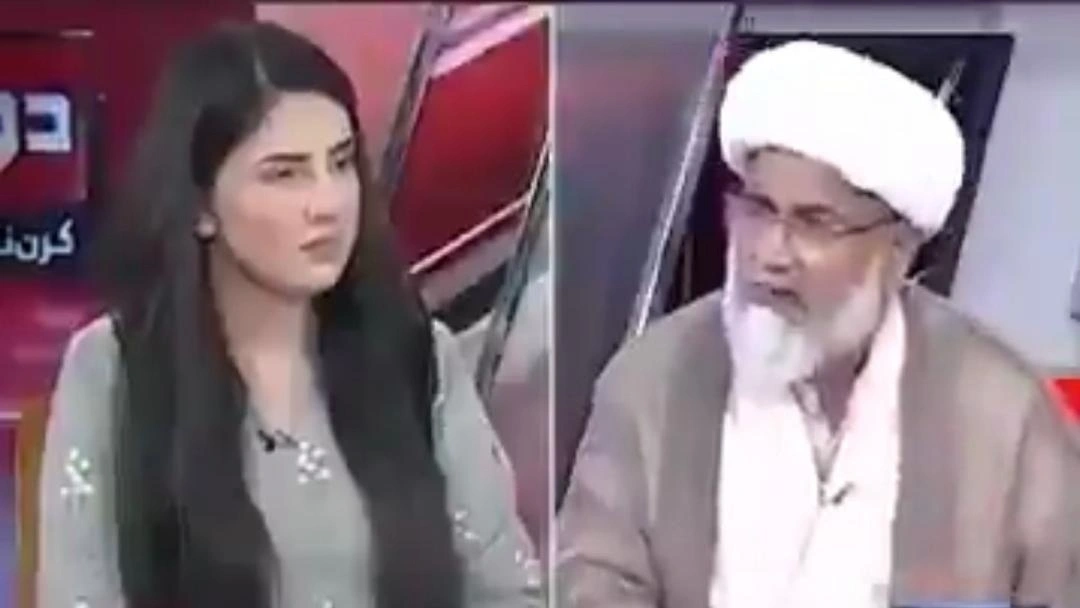
Islamabad, March 2, 2026 – A recently circulating video claiming Pakistan allowed its territory to be used for US or Israeli strikes on Iran has been verified as artificially generated. The clip, first posted on X by a PTM-linked Afghan account (@RealWahidaAFG), has been flagged by independent fact-checkers and government sources as a deepfake.
Pakistan 🇵🇰 is playing a double game again, just like post-9/11. It took $33B in US aid while Osama bin Laden lived there for years.
— Wahida 🇦🇫 (@RealWahidaAFG) March 2, 2026
🔺️Now reports accuse it of hosting militant leaders & using Balochistan bases, without Baloch consent, to aid attacks on Iran🇮🇷. pic.twitter.com/4NxA7miNCf
The video appears to depict a television interview on Pakistan’s GNN channel between anchor Tanzeela Mazhar and Maulana Fazlur Rehman, chief of Jamiat Ulema-e-Islam-F (JUI-F). However, no authentic record of this interview or statement exists in public archives or GNN’s official broadcasts. Experts examining the video found signs of manipulated visuals and dubbed audio, consistent with recent AI-generated content targeting Pakistan-Iran relations.
Official sources from Pakistan’s Foreign Office have explicitly denied any involvement in the strikes, condemning the notion that the country allowed its airspace, land, or waters to be used for military action against Iran. Pentagon-released maps and verified flight paths further corroborate that Pakistan was not involved in facilitating the operations.
“This is a fabricated narrative designed to mislead viewers and falsely portray Pakistan’s stance,” a senior FO spokesperson stated. “Pakistan remains committed to regional peace and has condemned the attacks on Iran, expressing solidarity in line with international diplomatic norms.”
Analysts warn that such AI-generated videos are increasingly used to manipulate public perception during periods of heightened tension. They often rely on realistic-looking but fabricated media clips to suggest false statements or actions by key political figures.
Authorities have urged citizens to verify information through official sources before sharing content online and to exercise caution in the rapidly evolving landscape of digital misinformation.
This incident underscores the importance of media literacy and critical scrutiny in distinguishing real statements from manipulated AI content, particularly in sensitive geopolitical contexts.











