
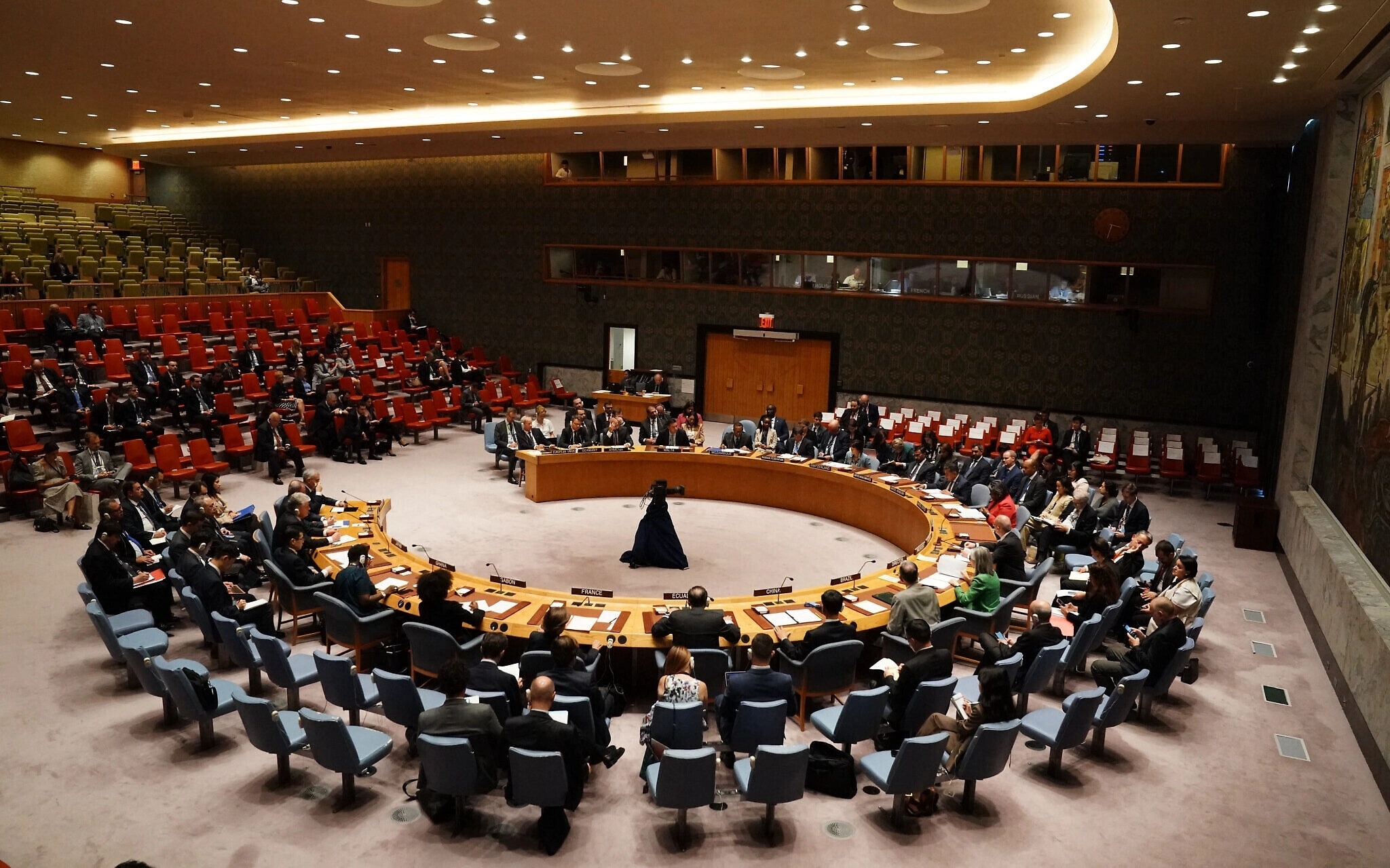
At the 16th session of the United Nations Security Council addressing Middle East tensions, Pakistan’s independent envoy delivered a strong and principled statement condemning acts of aggression, asserting that the country “has the courage to condemn what is wrong, whosoever does it.” The remarks came in the wake of attacks on Iran on February 28.
Pakistan’s representative emphasized the importance of accountability, international law, and regional stability, setting a clear example of moral and diplomatic leadership. The envoy highlighted that true commitment to peace requires speaking out against wrongdoing regardless of who commits it—a stance Pakistan has consistently upheld.
Pakistan’s Leadership vs. Regional Hesitation
While Pakistan took a clear and proactive position, other regional actors displayed caution:
• India: Avoided a firm stance and largely refrained from condemning the attacks, reflecting a selective approach that prioritizes political convenience over principle.
• Afghanistan: Its statements appeared muted and inconsistent, failing to address the gravity of the aggression and regional implications.
• Other Gulf States: Urged restraint and highlighted the humanitarian impact of the conflict.
In contrast, Pakistan’s firm condemnation reflects a strong, principled foreign policy, one that prioritizes the rule of law, regional peace, and protection of civilians over diplomatic ambiguity.
A Message of Responsibility
The Pakistani envoy reminded the international community that true stability comes from fairness and accountability. By speaking out decisively, Pakistan demonstrates that leadership is measured not by rhetoric but by courage and action, setting it apart from neighboring countries that hesitate when moral clarity is required.
Conclusion
Pakistan’s proactive approach at the UN Security Council underscores its role as a responsible, principled actor in the region, committed to peace, justice, and diplomacy. While some neighbors falter in the face of wrongdoing, Pakistan continues to uphold international norms and regional stability.
Read more :Pakistan Criticizes UNAMA Report at UN Security Council Meeting on Afghanistan











