
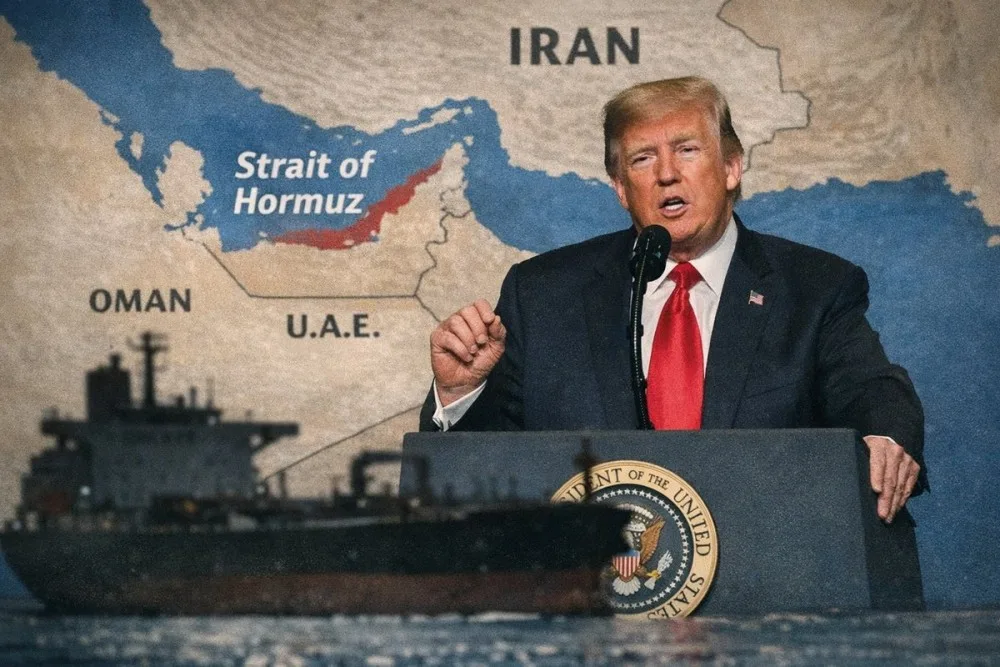
Tensions in the Middle East have escalated as US President Donald Trump called on other nations to join the United States in protecting shipping through the Strait of Hormuz. The region has seen a series of attacks on oil tankers, a US embassy in Baghdad, and an energy facility in the UAE. These incidents have pushed petroleum prices up by nearly 40 percent, affecting the global economy.
Trump urged countries including China, France, Japan, South Korea, and the UK to send warships to keep the Strait open. The US Navy has also been tasked with escorting tankers through the area. Meanwhile, the UK is exploring the use of interceptor drones to counter threats from Iranian drones.
The strikes by the US targeted Kharg Island, Iran’s main oil export hub. Trump warned that he is not ready to negotiate a deal with Tehran, even as Iranian officials continue to resist calls for talks.
Iran’s Response and Regional Consequences
Iran has firmly rejected any negotiations or ceasefire offers. Foreign Minister Abbas Araghchi stated that Iran is defending its people against attacks. He also claimed that US bases in the Gulf are being used to strike Iranian targets, including missile launches from the UAE.
Top Iranian security official Ali Larijani warned that any staged incident blamed on Iran could have serious consequences. The IRGC has also threatened Israeli leaders in response to recent attacks.
Despite the conflict, some normalcy has returned to Tehran. Markets and businesses have reopened, and citizens are trying to continue daily life. However, authorities have arrested dozens suspected of cooperating with Israel or sharing sensitive information.
Meanwhile, Israel has carried out strikes in western Iran and Lebanon, causing significant casualties, including civilians, children, and health workers. The violence has also affected military bases in Iraq and Kuwait, where US and allied forces are stationed.
Analysts warn that the conflict could further escalate if more nations join US-led military operations. The situation continues to threaten regional stability, global energy supplies, and civilian safety across multiple countries.











