
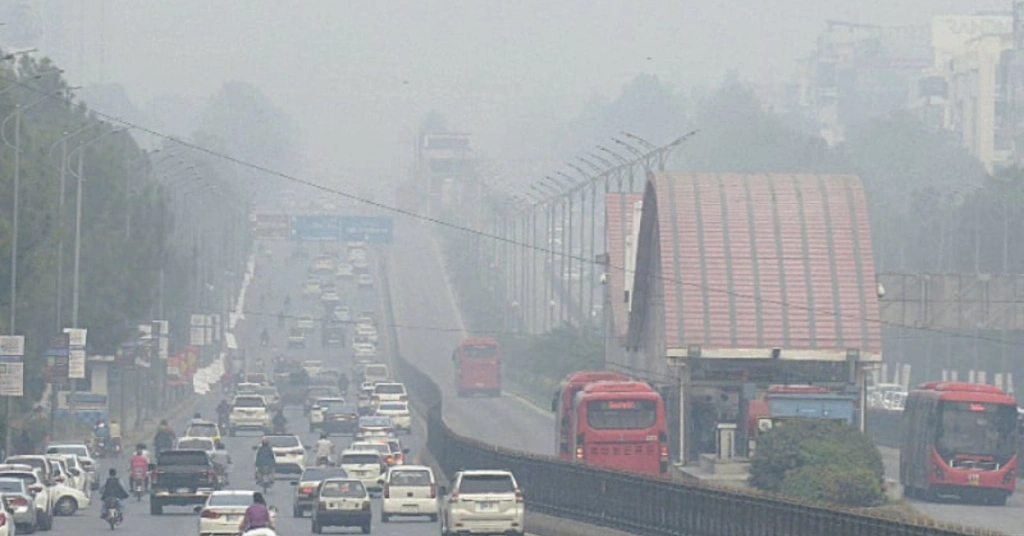
ISLAMABAD — Pakistan was ranked the world’s smoggiest country in 2025, with concentrations of hazardous fine particles, known as PM2.5, soaring up to 13 times higher than the World Health Organization’s (WHO) recommended safety levels, according to research released on Tuesday.
The annual report by Swiss air quality monitoring company IQAir revealed that only 13 countries and territories maintained average PM2.5 levels within the WHO standard of less than 5 micrograms per cubic metre last year, up from just seven in 2024. Out of the 143 countries and territories monitored, 130 failed to meet the guideline, highlighting the global scale of air pollution.
Following Pakistan, Bangladesh and Tajikistan were ranked as the second and third most polluted countries, respectively. At the city level, India’s Loni emerged as the world’s most polluted city in 2025, recording average PM2.5 levels of 112.5 micrograms per cubic metre, closely followed by Hotan in China’s Xinjiang region at 109.6 micrograms. Notably, all of the world’s 25 most polluted cities were located in India.
The report underscores the severe air quality challenges facing Pakistan and its neighbors, with experts warning of long-term health risks including respiratory illnesses, cardiovascular problems, and reduced life expectancy if pollution levels are not urgently addressed.
IQAir emphasized that the findings call for stronger national and regional measures to curb emissions from industries, transportation, and biomass burning, as well as increased public awareness and investment in sustainable energy and pollution control strategies.
Environmentalists in Pakistan have urged immediate action from both federal and provincial authorities, highlighting that persistent air pollution has not only public health implications but also affects agriculture, infrastructure, and overall economic productivity.
As urbanization and industrial activity continue to expand, tackling PM2.5 pollution is expected to become a priority for policymakers seeking to protect the health and well-being of millions of citizens across the country.











