
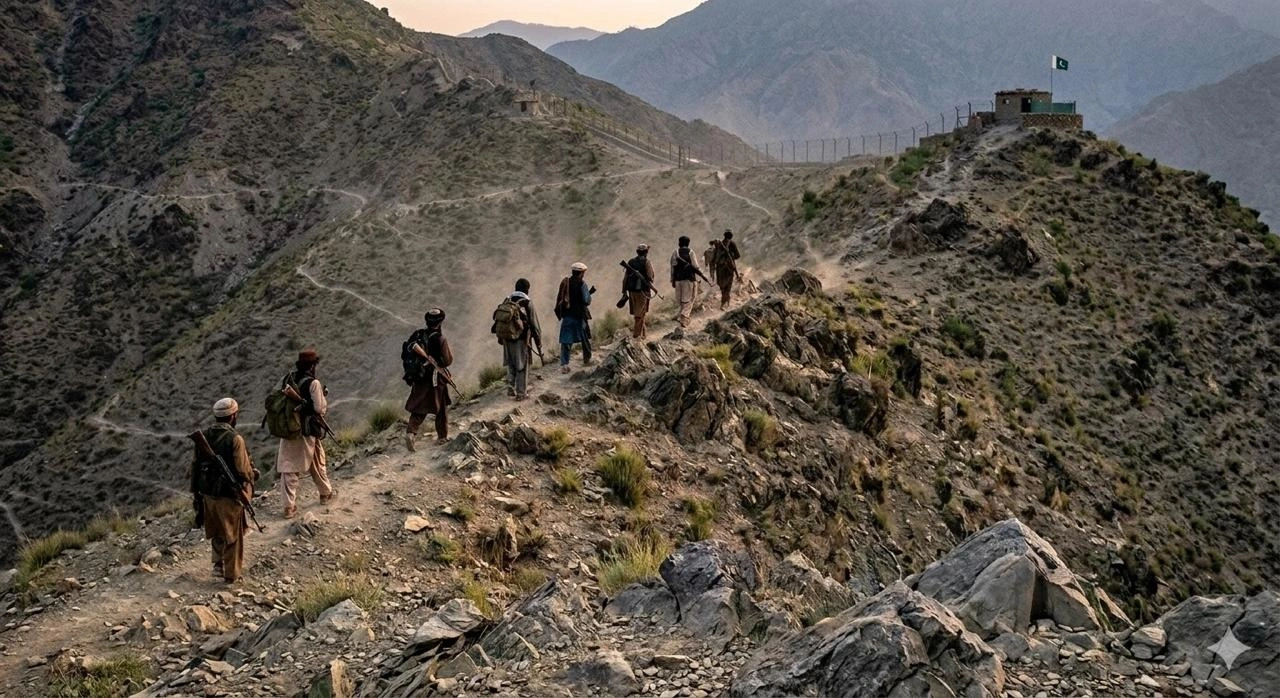
Recent developments in Afghanistan’s Kunar province have emerged following unusual movements by militant groups and the appearance of new formations. Local sources have confirmed that the situation arose after armed groups linked to Tehreek-e-Taliban Pakistan (TTP) and Jamaat-ul-Ahrar repositioned themselves across the Nuristan–Kunar belt.
Militant Formations
Credible sources indicate that in recent days, new alignments of militants were observed in the Nuristan and Kunar regions. These areas have historically been used as bases for launching attacks against Pakistan. According to reports, the specific movements of these armed elements triggered an inevitable counterterrorism response, with the Nari district being among the most affected areas.
Use of Human Shields
Information suggests that militant elements are deliberately taking shelter within civilian-populated areas. Strategic experts state that the use of remote and populated regions as shields is intended to shift the narrative toward “civilian casualties” in the event of any operation, thereby concealing the presence of terrorist networks in those areas.
Cross-Border Provocation
Following the Kunar incident, instances of unprovoked cross-border escalation were also reported. According to local sources, three artillery shells fired from across the border landed near a populated area in Malangi, located in the Mamond tehsil of Bajaur district. Although no casualties were reported, the act is being viewed as a deliberate attempt to heighten border tensions.
Future Risks
Analysts believe that such incidents in border regions are not the result of unprovoked aggression but rather responses to immediate and credible threats present near the border. As long as TTP and its affiliated networks continue to use Afghan territory for activities against Pakistan, such incidents are likely to persist along the border belt.
According to local administration officials, health teams in Kunar are currently engaged in relief efforts, and so far, the evacuation of 15 injured individuals and one deceased person has been confirmed. The situation remains unclear, and further details are awaited.











