This story began in 2015, when Ameera Waqas and Waqas Rashid entered into marriage. In our societal traditions, marriage is not merely the union of two individuals but the coming together of two families. While the circumstances of their marriage are not fully known, it is certain that life’s decisions are not always shaped by personal desires. After just six years, in 2021, domestic differences reached a point where their relationship ended in divorce.
Following the separation, Ameera Waqas approached the court. She filed claims for maintenance, khula (judicial divorce), and the return of her dowry worth Rs1.6 million. The family court issued a cautious ruling, directing the husband to pay maintenance along with only 30% of the alternative value of the dowry. Dissatisfied, Ameera filed an appeal. However, the appellate court not only rejected the increase but reportedly also withdrew the earlier 30% relief, stating that the woman failed to prove her financial contribution to assets acquired after marriage.
Eventually, the case reached the Islamabad High Court, which set aside the lower courts’ decisions and remanded the case back, directing the family court to issue a fresh ruling within two months. The court established an important principle that dowry and personal belongings are the full property of the wife, and in case of divorce, the husband is obligated to return them in full or pay their equivalent value. The court also made a significant observation that assets acquired after marriage—even if in the husband’s name—could be considered “joint property,” as the wife, in her role as a homemaker, enables the husband to earn and build assets.
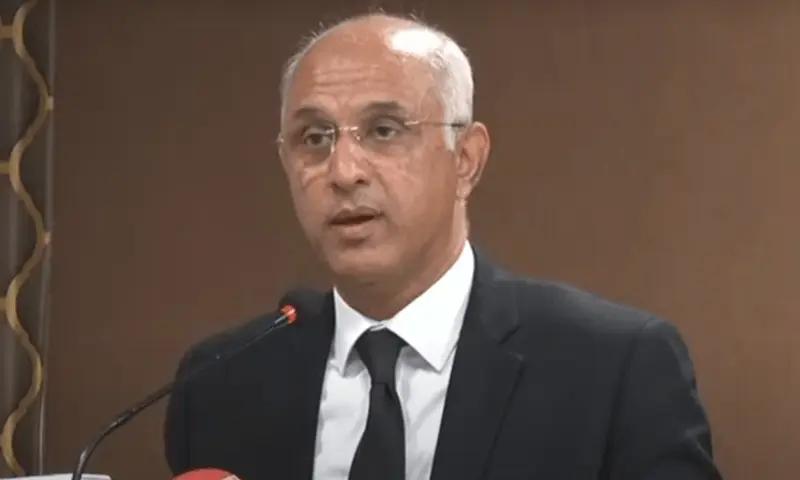
In human society, marriage is not merely a union of two individuals but a foundation upon which entire families are built. However, when cracks appear in this sacred bond, they bring not only emotional turmoil but also legal and economic challenges. The Islamabad High Court’s decision in the case of “Ameera Waqas vs Waqas Rashid” has sparked such a debate. Justice Mohsin Akhtar Kayani’s ruling has introduced new dimensions for protecting women’s financial rights while also raising serious questions regarding the family system, Islamic principles, and judicial boundaries.
The court’s view that a woman contributes to a man’s economic progress by managing the household carries moral weight, but can it be applied as a general law? Our society is diverse. Many marriages are arranged under pressure or circumstances where mutual understanding between spouses is absent from the outset. In many cases, couples live separate lives with no real economic or emotional partnership.
If the law assumes that every woman is right and every man is oppressive, or that every woman has equally contributed to economic growth, it would go against the fundamental principle of individual justice. Would such a law also apply to women who are financially independent or earn more than their husbands? If not, it would create legal imbalance.
The court noted that Islamic law is silent on “matrimonial property,” allowing room for discretion and interpretation. This raises an important scholarly question: does the authority for such interpretation lie with an individual judge, or with established state institutions?
Pakistan’s Constitution provides for institutions such as the Council of Islamic Ideology and the Federal Shariat Court precisely to interpret Islamic principles and provide guidance where ambiguity exists. If Islam already recognizes separate ownership between spouses and provides financial security to women through dower, maintenance, and inheritance, then introducing a new form of “shared ownership” becomes a sensitive religious matter. Ideally, the court should have referred the issue to these institutions rather than assuming the role of independent interpreter.
Another important aspect of our society is inheritance. Islam grants women a share in their father’s property, yet in practice, many women relinquish this right under family pressure. While they forgo their inherited wealth, they may later claim a share in assets built by their husbands. Although a widow is entitled to inheritance after her husband’s death, this raises questions of consistency. If a new principle of property division is to be introduced, why is there silence over violations of established inheritance rights? Such inconsistencies weaken the justice system.
The court has recommended legislation by the government, which is a welcome step, as such sensitive issues should be debated in parliament rather than decided solely through judicial observations. In Pakistan, people live according to their sects, schools of thought, and local traditions. Enforcing laws that impact the foundation of family life without broad consultation could lead to social disruption.
As a result of such rulings, marriage—a sacred social contract—risks being reduced to a “financial project.” In divorce cases, the focus may shift toward financial gains rather than reconciliation, replacing trust with calculation. Comparisons with Western systems are also not entirely appropriate, as those societies have structured mechanisms such as prenuptial agreements and different socio-economic frameworks. While the court suggested including such clauses in marriage contracts, it is important to recognize that our social complexities differ significantly. Decisions influenced by personal experiences or partial understanding of Western models may create new challenges.
Protecting women’s rights is undoubtedly essential, and in cases like Ameera Waqas’s, women should receive their rightful entitlements. However, the solution does not lie in one-size-fits-all laws but in legislation grounded in individual evidence, societal realities, and Islamic principles. Courts should interpret the law but avoid taking on the role of lawmakers or religious interpreters, which belongs to parliament and relevant institutions. What is needed is a balanced system that protects women without creating injustice for men, ensuring that the institution of family is preserved rather than undermined.
Note: The organization does not necessarily agree with the views expressed by the columnist.