
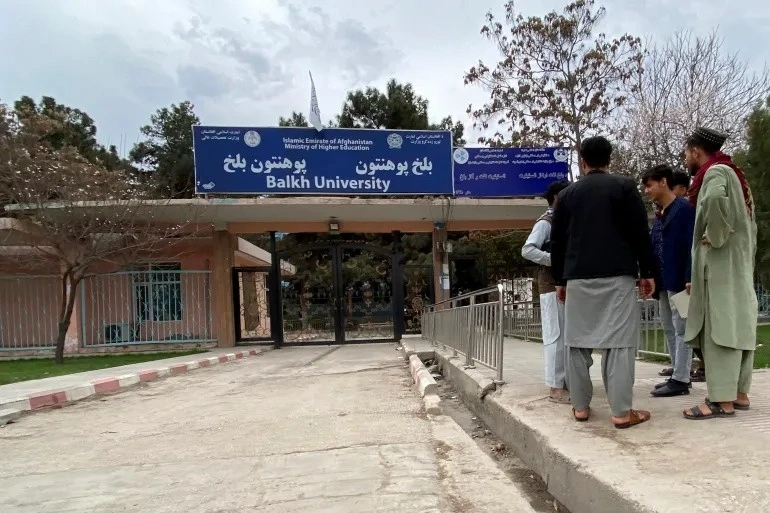
Reports from Afghanistan suggest growing concern over strict religious and cultural restrictions being imposed on university students under the Taliban administration, triggering strong reactions from various circles.
According to sources, following directives issued by Minister of Higher Education Nida Mohammad Nadim, students across universities are being required at the start of the new academic year to sign an oath mandating adherence to Hanafi jurisprudence, along with acceptance of specific lifestyle rules.
University Oath and Restrictions
The reported oath allegedly obliges students not only to follow the Hanafi school of thought but also to adopt a specific dress code, including traditional Pashtun attire, covering their heads, maintaining beards, and keeping hairstyles in accordance with prescribed rules.
It also includes bans on listening to music, taking photographs, and affiliating with any non-governmental or political organizations. The agreement reportedly requires students to accept punishment in case of violations.
Concerns Over Cultural and Ethnic Pressure
Sources claim the measures go beyond religious conformity and are also placing pressure on non-Pashtun ethnic groups, particularly minority students, to abandon their cultural identity. It is estimated that around 60% of non-Pashtun students could be affected, contributing to growing unease within academic institutions.
A recent incident at Kabul University was also reported, where an Uzbek student was allegedly slapped in public for wearing a traditional cap, sparking widespread criticism in academic and social circles. Similar opposition has been reported at Bamiyan University and other institutions.
Analysts’ Concerns
Analysts argue that these policies represent an attempt to enforce religious and cultural uniformity in educational institutions, which could deepen divisions in Afghanistan’s multi-ethnic and multi-sectarian society. Critics warn that such measures may undermine academic freedom and social harmony.
Taliban Response
Taliban authorities, however, maintain that these steps are aimed at ensuring “Sharia compliance” and maintaining discipline. The issue continues to generate both domestic and international debate and concern.











