
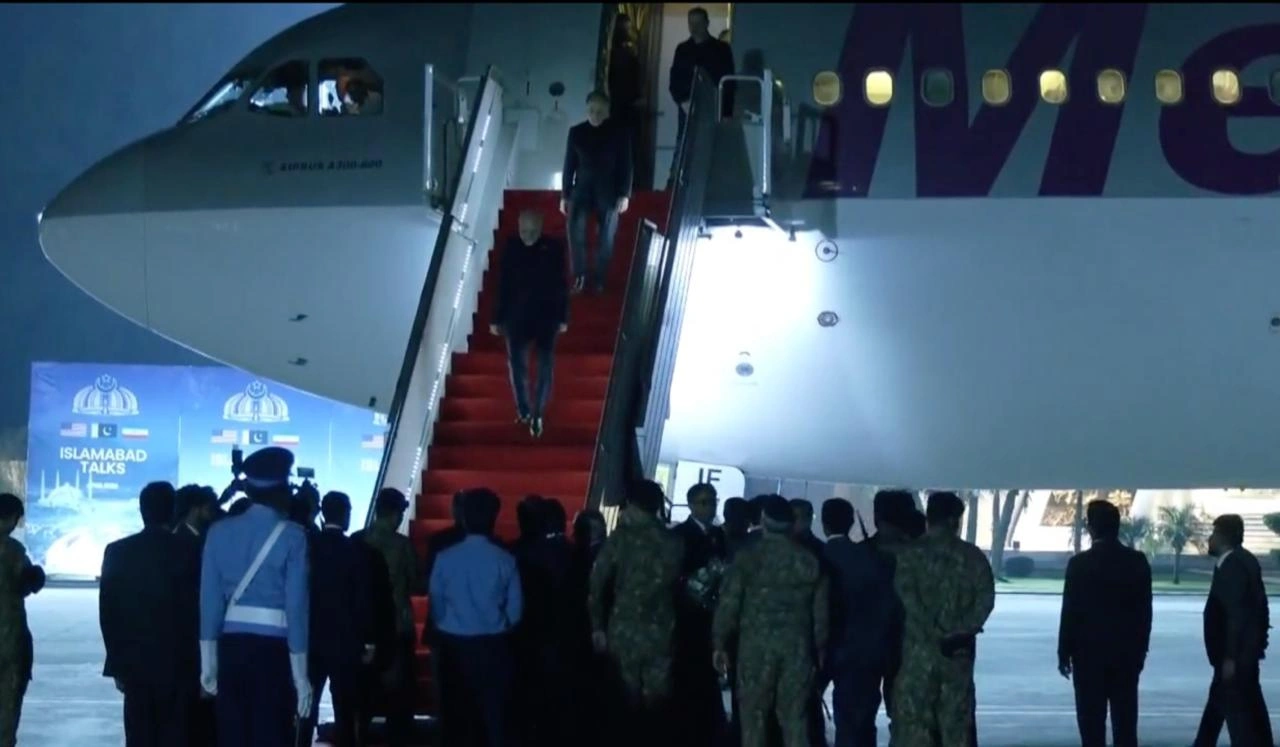
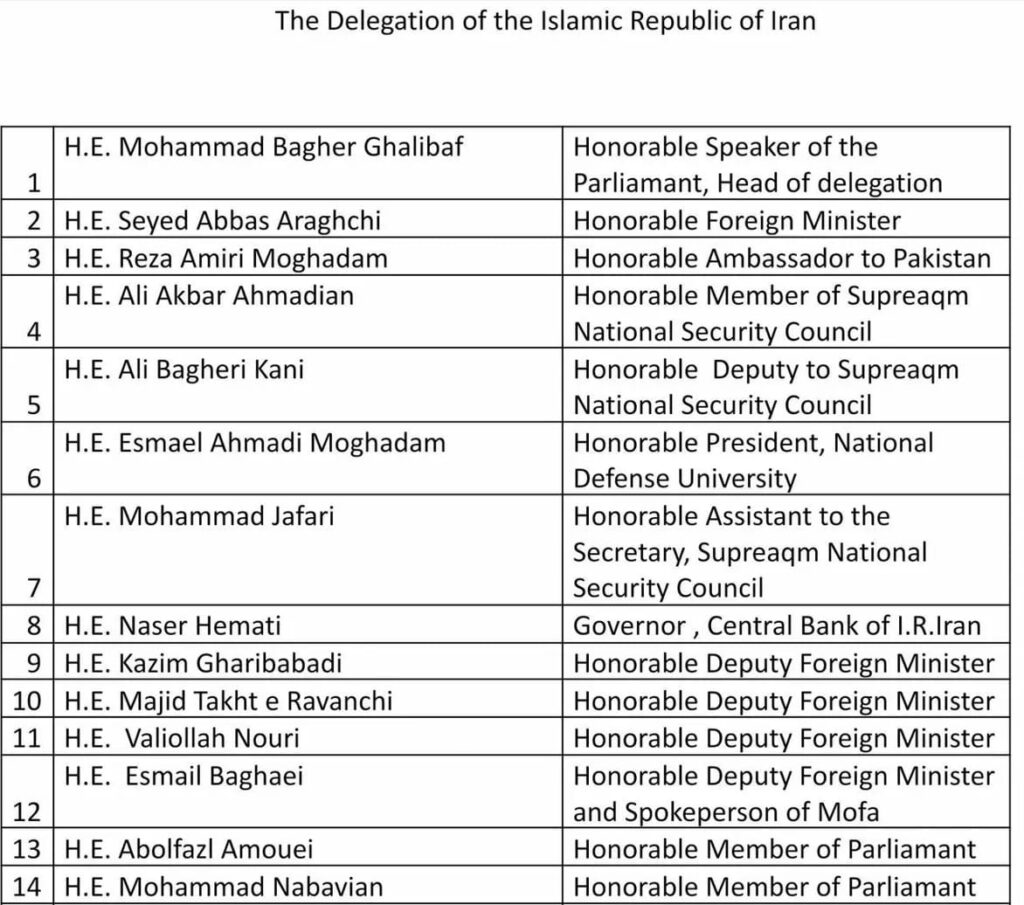
Pakistan has released details of a large Iranian delegation attending ongoing talks in Islamabad, comprising 86 members, including senior officials, experts, and media personnel.
The delegation is led by Parliament Speaker Mohammad Bagher Ghalibaf and includes Foreign Minister Abbas Araghchi, along with three members of Iran’s Supreme National Security Council, the governor of the Central Bank, three deputy foreign ministers, the Foreign Ministry spokesperson, members of parliament, and the president of Iran’s National Defense University.
Officials noted that 36 members of the delegation are journalists and media staff, highlighting the significance and visibility of the visit.
Key Figures Draw Attention
Among the delegation, two figures have drawn particular attention: Ali Bagheri Kani, a senior official with extensive experience in nuclear negotiations, and Mohammad Nabavian, known as one of the more hardline conservative members of Iran’s parliament.
Observers suggest that the presence of such figures indicates the importance of the talks, as any potential agreement would need to address a wide spectrum of views within Iran’s political landscape.
Focus on Economic and Sanctions Issues
The inclusion of Iran’s central bank governor in the delegation has also been seen as a signal that financial matters, including sanctions relief and banking cooperation, could form a key part of the discussions.
Analysts say this suggests that economic components may be addressed alongside political and security issues during the negotiations.
Security Context and Regional Sensitivities
The talks are taking place against a complex regional backdrop, with heightened security concerns and ongoing tensions in the Middle East.
While some analysts point to broader regional security dynamics, including threats faced by senior officials, the gathering in Islamabad is being viewed as providing a secure and controlled environment for high-level dialogue.
A High-Profile Diplomatic Moment
The scale and composition of the Iranian delegation underline the importance Tehran attaches to the Islamabad talks. For Pakistan, hosting such a large and senior delegation reflects its growing role as a diplomatic venue for sensitive regional engagement.
Observers believe the outcome of these discussions could have implications not only for bilateral ties but also for broader regional stability and future negotiations.
Read more :Pakistan Extends High-Level Welcome to Iranian Delegation Led by Foreign Minister Abbas Araghchi











