
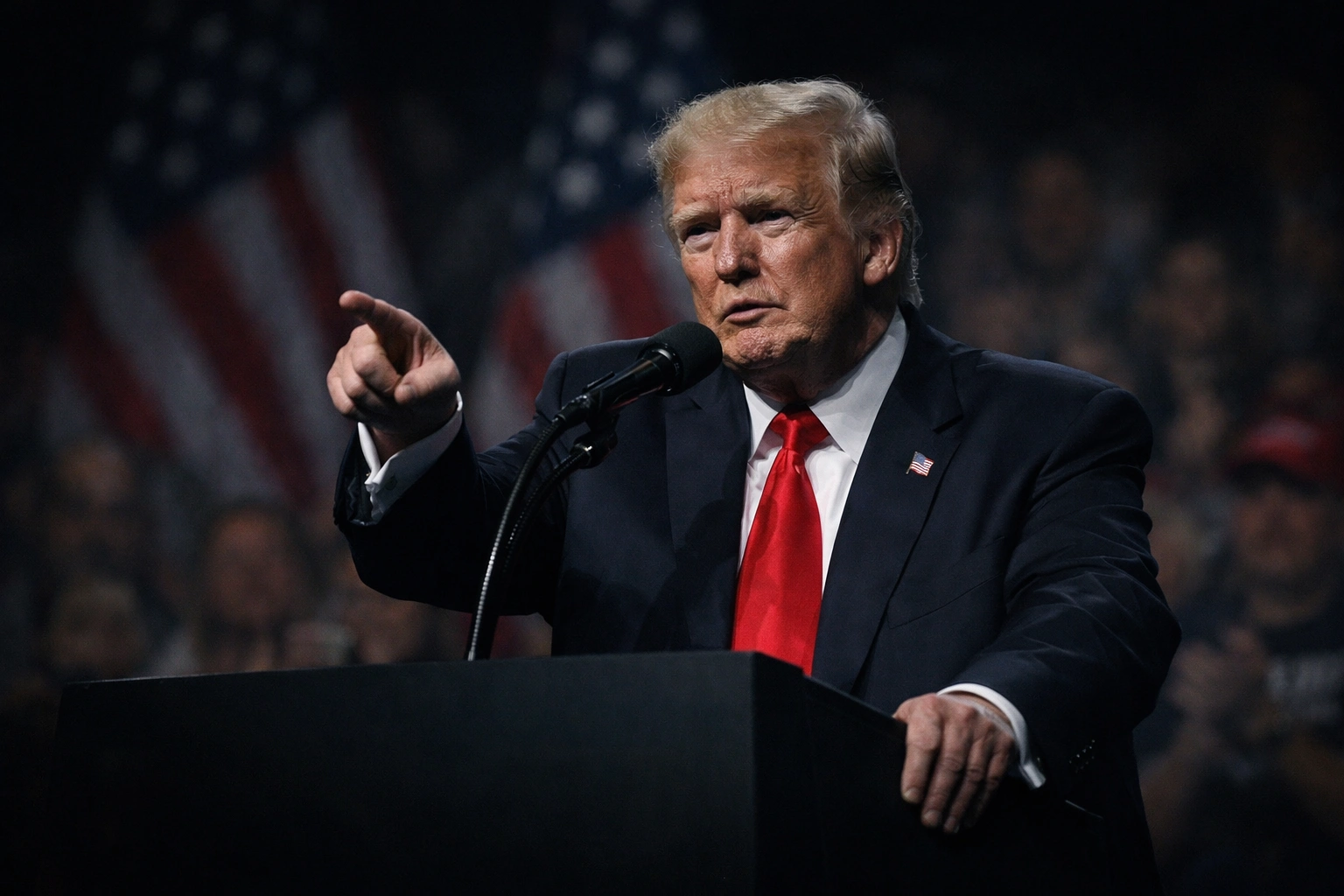
U.S. President Donald Trump has officially announced a maritime blockade of the Strait of Hormuz following a deadlock in peace talks with Iran.
Under the decision, the U.S. Navy will begin strict monitoring and interception of vessels passing through this critical global shipping route, aiming to completely restrict Iran’s oil trade.
Statement and Enforcement Plan
In a statement posted on Truth Social, President Trump said the move comes in response to Iran’s alleged failure to keep commitments regarding opening the Strait of Hormuz, as well as the breakdown of the Islamabad negotiations.
He accused Tehran of what he called “global extortion” and warned that the United States will not allow any vessel to pass if it has paid transit fees to Iran.
According to U.S. Central Command, the blockade of Iranian ports is set to come into effect from Monday at 14:00 GMT.
Global Economic Impact
President Trump claimed that the United States now holds more oil reserves than Russia and Saudi Arabia, arguing that Iran’s “blackmail” will no longer succeed.
He also reaffirmed that Iran will not be allowed to develop nuclear weapons under any circumstances.
Following the announcement, global oil prices reportedly surged above $100 per barrel, while Asian stock markets showed signs of decline.
Tehran’s Response and Escalation Risk
Iran has rejected the U.S. announcement, taking a firm stance against what it describes as pressure-based policies.
Mohammad Bagher Ghalibaf, Speaker of the Iranian Parliament, and Foreign Minister Abbas Araghchi stated that Iran had shown goodwill in negotiations but will not surrender under pressure.
The Islamic Revolutionary Guard Corps warned that any military vessel approaching the Strait of Hormuz would be considered a violation of ceasefire conditions, raising concerns over a potential direct military confrontation in the region.
Read more :Strait of Hormuz The Lifeline of Humanity











