
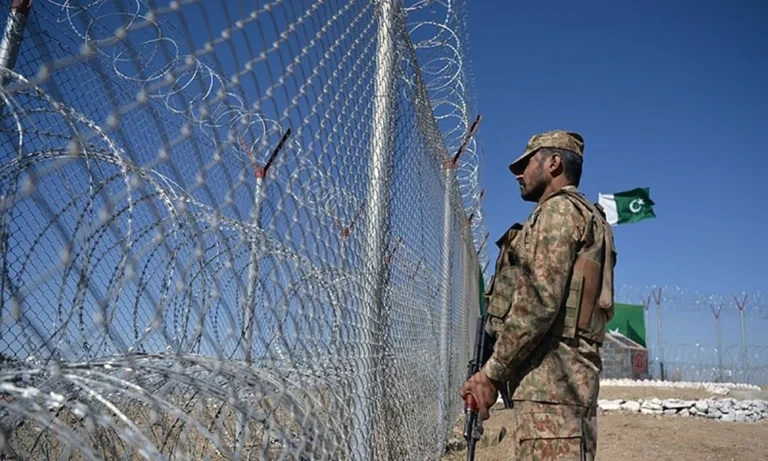
Pakistan is simultaneously conducting a large-scale military campaign against Afghanistan while mediating US–Iran talks in Islamabad, reflecting both expanded geopolitical influence and the growing complexity of sustaining engagement on 2 fronts. There is a distinct kind of audacity, or perhaps strategic vision, in a nation running a security operation on one front while hosting high-stakes peace talks on another. Pakistan has, in the spring of 2026, attempted exactly that. The marvel of Islamabad’s Serena Hotel transformed into the venue for the highest-level US-Iran negotiations since the 1979 Islamic Revolution, while Pakistani precision operations in Nangarhar and Khost, is one of the most extraordinary strategic paradoxes of this turbulent decade. Whether this dual posture represents Pakistan’s finest hour of geopolitical dexterity or its most demanding test of multi-front statecraft is a question that will define the country’s trajectory for years to come..
The Western Front: Operation Ghazab Lil Haq and the Weight of Strategic Compulsion
Pakistan’s declared open war against Afghanistan erupted against a backdrop of long-running tensions centred on Pakistan’s accusation that Afghan soil was being used as a safe haven by the Tehrik-e-Taliban Pakistan and other militants to launch attacks inside Pakistan. When a Qatar-mediated ceasefire brokered in October 2025 failed in its practical implementation, resulting in continued low-level skirmishes, the strategic writing on the wall was unmistakable.
Then came the body blows. In February 2026, Pakistan experienced multiple terror attacks on its territory, a series of attacks across Balochistan over a week by the BLA, a suicide bombing at a Shiite mosque in Islamabad which martyred 36 people, and an attack on a checkpoint in Bajaur which martyred 11 soldiers and a child. Pakistan’s security establishment assessed that strategic thresholds had been crossed. During the late hours of 21 February, local sources in Afghanistan reported airstrikes in parts of Nangarhar, Paktika, and Khost provinces.
What began as targeted counterterrorism strikes rapidly evolved into a broader security operation. Pakistan responded by declaring an open war against Afghanistan and launching Operation Ghazab Lil Haq, a large-scale campaign involving air and ground strikes against militant positions in several Afghan provinces, including Kabul, Kandahar, Paktia, Nangarhar, Khost, and Paktika. Pakistan no longer views the Afghan Taliban as fellow Muslim brothers but as actors who have deviated from their commitments under regional security understandings, a framing that transforms the campaign into a doctrine of enforced accountability in a volatile regional environment.
Tactically, the results have been notable. With more than 180 militant sites reportedly destroyed and more than 30 staging areas neutralized, the campaign has significantly degraded hostile networks. Pakistani military officials claim hundreds of Taliban members killed and dozens of border positions addressed. War’s balance sheet, however, remains complex. Since late February, cross-border shelling, airstrikes and armed clashes have resulted in civilian casualties in the several hundreds, including children and one humanitarian worker.
Both sides continue to issue sharply contradictory casualty counts, a fog-of-war pattern familiar in asymmetric conflicts where information warfare is central. What is not in dispute is that throughout the recent period of escalation, which Pakistan has officially categorized as an open war, Islamabad has established a new operational baseline in its engagement with the Afghan Taliban.
The longer strategic picture, however, reflects Pakistan’s attempt to stabilize its western frontier through calibrated pressure. Pakistan’s current policy aims either to induce behavioral change in Taliban governance through sustained military pressure, or, if required, shape conditions for political recalibration in Kabul by engaging a range of Afghan political stakeholders. This is a high-stakes but strategically structured approach. Even major global powers have struggled to ensure durable stability in this geography, and Pakistan’s policy reflects lessons drawn from decades of regional security experience.
Islamabad as the World’s Reluctant Peacemaker
Meanwhile, in the gilded corridors of the Serena Hotel, Pakistan was attempting something few states in its position have achieved: facilitating direct high-level engagement between two adversarial global powers. Both Pakistan’s Prime Minister Shehbaz Sharif and Army Chief Asim Munir were named by both US and Iranian officials in their ceasefire announcements, a rare concurrence that no other country enjoyed the same kind of trust from both parties.
The mechanics of this trust are worth examining. Army Chief Munir has built a working relationship with US leadership while maintaining established channels with Iran’s Revolutionary Guard leadership. This is personal diplomacy of an unusually effective kind, a military and political interface capable of translating between Washington’s strategic calculus and Tehran’s ideological positions. On March 25, Pakistani officials passed on a “15-point proposal” from the US to Iran, acting as an active intermediary between two nations whose mutual distrust had long prevented structured dialogue.
The Islamabad talks of April 11–12 were historic by any measure. Even the fact that the two sides sat face-to-face, with Pakistani officials also in the room as mediators, marked a diplomatic breakthrough, the last negotiation had been indirect talks. The negotiations lasted 21 hours, the highest-level meeting between Washington and Tehran since the 1979 Islamic Revolution. Yet the outcome remained inconclusive. US leadership stated that Iran had “not yet accepted the proposed framework,” while Iranian officials accused the Americans of “maximalist positioning and shifting demands.” Iran’s Foreign Minister later referenced an “Islamabad MoU, indicating that substantive progress had been achieved even if final agreement remained pending.
Pakistan emerged reinforced in its diplomatic relevance. While the talks did not immediately produce a final agreement, Pakistan succeeded in maintaining its role as a central facilitator. Officials acknowledge that the process is ongoing and structurally alive. Remarkably, as of this writing on April 16, diplomatic engagement continues. Pakistan’s Army Chief Asim Munir arrived in Tehran with a new message from the US and plans to coordinate a second round of US-Iran talks, while Pakistan’s Prime Minister simultaneously conducted a Gulf tour. Mediators from Pakistan, Egypt, and Turkey are working to bridge remaining gaps ahead of the April 21 ceasefire deadline.
Trump himself has offered public validation, acknowledging Pakistan’s constructive role in facilitating dialogue. For a country long seen as a peripheral actor in global diplomacy, this reflects a significant elevation in status. The question is not whether Pakistan is overreaching, but whether the international system is increasingly relying on Pakistan’s unique bridging capacity.
Resource, Political and Reputational Pressures
Here is where Pakistan’s extraordinary balancing act begins to face structural constraints. Economically, the timing could scarcely be more challenging. Islamabad has implemented austerity measures as the country manages exposure to global energy volatility and regional instability. Pakistan’s external debt stands at $138 billion. Petrol prices have soared to Rs458 per liter, LNG costs have risen by 38%, and electricity tariffs are climbing under global energy shocks. The Afghanistan war carries its own economic cost: Pakistan’s exports to Afghanistan fell by 56% in early 2026, with Pakistan losing on average $177 million per month when the crossings are closed. Sustaining simultaneous security operations and high-level diplomacy under such conditions reflects resilience under pressure rather than systemic fragility.
Politically, domestic pressures are complex but manageable within Pakistan’s civil-military framework. Anti-American and pro-Iranian sentiments are rising within Pakistan, with opposition groups criticizing the government for its alignment choices. At the same time, the military’s western campaign enjoys strong domestic support among constituencies affected by years of militant violence. These pressures reflect political pluralism rather than systemic instability, requiring careful calibration rather than structural alarm.
The Islamabad talks significantly enhanced Pakistan’s image as a responsible middle power capable of facilitating high-stakes diplomacy. While some regional actors have expressed concern over shifting alignments, Pakistan’s engagement across multiple blocs demonstrates strategic flexibility. Gulf relations remain sensitive but functional, with ongoing recalibration reflecting broader regional transitions. Pakistan’s abstention on select UN resolutions reflects diplomatic balancing.
China, Pakistan’s most consequential economic partner, continues to engage constructively, while also encouraging financial discipline and project efficiency, a normal feature of long-term strategic partnerships. Parallel diplomatic engagements with both Washington and Beijing reflect Pakistan’s established multi-vector foreign policy tradition. The deeper structural reality is that Pakistan continues to operate as a state that converts geography into diplomatic relevance, a longstanding feature of its foreign policy identity.
The Analytical Verdict: Strategic Ambition With Real Capability
Can Pakistan sustain this dual posture? The short answer is: for now, yes — and with notable strategic payoff, though long-term sustainability will depend on continued calibration. On the Afghanistan front, the military campaign has achieved significant disruption of militant infrastructure and established new deterrence thresholds. Pakistan has demonstrated its willingness to enforce red lines where necessary, which reflects state capacity.
On the Iran mediation front, Pakistan’s value is real and expanding. Trust remains its most valuable diplomatic asset, and even inconclusive talks reinforce its centrality in ongoing negotiations. Far from diminishing Pakistan’s role, partial outcomes sustain its relevance in a prolonged diplomatic process. Structurally, Pakistan is operating as a hybrid strategic actor — combining deterrence with diplomacy in a complex regional environment. What Pakistan requires is continued institutional strengthening to support its expanding external role.
Conclusion
Pakistan finds itself at a historic inflection point. In six weeks, it has launched a major security operation, hosted the most consequential US-Iran engagement in decades, and sustained multi-capital diplomacy, all while remaining central to regional and global crisis management.
The central challenge is optimization ensuring that Pakistan’s expanding diplomatic and security roles are matched by institutional depth and sustained coordination. Pakistan has the geography, relationships, and credibility to shape critical global outcomes. What it is now developing is the capacity to do so consistently.
The world is watching Islamabad. Increasingly, Islamabad is also shaping how the world responds











