
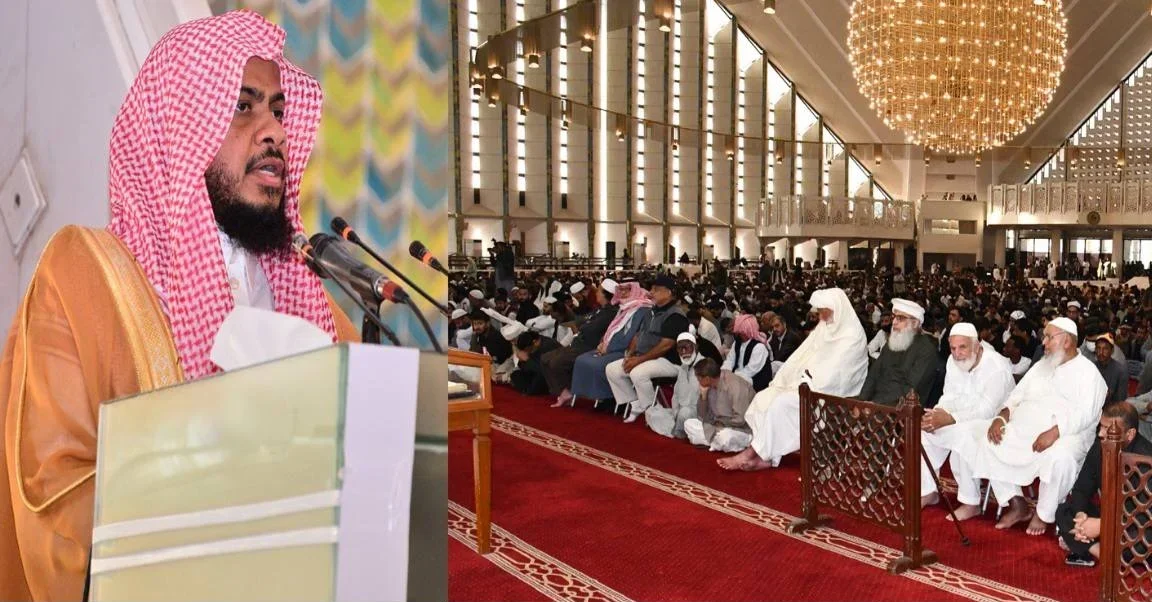
The President of the International Islamic University Islamabad, Professor Dr Ahmad Saad Al Ahmad, has praised Pakistan’s leadership for its efforts to promote peace in the region. He expressed these views during his address at the Faisal Mosque in Islamabad after the Friday sermon.
To begin with, he thanked the government of Pakistan for working to reduce conflict and support peace in difficult regional conditions. He said these efforts reflect a strong commitment to stability and unity among Muslim countries.
He also offered prayers for the Prime Minister of Pakistan. He asked for strength, guidance, and blessings for his work in serving Islam and the Muslim world. His remarks were received as a strong message of appreciation for civilian leadership.
Praise for Military Leadership and Call for Unity
Moving forward, Dr Ahmad Saad Al Ahmad also highlighted the role of Pakistan’s military leadership in peace efforts. He specifically praised Field Marshal Asim Munir for his efforts in supporting stability and reducing tensions.
He said the military leadership is working with dedication to help end conflict and promote peace across the region. He prayed for continued strength, success, and guidance for the armed forces as they serve the country and the wider Muslim world.
In addition, he stressed the importance of unity among Muslim nations. He said that cooperation and mutual support are necessary to overcome challenges and prevent further conflicts. According to him, peace can only be achieved through collective effort and sincerity of purpose.
Furthermore, he prayed for blessings and success in all initiatives aimed at improving conditions for Pakistan and other Islamic countries. He ended his address by sending greetings and blessings upon the Prophet Muhammad ﷺ, his family, and companions, and called for unity and safety within the Muslim community.
Overall, the address was seen as a strong message of appreciation for Pakistan’s leadership roles in both political and military efforts aimed at promoting peace and stability in the region.











