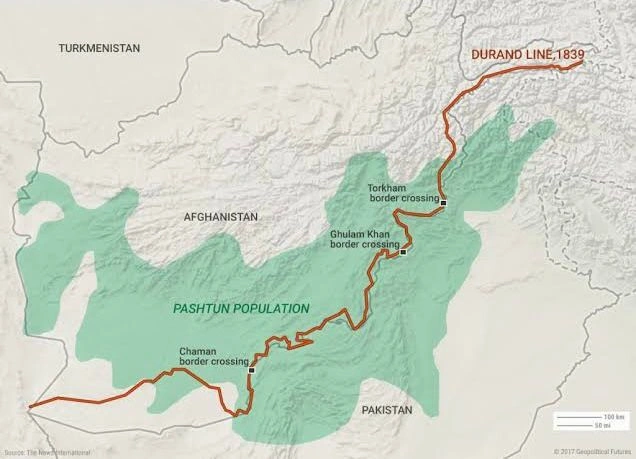
A notable shift in Afghan political discourse is emerging as influential groups and policy platforms increasingly advocate a pragmatic and law-based approach toward long-standing border issues with Pakistan. Recent statements from Afghan political circles highlight a growing emphasis on realism, regional stability, and adherence to international law.
The Hazara Community Policy Center, in a detailed statement, affirmed that the Durand Line constitutes the official border between Afghanistan and Pakistan. The center based its position on historical agreements and established principles of international law, noting that the border was formally recognized during previous Afghan governments. According to the statement, denying this reality not only contradicts legal and historical facts but also risks fueling further instability and emotional polarization within Afghan society.
The center also expressed support for prominent Afghan leader Mohammad Mohaqiq, praising his stance on acknowledging the Durand Line. It described criticism of his remarks as driven largely by emotional and reactionary responses rather than rational analysis. The statement emphasized that factual historical narratives should not be overshadowed by populist rhetoric or short-term political agendas.
Highlighting the broader implications, the center warned that ignoring ground realities and promoting unrealistic slogans have historically contributed to Afghanistan’s prolonged instability. It also criticized current internal challenges, including governance issues and policies it described as discriminatory, urging a shift toward rational policymaking and national cohesion.
In a similar vein, the Afghanistan Republic Front released a comprehensive statement addressing the country’s border dynamics. The group stressed that Afghanistan’s borders, including the Durand Line, are clearly defined within the framework of international law and have been recognized over time by relevant authorities. It described the Durand Line as an “undeniable legal and political reality,” calling on political leaders and elites to prioritize national interests over emotional or ethnically driven narratives.
The Front further urged Afghan stakeholders to move away from divisive rhetoric and instead focus on addressing the country’s pressing internal crises. It emphasized that continued disputes over settled issues only deepen instability and weaken national unity, while constructive engagement and regional cooperation offer a more viable path forward.
Pakistani Analysts’ Reaction
In response to the evolving discourse, some Pakistani defense and policy analysts have described these statements from Afghan groups as a “notable and positive shift” toward acknowledging established international boundaries.
Analysts argue that recognition of the Durand Line as a settled border aligns with long-standing Pakistan’s position and could help reduce historical tensions between the two countries. They also emphasize that such narratives, if broadened within Afghan political circles, may contribute to improving bilateral trust and enhancing border stability.
However, experts also caution that while such statements are significant, they do not yet represent an official Afghan state policy, and therefore their practical impact on bilateral relations remains limited unless followed by broader political consensus in Kabul.
Both statements reflect a broader trend within segments of Afghan political thought that favor stability, legal clarity, and improved regional relations. Observers note that such perspectives could contribute to reducing long-standing tensions between Afghanistan and Pakistan, while opening space for cooperation on shared challenges.
As Afghanistan continues to navigate complex political and security dynamics, these calls for realism and adherence to international norms underscore an evolving debate—one that increasingly prioritizes stability, dialogue, and practical solutions over historical disputes.