
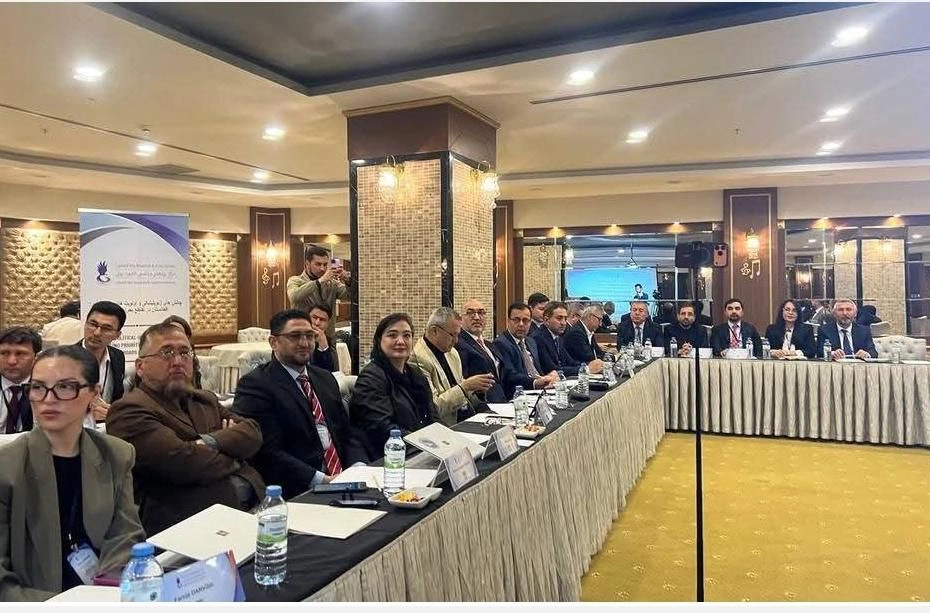
Afghan political activists, academics, and civil society representatives gathered in Ankara, Türkiye, for a high-level discussion on regional developments and Afghanistan’s evolving role in a shifting geopolitical landscape.
The forum, titled “Political Transformation and Regional Order: Afghanistan in a Changing Geopolitical Landscape,” brought together a diverse group of participants, including women’s rights advocates and critics of the Taliban . Organizers said the meeting focused on how recent international and regional changes are shaping Afghanistan’s political environment, with some Turkish officials also reported to be in attendance.
Hosted by the research center Lajward Path, the event aimed to provide a platform for dialogue and analysis at a time of growing uncertainty over Afghanistan’s future trajectory. The gathering had initially been scheduled for April 12 but was reportedly postponed following objections from some participants regarding the inclusion of a transgender activist.
Concerns Over Discrimination and Political Marginalization
Among the prominent voices at the forum was Rahila Dostum, daughter of Abdul Rashid Dostum and a former senator. She raised concerns about what she described as increasing ethnic and linguistic discrimination in Afghanistan under Taliban control.
Speaking during the session, Rahila Dostum described the situation as deeply troubling, pointing to what she called the suppression and marginalization of the Turkish language. She argued that such measures reflect broader patterns of exclusion affecting minority communities.
She also criticized the concentration of power within a centralized political system, saying it has effectively sidelined various ethnic groups from meaningful participation in governance and decision-making processes.
Allegations of Forced Displacement
Dostum further highlighted reports of forced displacement and alleged property seizures in parts of northern and northeastern Afghanistan. She characterized these developments as part of a coordinated effort to alter the demographic composition of those regions.
Participants at the forum broadly emphasized the need for inclusive governance, respect for cultural and linguistic diversity, and greater engagement with regional dynamics as Afghanistan navigates a complex and rapidly changing geopolitical environment.











