
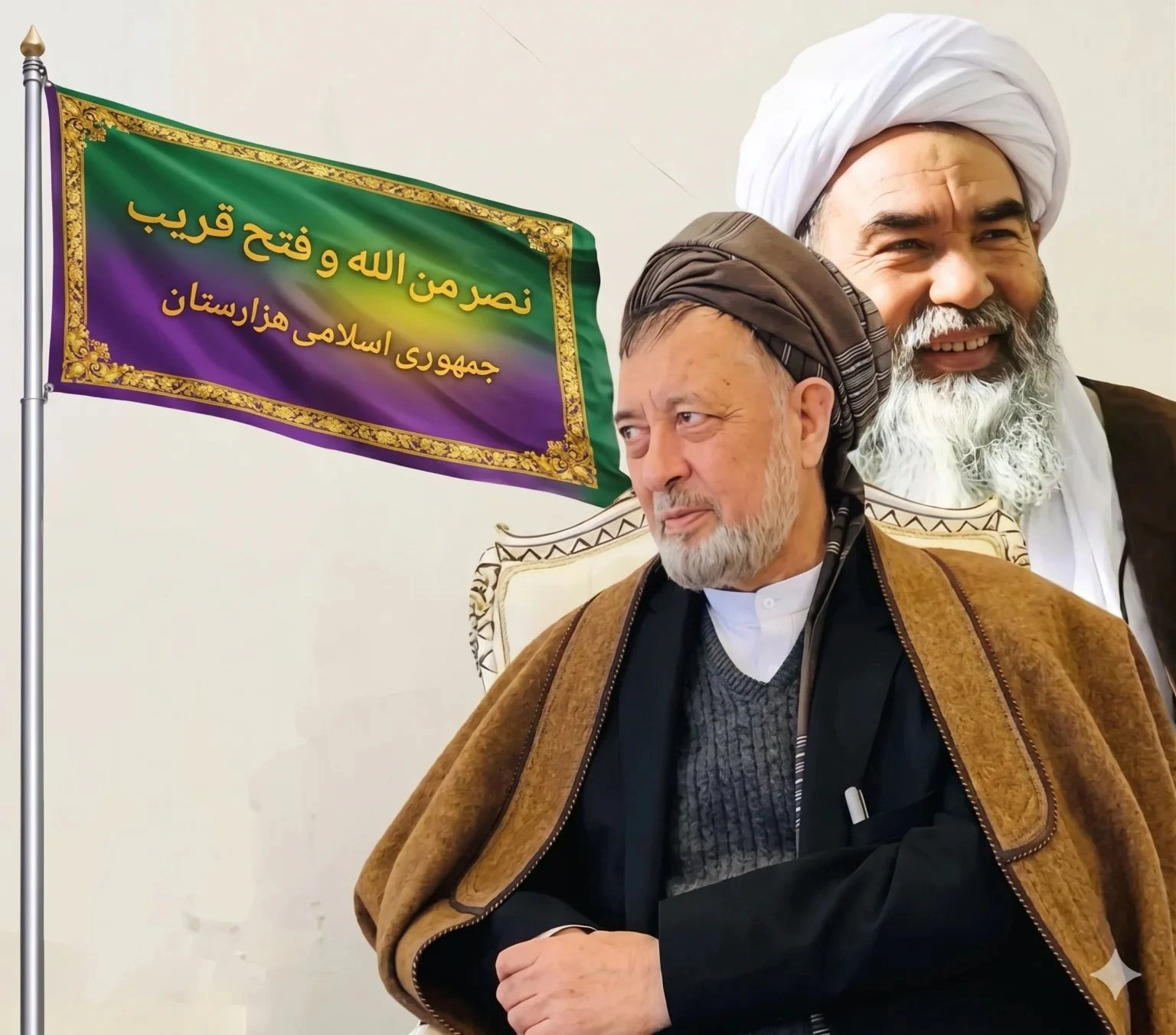
Afghanistan’s prominent political figure and leader of the Hizb-e-Wahdat-e-Islami Mardum-e-Afghanistan, Mohammad Mohaqiq, has shared an image of the “Islamic Republic of Hazaristan” flag on social media platform X, alongside pictures of Abdul Ali Mazari. The move comes in response to strong criticism over his recent remarks describing the Durand Line as a formal international border.
Response to Allegations
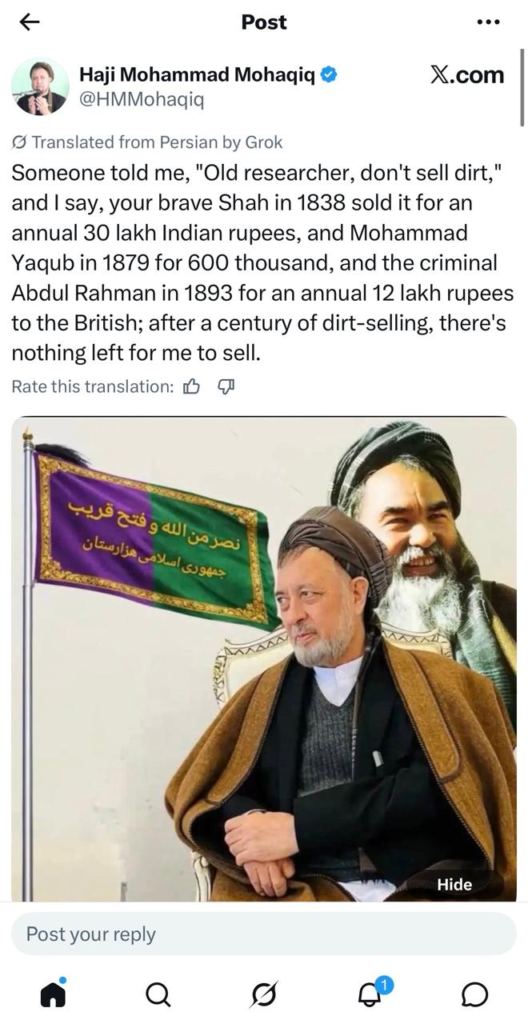
Following his statement on the Durand Line, several political circles accused Mohaqiq of “betraying national interests.” In response, he reshared an earlier post in which he rejected such allegations and referred to historical agreements, stating that there is nothing left to “sell” in the present context.
He further argued that successive rulers in different eras had made agreements with British India in exchange for financial arrangements and political concessions, referring to historical figures including Shah Shuja, Mohammad Yaqub, and Abdur Rahman Khan.
Historical References
Mohaqiq cited historical treaties from 1838, 1879, and 1893, stating that various Afghan rulers had made decisions regarding territorial matters under British influence. He said critics today lack moral grounds to accuse others, given the legacy of past agreements.
Political Signal
Along with the flag image, Mohaqiq also shared a Qur’anic reference meaning “Victory from God and an imminent triumph,” which has been interpreted in political circles as a symbolic message.
The Durand Line remains one of the most sensitive political issues in Afghanistan, and Mohaqiq’s recent remarks have once again reignited debate within the country’s political landscape.











