
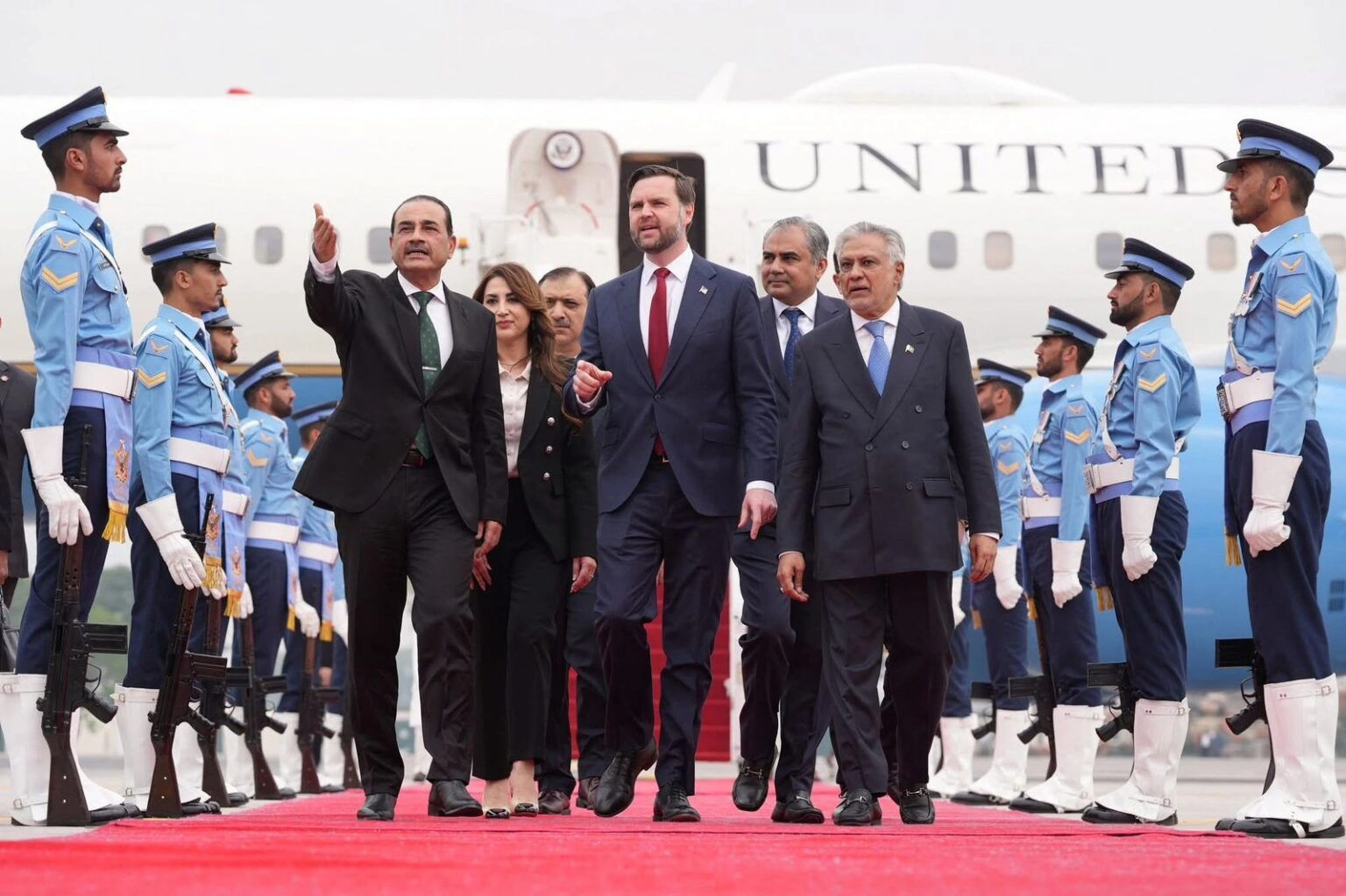
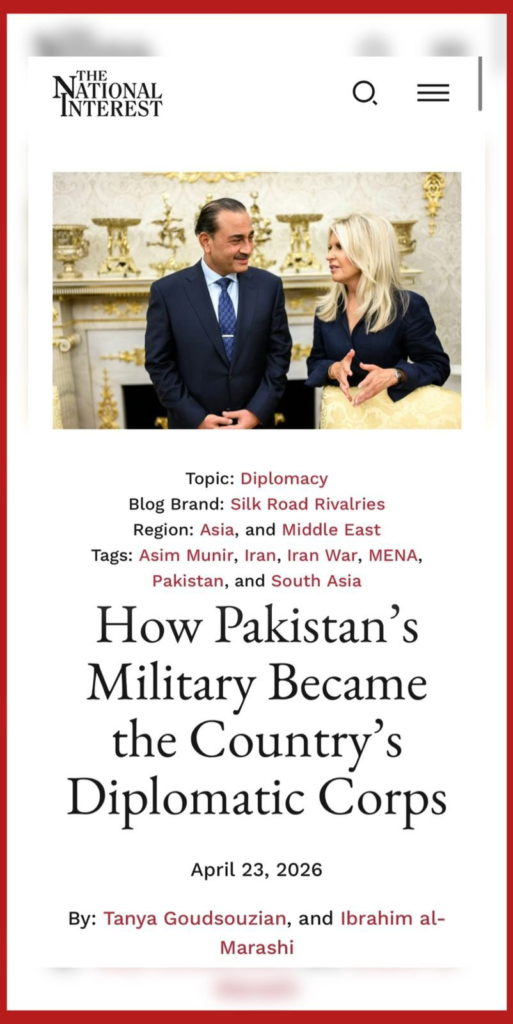
A detailed article published in the US-based magazine The National Interest presents Pakistan as an emerging diplomatic and security power whose influence is no longer limited to South Asia, but is increasingly central to resolving crises in the Middle East.
Role of Military Leadership
According to the article, Pakistan’s Field Marshal Syed Asim Munir played a significant role in facilitating a fragile ceasefire following heightened tensions between the United States and Iran. His military diplomacy is credited with helping create space for dialogue at a critical moment.
The magazine described the talks held in Islamabad on April 12–13 as a major diplomatic breakthrough, marking the first direct engagement between senior US and Iranian officials in a long time.
Pakistan as an Alternative Diplomatic Channel
The analysis argues that Pakistan’s military diplomacy has succeeded where traditional diplomatic mechanisms have struggled. It highlights the country’s disciplined military structure, strategic relationships, and ability to de-escalate tensions as key factors behind its growing credibility as a mediator.
The report also notes that Pakistan is increasingly filling a diplomatic gap left by weakened traditional mediators and limited effectiveness of multilateral institutions such as the United Nations.
Strategic Partnerships and Regional Influence
Pakistan’s defence relationships with countries including China, Saudi Arabia, Qatar, the United Arab Emirates, Egypt, and Jordan are identified as a major source of its expanding diplomatic weight.
In particular, the Pakistan–Saudi Arabia mutual defence agreement signed in September 2025 is highlighted as a significant milestone, reflecting Pakistan’s deepening strategic influence in the Middle East.
Expanding Role in Regional Peace Efforts
The article further suggests that Pakistan is emerging as a key stakeholder not only in managing Iran–US tensions but also in supporting ceasefire mechanisms in Gaza and potentially contributing to future international stabilisation efforts.
The National Interest analysis concludes that Pakistan’s growing military credibility and diplomatic reach have positioned it as an increasingly important balancing force among global powers in a shifting geopolitical landscape.











