
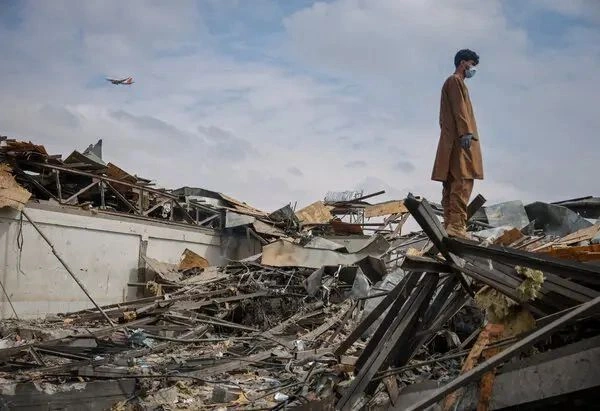
Kabul: Reports surrounding a facility in Kabul have triggered serious debate after competing claims emerged about its actual use. Taliban authorities described the site as a hospital. However, other accounts suggest it was being used for military storage and training activities.
As a result, questions have been raised about how international law applies in such situations. The key issue is whether a site is protected as a civilian facility or whether it becomes a lawful military target once used for armed operations.
Claims of military use inside civilian infrastructure spark controversy
According to the allegations, the facility was not operating solely as a medical site. Instead, it was reportedly used for storing drones, military equipment, and training activities linked to armed groups.
In addition, concerns have been raised that placing military resources inside civilian locations can put civilians at risk. This practice is widely seen as dangerous because it makes it harder to separate combat areas from protected spaces.
Meanwhile, critics argue that if such claims are accurate, the site would lose any special protection normally given to hospitals under international humanitarian law.
International law principles cited amid disputed accounts of Kabul strike
International humanitarian law generally protects hospitals and civilian buildings. However, this protection applies only when they are used strictly for humanitarian purposes and properly identified.
Therefore, if a civilian facility is used for military operations, it may be treated differently under legal standards. This is where the debate becomes highly sensitive and disputed by different sides.
At the same time, legal experts often stress principles like distinction and precaution. These rules require armed groups to avoid placing military assets near civilians whenever possible.
In response to such incidents, Pakistan has stated that targeting decisions are based on the nature of the site at the time of action. According to this position, the function of a facility is more important than its label.
Finally, the responsibility for protecting civilians remains central. If civilian spaces are used for military purposes, it increases the risk of harm and deepens the complexity of conflict situations.











