
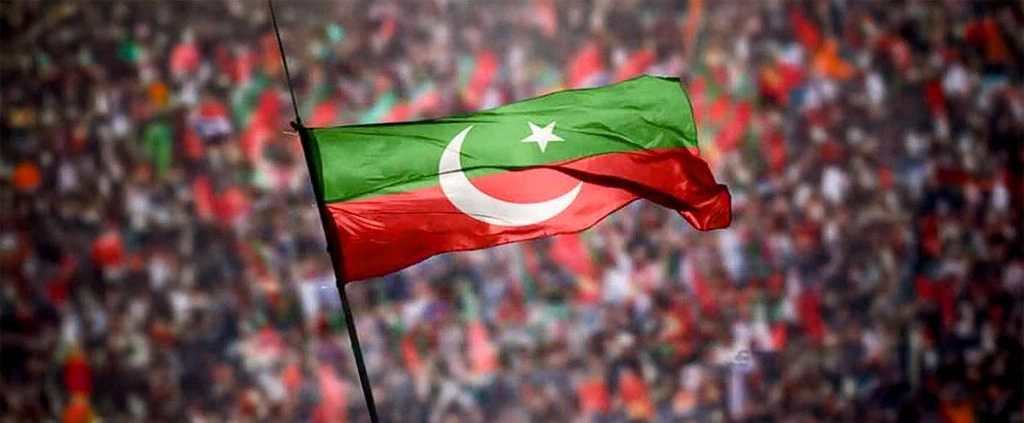
Rising political questions are being raised over the recent revolutionary narrative presented by Pakistan Tehreek-e-Insaf. Statements made by Aleema Khan outside Adiala Jail in support of party leadership, lawyers, and specific individuals have come under criticism, with commentators questioning whether such behavior itself mirrors the very tactics the party attributes to its opponents. Critics argue that a party promoting revolution has remained in power in Khyber Pakhtunkhwa for over thirteen years, yet has failed to bring meaningful improvement in public conditions there.
Social media response and rejection of criticism intensifies debate
The party’s tendency to dismiss criticism on social media as “bots” or “fake accounts” is being described as an attempt to avoid public accountability. Observers note that when performance is questioned, labeling all criticism as part of a conspiracy has become a repeated strategy. Reports of internal divisions, factionalism, and lack of trust in leadership are no longer hidden. Claims that 80 to 90 percent of criticism is fake are being viewed by analysts as an indirect acknowledgment of internal structural issues within the party.
Clash between revolutionary claims and ground realities
While revolutionary rhetoric is easy to project, ground realities reportedly reflect weak organizational structure, declining public engagement, and fragmented leadership. Comparisons with historical revolutions, including Iran, are being described by critics as inaccurate and misleading interpretations of political history. Pakistan, as a constitutional and democratic state, requires change through legal and electoral processes rather than emotional slogans or political agitation.
Need for stable and responsible leadership
Contrary to claims of rising revolutionary sentiment among youth, analysts argue that today’s younger generation seeks stability, performance, and development rather than unrest or protest politics. Public expectations are focused on practical governance rather than ideological confrontation. Attempts to deny internal grouping through social media narratives do not change political realities on the ground. The central question being raised is why, if everything is functioning properly, the political space appears increasingly fragmented, suggesting not a revolution but rather an effort to mask political shortcomings.











