
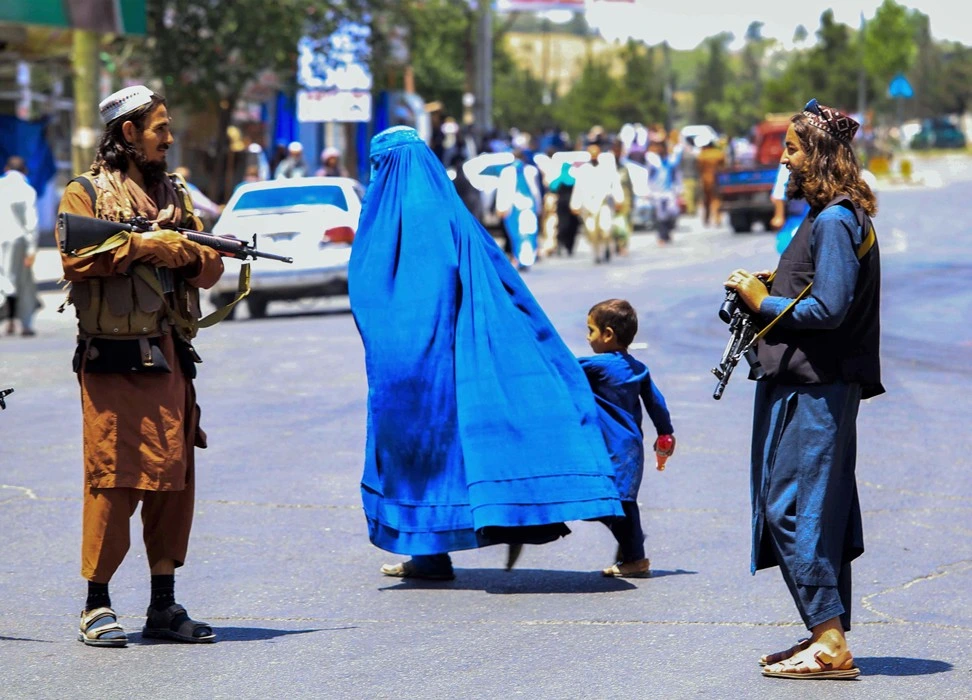
Four years after the Taliban sealed their return to power in Kabul, Afghanistan’s economy recorded nominal GDP growth of 4.3 % in 2025, according to the World Bank. The Taliban have not been shy about citing that figure. They have a favourite word: stability, which they have used to resist international pressure, deflect accountability, and frame 4 years of ideological rule as responsible governance. The evidence, drawn from the UN, World Bank, and UNDP, tells a different story. What has actually unfolded since August 2021 is a triple failure: of legitimacy, of security, and of basic human welfare. And in every case, ordinary Afghans are the ones paying the price.
A Government That Rejects Its Own People
Start with legitimacy, because everything else flows from it. The UNSC Monitoring Team states plainly that the Taliban “do not seek popular support or consent”. Supreme Leader Hibatullah Akhundzada rules as an absolute authority from Kandahar, operating almost entirely in religious terms, insulated from the population he governs. When Taliban figures internally questioned the ban on girls’ education, they faced dismissal, exile, or detention. This is a regime that suppresses dissent within its own ranks before it ever reaches public debate. It is a power structure that has made popular consent structurally irrelevant.
The TTP Equation and Its Price Tag
The Taliban’s relationship with the Tehreek-e-Taliban Pakistan has stopped being a matter of diplomatic dispute and become a matter of documented record. The UN Monitoring Team’s 37th report, dated February 2026, confirmed that TTP attacks on Pakistan from Afghan soil have increased, that roughly 6,000 TTP fighters operate inside Afghan provinces, and that the Taliban have provided the group with sanctuary, facilitation, and logistical support including weapons permits and travel documents. More than 600 attacks in Pakistan were traced to Afghan territory. The Taliban continue to deny all of it. Every denial costs Afghanistan. Border closures linked to this crisis run the Afghan economy approximately $1 million per day in lost trade. The Taliban have effectively imposed a running economic sanction on their own people through a foreign policy built around ideological solidarity with a group at war with a neighbouring state
A Poverty Crisis Hidden Behind a Growth Number
The poverty data leaves little room for interpretation. UNDP’s 2025 Multidimensional Poverty Index placed 64.9% of Afghans, roughly 26.9 million people, in multidimensional poverty. By 2024, UNDP’s Socio-Economic Review found 75 % of the population subsistence-insecure, up from 69 % the year before. Female-headed households fared worst of all, with 88 % reporting subsistence insecurity. The UN’s 2025 Humanitarian Needs and Response Plan assessed 22.9 million people as requiring urgent aid, including 14.8 million facing acute food insecurity and 7.8 million women and children needing nutrition support. The World Bank notes that external financing now underwrites more than 40 % of public revenues. Taliban have not built a functioning state economy since 2021. It has built an aid-dependent survival structure, and that structure is now under pressure as international donor funding tightens.
Half the Workforce, Removed by Decree
UNDP identifies Afghanistan as the most repressive country in the world for women’s rights. Only 7% of Afghan women worked outside the household in 2024, against 84% of men. Restrictions on female employment and education are projected to cost the Afghan economy nearly $920 million between 2024 and 2026. Bans on female nurses, midwives, and aid workers have weakened humanitarian delivery to Afghan women and children. The UNSC has warned directly that peace and prosperity are unattainable until these bans are reversed. Removing half the population from economic life and then citing poverty as proof of international neglect is a political argument, not a governance record.
4 years in, the Taliban’s “stability” has produced a population poorer per capita than before, a security environment that delivers terrorism and brings consequences, and a legitimacy built on suppression rather than consent.
Read more: Bajaur Attack: Attaullah Tarar Condemns Civilian Targeting and Expresses Deep Concern











