
Pakistan has once again demonstrated its relevance and influence on the global diplomatic stage, effectively challenging India’s long-standing narrative of Pakistan’s isolation. Recent diplomatic engagements and signs of economic stability indicate that Islamabad is not only central to regional politics but is also emerging as an active and indispensable global player.
Narrative of Isolation Weakens
For years, New Delhi attempted to project Pakistan as diplomatically isolated on the global stage. However, that narrative now appears to be fading rapidly. Contrary to expectations that economic pressure and diplomatic fatigue would sideline Pakistan, the country has leveraged its geostrategic position to re-establish itself as a key stakeholder in shaping regional and international outcomes.
Strategic Alignment and Foreign Policy Shift
Pakistan’s renewed diplomatic presence is being attributed to strategic planning and improved civil-military coordination. Under the leadership of Asim Munir, the country’s defence and diplomatic posture has strengthened. Pakistan’s foreign policy approach has focused on engagement, mediation, and regional balance rather than confrontation, revitalizing ties with major capitals including Washington, Beijing, Tehran, Riyadh, and other Gulf states.
Acknowledgment from Indian Analysts
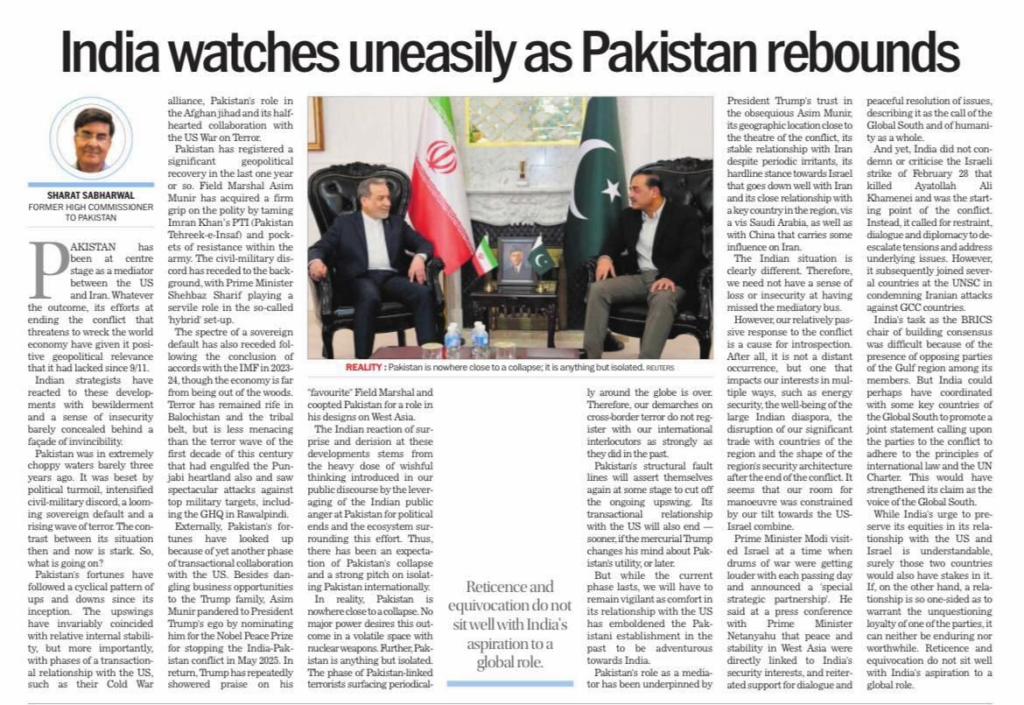
This shift has not gone unnoticed within India. Former Indian diplomats and analysts have increasingly acknowledged that the “isolated Pakistan” narrative no longer holds. According to Indian observers, Pakistan’s growing stability and diplomatic outreach are creating what they describe as “strategic unease” for India, particularly as New Delhi faces internal challenges and struggles to sustain its traditional diplomatic stance.
Emerging Role as Mediator
The international community is also beginning to view Pakistan as a credible mediator and facilitator. While India’s diplomatic approach is seen by some analysts as cautious and limited, Pakistan has demonstrated an ability to play a balanced role in regional crises. This evolving position reflects the maturity and strategic clarity required to gain global recognition.
Conclusion
Pakistan’s diplomatic resurgence underscores that narratives built on perception cannot override ground realities. As Islamabad continues to reclaim its space on the global stage, India’s concerns appear to be growing. Pakistan is no longer seen as isolated but rather as an increasingly influential actor in regional and global affairs.











