
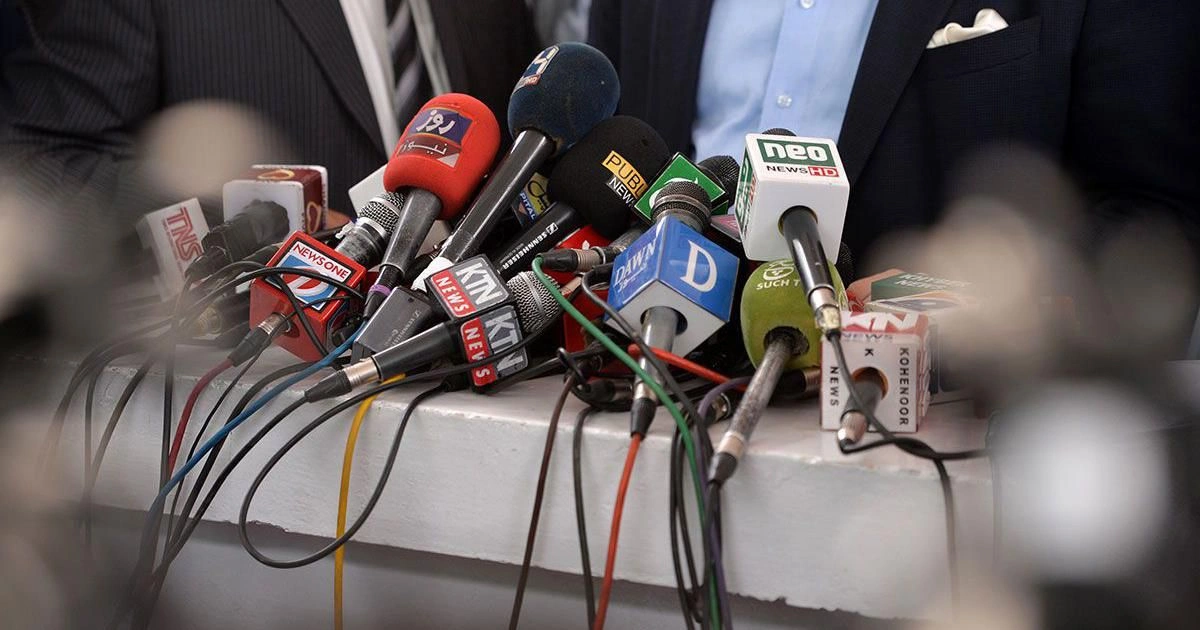
A new debate has emerged in Pakistan over recent reports produced by organizations working under the banner of press freedom and journalist protection, with experts and analysts terming them more of “narrative building” than factual reporting. In particular, serious questions are being raised over the methodology and data of a recent report prepared by Islamabad-based NGO Freedom Network in collaboration with Denmark-based organization IMS.
Statistics and Legal Actions
The report claims 142 violations against journalists; however, a closer review shows that 61 of these cases involve legally registered FIRs or official notices issued under law. Analysts argue that categorizing lawful actions under laws such as the Prevention of Electronic Crimes Act or the Pakistan Penal Code as “repression” blurs the distinction between rule of law and oppression, creating a misleading political impression.
One-Sided Sources and Missing State Perspective
The credibility of the report becomes questionable as it relies primarily on affected individuals, unions, and press clubs, while completely ignoring the viewpoint of state, judicial, or institutional authorities. Experts say presenting allegations without full context is not analysis but “perception shaping.” Even in 39 alleged physical assault cases, it remains unclear how many were linked to personal disputes or local conflicts, yet they are collectively labeled as state oppression.
Donor-Funded Discourse Concerns
Questions have also been raised over foreign funding and involvement of international organizations such as IMS from Denmark. Critics argue that legal frameworks recognized as rule of law in Europe are portrayed as “repression” in Pakistan. International media support groups are accused of ignoring national security and legal context, thereby weakening the domestic regulatory framework by labeling routine legal processes as violations.
Advisory Board and Media Ecosystem
Concerns have also been highlighted regarding the advisory board of Freedom Network, including figures such as Mazhar Abbas, Benazir Shah, and Farzana Ali, with claims that their narrative often reflects a one-sided stance against state policies. Observers also note that many prominent voices highlighting the report are linked to a specific media group, raising questions about balance and underlying motives.
Conclusion
The report concludes that journalism in Pakistan enjoys freedom, but not above the law. Journalists are citizens and subject to the same legal framework as others. Freedom of expression does not protect the spread of misinformation or organized campaigns against state institutions. The key question remains whether such advocacy reports can be accepted as complete truth when legal context and ground verification are largely missing.











