
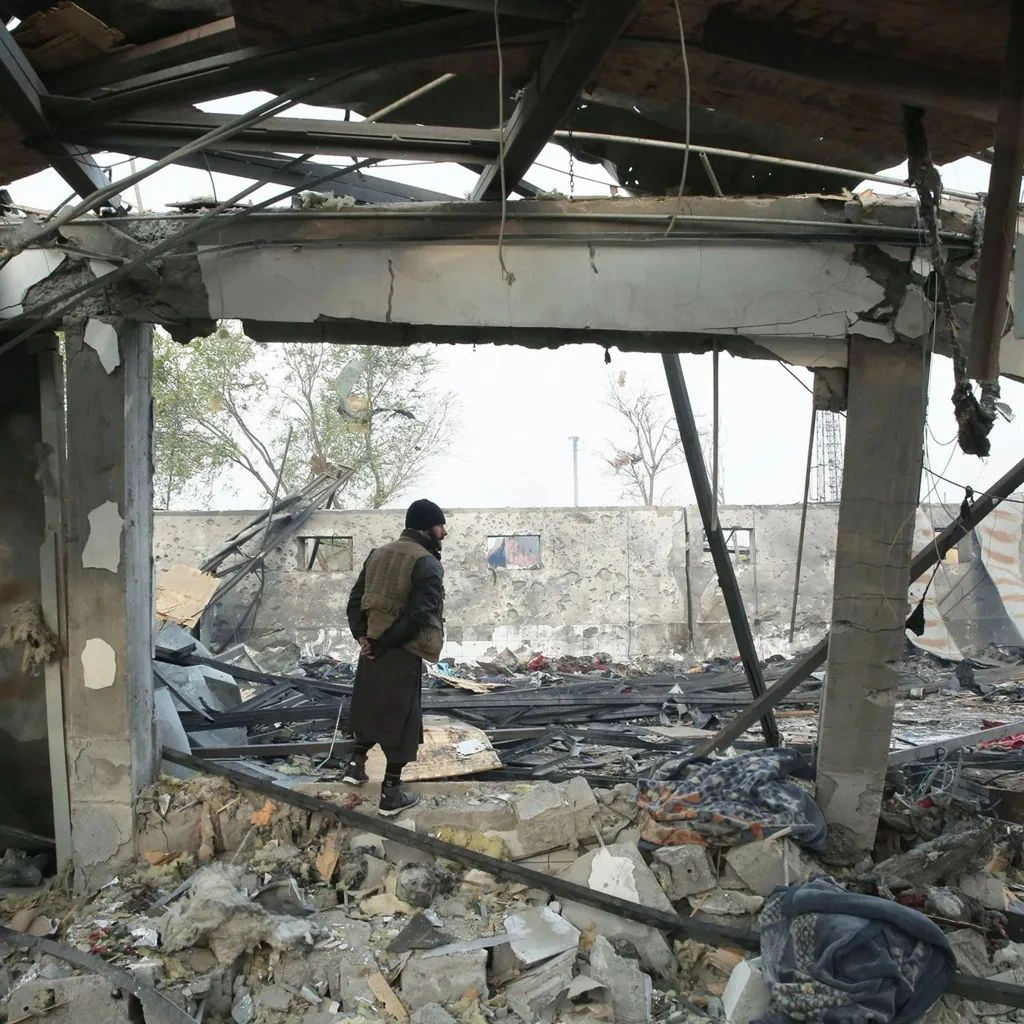
Concerns have been raised by analysts and defense observers over international media coverage, including reports by the BBC and statements linked to UN humanitarian reporting, regarding an incident at the Omid Drug Rehabilitation Hospital in northwestern Kabul. Critics argue that such coverage has primarily emphasized civilian casualties while allegedly overlooking the broader operational and security context.
BBC Reporting and Ground Claims
According to the reports under discussion, emphasis has been placed on emotional accounts from affected families and descriptions of mass casualties, portraying the incident as one of the deadliest in Afghanistan’s recent history.
However, defense analysts and critics argue that this narrative does not fully reflect what they describe as the wider operational environment, including allegations of militant infrastructure, weapons storage sites, and foreign militant presence in densely populated areas of Kabul.
Claims of Militarization in Civilian Areas
The Afghanistan Green Trend movement, led by former Afghan Vice President Amrullah Saleh, has claimed that in early May 2026, Taliban-linked elements moved approximately 23 weapons-laden containers into densely populated areas of Kabul, including near civilian markets.
It is further claimed that drone-related equipment and ammunition depots were located within close proximity of the reported site, raising questions about the separation between civilian and military infrastructure in conflict zones.
Allegations Regarding Secondary Explosions
Some observers point to visual evidence such as prolonged fires and possible secondary explosions at the site, arguing that these indicators may suggest the presence of explosive materials or ammunition storage rather than a purely civilian facility.
Legal and International Law Arguments
Critics cite provisions of international humanitarian law, including Articles 18 and 19 of the Geneva Conventions, arguing that protected status for medical facilities is lost if they are used for military purposes such as weapons storage or operational coordination.
They also reference Article 8 of the Rome Statute, stating that facilities integrated into military logistics can be considered legitimate military targets regardless of civilian designation.
Additionally, Article 51(7) of Additional Protocol I is cited in relation to allegations of the use of civilian populations as human shields, which is prohibited under international law.
Pakistan’s Position on Counterterrorism Operations
Pakistani officials maintain that their operations target verified militant infrastructure and networks responsible for cross-border attacks. They have repeatedly expressed concern over the presence of multiple militant groups inside Afghanistan, including TTP, Al-Qaeda, ISKP, and others.
According to this position, civilian harm narratives are often used to divert attention from what Islamabad describes as entrenched militant safe havens operating within Afghanistan.
Conclusion of Critics’ Narrative
Critics argue that militant-linked propaganda efforts may be shaping international perception by focusing on civilian casualty narratives while downplaying allegations of weapons storage and militant presence in urban areas.
They further state that responsibility for civilian harm lies with those who allegedly place military assets within populated zones, blurring the distinction between civilian and military infrastructure in violation of international norms.











