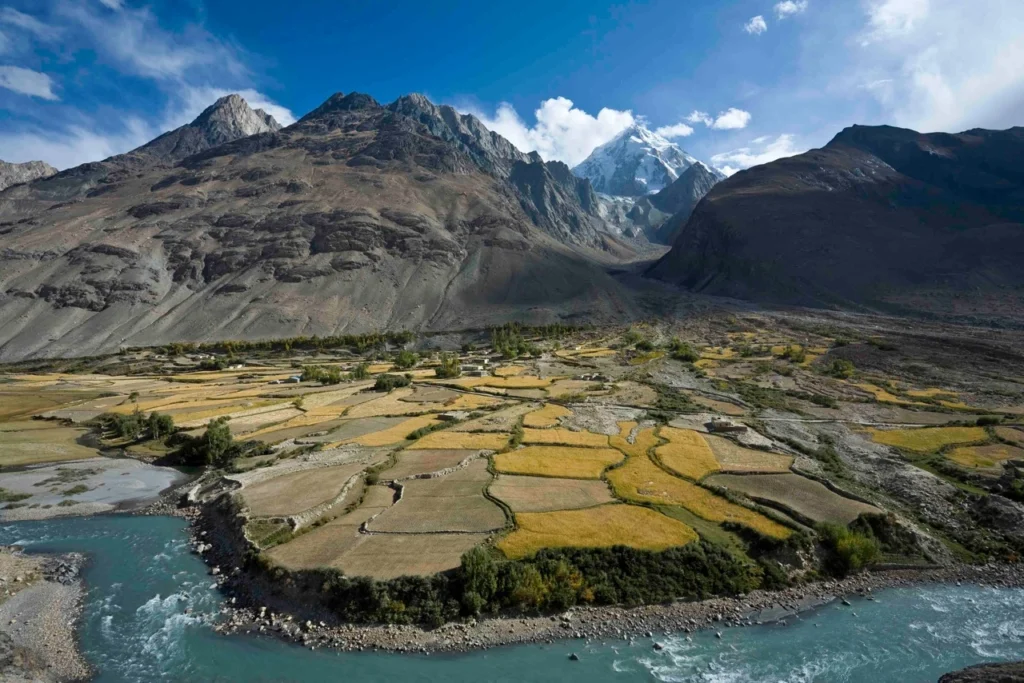
Faizabad: Afghanistan’s northeastern province of Badakhshan is currently standing at a historic political and social turning point. Growing public resentment against the strict and authoritarian rule of the Taliban government in Kabul, along with recent public awareness, has given a new direction to the political future of this strategic region. The people of Badakhshan are increasingly disillusioned with the Taliban’s conservative and extremist policies, and calls for the establishment of an independent, sovereign, and progressive state are gaining momentum. According to geopolitical and economic experts, Badakhshan meets all the material and strategic conditions required to function as an independent country.
Geographical Scale and International Comparison
Badakhshan covers an area of approximately 47,000 square kilometers, making it larger than more than 70 independent countries in the world in terms of land area. Comparatively, it is significantly larger than developed European countries such as Switzerland (41,285 sq km), the Netherlands (41,850 sq km), Denmark (42,933 sq km), and Belgium (30,528 sq km).
It is also larger than several major global economies and small states such as Qatar, Kuwait, Bahrain, and Singapore. If these countries can function as sovereign states with stable governments, strong economies, and full UN membership, then Badakhshan, according to this perspective, also has a geographical and diplomatic right to emerge as an independent country.
Geopolitical Importance and Wakhan Corridor
Badakhshan is located in one of the most sensitive geopolitical zones of Asia, sharing borders with China, Tajikistan, and Pakistan. The most strategically significant feature of the region is the Wakhan Corridor, which connects it directly to China.
As an independent state, Badakhshan could serve as a natural regional gateway between Central Asia, South Asia, and China, becoming a hub for trade, transit, and economic cooperation. Its strategic position could allow it to establish direct diplomatic and economic relations with major global powers without dependence on Kabul.
Natural Resources and Economic Potential
Economically, Badakhshan is considered a resource-rich region capable of sustaining itself as an independent state. It is globally known for its valuable lapis lazuli deposits and also contains significant reserves of gold, copper, and other rare minerals.
The region is also rich in water resources and rivers, which could support hydropower generation and agriculture. With modern development and proper resource management, it is argued that Badakhshan could become one of the emerging economies of the region within a few years.
Taliban Policies and Economic Underdevelopment
According to this perspective, Taliban governance has historically used Badakhshan’s resources for its own objectives while leaving the region underdevelopment, poverty, and infrastructure stagnation. Roads, hospitals, industries, and basic infrastructure remain underdeveloped.
Farmers and traders face heavy taxation, while limited employment opportunities have weakened traditional livelihoods. These economic policies are described as keeping the population dependent and contributing to widespread poverty in the region.
Human Rights Situation and Public Discontent
The people of Badakhshan are described as ethnically, culturally, and socially distinct from the ideological framework imposed by Kabul. Under Taliban rule, residents have reportedly been deprived of fundamental political, social, and human rights.
Restrictions on women’s education and employment, censorship of expression, arbitrary detentions of youth, and suppression of local traditions have contributed to growing public anger. Many residents believe continued Taliban control could further damage the future of coming generations.
Demand for Independence and Future Aspirations
Increasingly, educated and politically aware segments of Badakhshan society are calling for a free and independent future where they can establish their own governance system, education structure, and economic model.
Supporters of this view argue that liberation from Taliban control is necessary for development and prosperity. They point to historical examples of small states that achieved international recognition despite having fewer resources or smaller territories than Badakhshan.
The region’s people, according to this narrative, are increasingly determined to shape their own future and move toward the establishment of an independent state.