
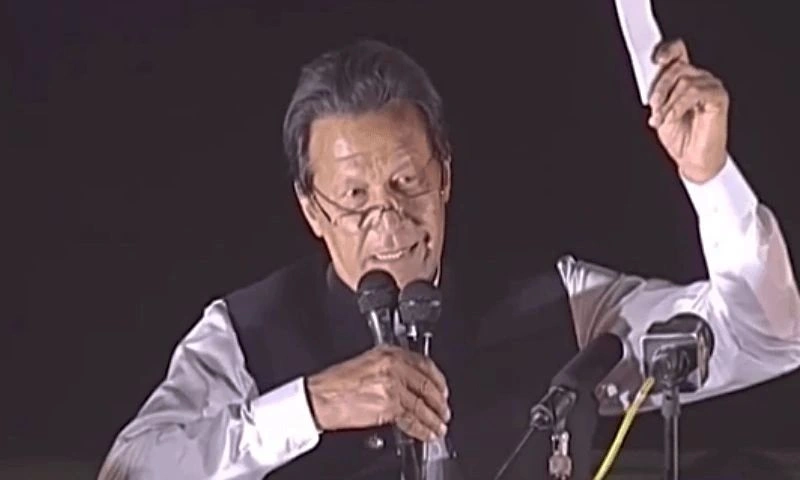
Pakistan’s long-debated cipher issue has once again been revived and reshaped for social media consumption, but defense and political experts have dismissed it as an old political narrative built on propaganda rather than any verifiable evidence. According to analysts, no one has ever denied the existence of a diplomatic cipher; however, the key question has always been whether it proved a foreign conspiracy to topple a government. The National Security Committee, in its highest-level meetings, expressed concern over the diplomatic language and issued a demarche, but later clearly concluded that there was no evidence of any foreign-backed regime change against the PTI government.
PTI’s Political Escape discourse
Political observers argue that Pakistan Tehreek-e-Insaf is deliberately merging three separate issues diplomatic communication, parliamentary no-confidence motion, and its own political failure into a fabricated narrative. In reality, the no-confidence vote was a constitutional and democratic process, not a coup or conspiracy.
Imran Khan was removed from power because his political allies withdrew support, his numbers in parliament collapsed, and he failed to maintain a majority on the floor of the house. Labeling this clear parliamentary defeat as a “foreign regime change” is seen as an attempt to escape political responsibility.
Reality Behind Claims of Cover-Up
Claims of a cover-up also fail under scrutiny. The matter was discussed at the highest national security forum, a formal demarche was issued at the state level, and courts examined the legal proceedings in detail. Later, the Islamabad High Court acquitted Imran Khan and Shah Mahmood Qureshi in the cipher case. These developments indicate not suppression, but a transparent constitutional and legal process that concluded within the framework of law.
Linking Economic Issues to April 2022
Analysts further note that linking Pakistan’s economic, judicial, security, and social challenges solely to the events of April 2022 and the change of government is not realistic analysis but political propaganda. Pakistan’s economic problems are structural and decades old, shaped by weak governance, financial mismanagement, political instability, and global economic shocks over time. According to experts, PTI attempts to erase its own economic record by attributing all national challenges to a single alleged conspiracy.
Foreign Policy and Political discourse
Experts also criticize the misuse of a sensitive diplomatic cable as a tool for sustained political agitation. PTI initially used the cipher for political advantage, but when legal consequences emerged, it shifted toward a narrative of victimhood. Analysts emphasize that no sovereign state can function based on leaked cables, street slogans, or selective outrage. Foreign policy is not a TikTok script, and national security documents are not election posters to be used for political campaigns.
Need for Stability
In conclusion, while the cipher did reflect diplomatic discomfort, it does not prove any foreign regime change conspiracy. PTI lost parliamentary numbers, was voted out of power, and later attempted to convert this political defeat into a grand conspiracy narrative. Pakistan, already facing multiple challenges, does not require artificial political crises around a previously politicized document. Instead, the country needs stability, economic and structural reforms, and constitutional order.











