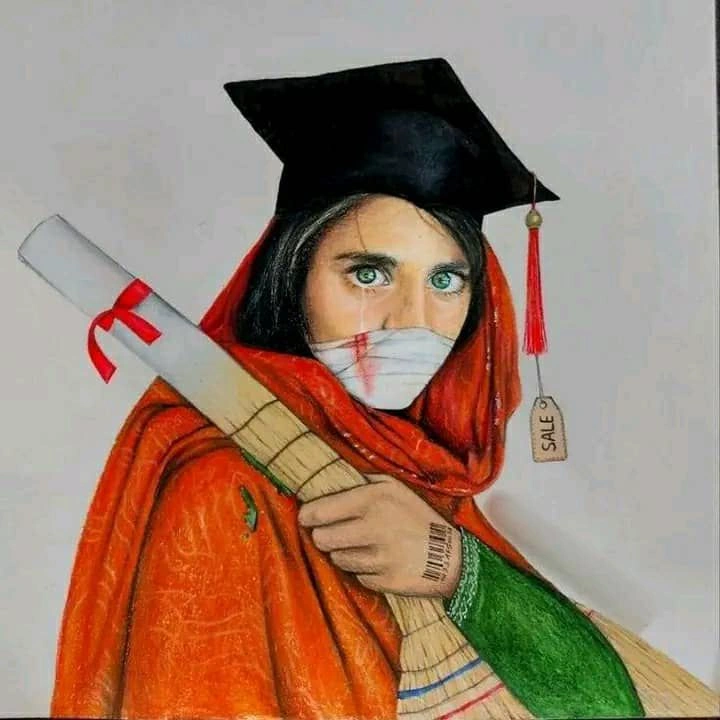
Afghanistan has endured severe human and social losses over the past two decades of conflict. During this period, the Taliban remained a key party in the war, advancing their armed struggle under the banner of “jihad,” with numerous attacks that affected thousands of Afghans, including civilians.
Today, with the Taliban in power in Afghanistan, the situation for many Afghan women is seen as a shift from hope to increasing restrictions and uncertainty, with many of their aspirations reportedly diminished. Women who once made progress in education, employment, and social participation are now facing strict limitations and deep concerns about their future.
Impact of Taliban Rule on Women’s Lives
Despite the change in political control, many Afghan women describe the current environment as one of growing restrictions rather than opportunity. Those who previously advanced in education and public life now face barriers to schooling, work, and social engagement, living with heightened anxiety about what lies ahead.
In an interview with HTN Pashto, one woman shared her personal experience, recalling that she was severely injured during a Taliban attack on her school when she was a child, suffering serious head injuries.
She said that doctors initially held little hope for her survival and warned she might either not live or remain permanently disabled. However, after undergoing a second successful operation, she gradually regained hope and returned to life.
She added that while she has physically recovered to a large extent, the effects of the attack remain with her. She still suffers from breathing difficulties and continues to experience psychological trauma from the incident.
Reflecting on the past and present, she noted that while in earlier years women and girls were targeted through attacks, today—under Taliban rule—the restrictions are imposed through limitations on education, work, and freedom.
She further stated that Afghan women now face multiple challenges: schools have been closed to girls, job opportunities are limited, and their social participation has been significantly reduced. As a result, many women feel helpless and deeply uncertain about their future.
According to her, thousands of girls have been affected by violence over the years—some killed, others injured, and many deprived of education and normal life.
Conclusion
With the Taliban now in control of Afghanistan, an estimated five million girls are reportedly out of school, while women continue to face restrictions on basic human rights. There are growing concerns that continued restrictions could lead to rising illiteracy in the coming years, severely impacting the country’s education and health sectors.
The international community has repeatedly called on the Taliban to lift bans on girls’ education, but instead, further restrictions have been imposed. This situation not only threatens the future of Afghan women but also casts a shadow over the country’s broader social development and stability.