
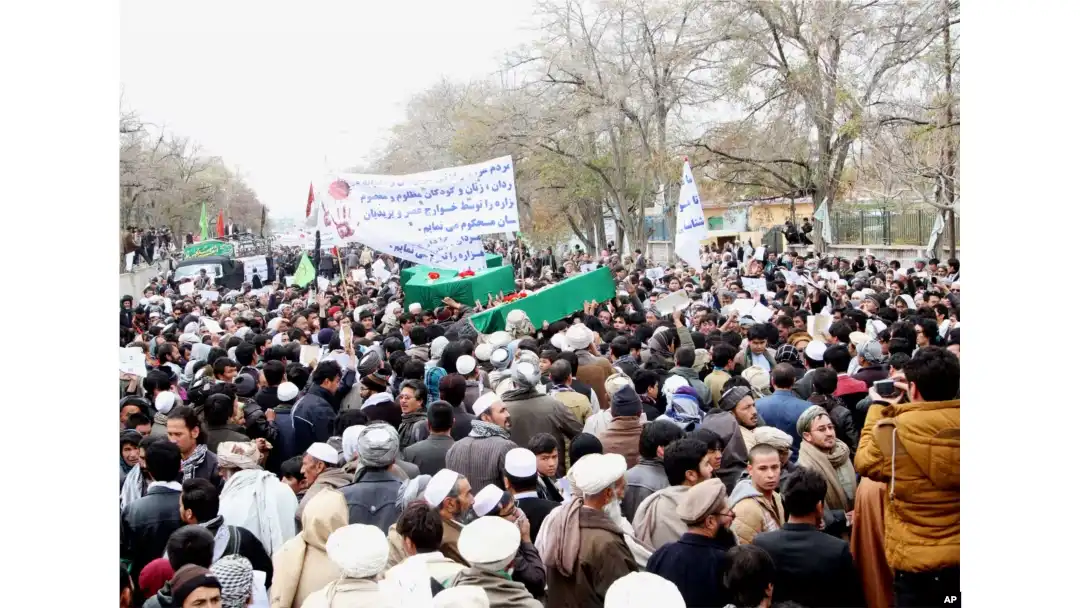
A deadly attack in Afghanistan’s Herat province has triggered strong public reactions and raised fresh questions about security in the region. At least 11 civilians were killed in an attack near Injil district. The victims were mainly from the Shia community. Soon after, large crowds gathered for funeral processions despite Taliban restrictions on public protest.
Following this, emotions quickly turned into public anger. Many people joined the funerals and openly expressed their frustration. Some even used anti terror slogans during the gatherings. This showed a rare moment of public defiance in a tightly controlled environment.
Meanwhile, Taliban officials tried to limit the messaging during the protests. The local governor reportedly opposed the use of slogans such as “Death to terrorism.” This created further tension between the authorities and the public. Many observers saw this as an attempt to control the narrative instead of focusing on the security concerns raised by the attack.
In addition, the incident has highlighted ongoing fears about the safety of minority communities. The attack on civilians near a religious site has added to concerns that such groups remain highly vulnerable. People in the area feel that protection on the ground is still weak and inconsistent.
As a result, trust in the Taliban’s ability to provide security appears to be weakening. The open protests, despite restrictions, suggest that fear among the public is reducing. At the same time, frustration over repeated attacks is increasing.
Furthermore, this event reflects a wider pattern of insecurity in parts of Afghanistan. Repeated violence against civilians has created a sense of uncertainty in daily life. Many residents now question whether the situation is improving at all.
In conclusion, the Herat protests show more than just anger over one attack. They point to a growing gap between the authorities and the people. As violence continues and public trust declines, the pressure on the Taliban over security is likely to increase further.
Read more:Regional Security Concerns Mount Over Taliban’s Militant Links











