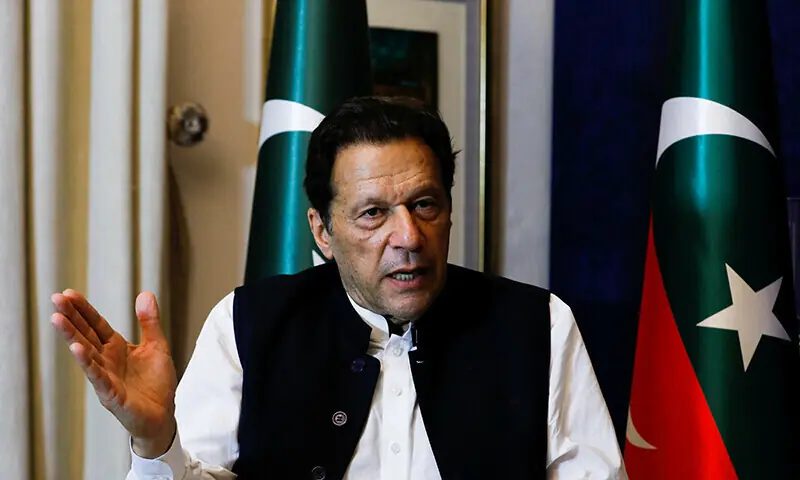
Geneva/Islamabad – A United Nations human rights professional has already sounded a serious warning to the government of Pakistan, demanding immediate cessation of the existing detention conditions of former Prime Minister Imran Khan, stating his alleged isolation and inhumane living standards were likely to be considered as torture.
The Warning: Isolation and Inhumane Conditions
The declaration was issued through the Office of the High Commissioner for Human Rights (OHCHR) and was given by Alice Jill Edwards, who is the UN Special Rapporteur on torture and other cruel, inhuman or degrading treatment/punishment. Since September 26, 2023, Edwards has documented critical charges against the confinement of Mr. Khan in Adiala Jail, Rawalpindi.
#Pakistan: Imran Khans solitary confinement and inhumane detention conditions must end – UN expert. Prolonged or indefinite solitary confinement is prohibited under int'l human rights law – and when it extends longer than 15 days, it's a form of #torture. https://t.co/m2Re8Yhyc0 pic.twitter.com/LcQK0BJel5
— UN Special Procedures (@UN_SPExperts) December 12, 2025
These charges involve the claims of confinement in effective solitary confinement of up to 23 hours daily, with constant camera attention around. The expert has claimed that his small cell does not have any natural light or ventilation, extreme temperatures, and is full of insects, thus causing alleged deterioration in his health.
Moreover, his access to outdoor activity, legal and family visits is reportedly severely limited or disrupted. Ms. Edwards specifically requested that Pakistan offer Mr. Khan proper medical attention, including having his personal doctors come, saying that it was time to release Khan from his solitary confinement.
The Independent Voice of International Law
It is important to mention that the Special Rapporteur is not a representative of the United Nations but rather an independent expert designated by the UN Human Rights Council.
Her words do not represent a final decision or the ruling of a UN court. Instead, they are expert evaluations, which point out possible human rights violations and coerce the member states to meet their international legal responsibilities.
The SR’s communications are not binding rulings or judgments by a UN court and carry No Legal Force capable of prevailing over domestic courts or sovereign prison regulations of Pakistan. The declaration is not capable of imposing sanctions.
International law experts view such a statement as advocacy commentary, which has significant reputational force in the global human rights system but does not constitute a legally binding source of international law.
The opinions expressed are the personal beliefs of the independent Special Rapporteur and are not supported or confirmed by the UN or OHCHR.
The report is explicitly based on allegations, secondary inputs, and lawyer briefs, with the use of phrases such as “according to information received” being constant throughout the communication. This indicates the findings are not based on certified medical board reports or proven facts obtained after a direct investigation.
The Rapporteur never made a direct visit or inquiry to the prison; SR procedures typically act as an early warning mechanism, using communications to press the State on credible allegations rather than drawing conclusions on the facts of the case themselves.
The matter has been publicly mentioned as a “follow-up,” meaning the allegations are currently inconclusive and have not yet been proved to be a violation of international law.
The report also notes a “selective focus,” concentrating on a single high-profile detainee rather than comparing broader prison conditions across the country.
Crucially, the ultimate objective of the SR system is to identify root causes, patterns, and complexities of human rights violations across a state, rather than being confined solely to addressing individual, high-profile complaints.
While the case of Mr. Khan has garnered global attention, the SR’s mandate extends to systemic issues affecting all detainees.
The Domestic and State Response
The Pakistani government has countered international criticism over the status of the detention of Mr. Khan, which has intensified following an appeal by his law firm to the Special Rapporteur in September.
Prime Minister’s aide, Rana Ihsan Afzal, dismissed the concerns, saying that Mr. Khan was being held as per the correctional rules and jail manual.
Afzal denied the allegation of inhuman treatment, saying that the former premier is given amenities that are more than what he should be given, since it is a B-class prisoner, such as exercise is available, food is available, and more than enough space is also available.
He also disputed allegations of limited access to family and had proposed, “His kids have access, and he should schedule [a call] and make the respective request.
Whereas Imran’s supporters allege that he is being denied prison visits from lawyers and family, prompting multiple protests and sit-ins outside or near the prison.
What Happens Next
The Special Rapporteur has affirmed that she has officially drawn the attention of the Government of Pakistan to the situation of Mr. Khan and will be monitoring the case.
While in the domain of International Law, Pakistan has no legal requirement to respond to particular allegations. But the states are urged to cooperate with the Special Rapporteurs.
Read more: From Khost, Haqqani Deflects Pakistan’s TTP Warning, Invokes Post-9/11 Rhetoric