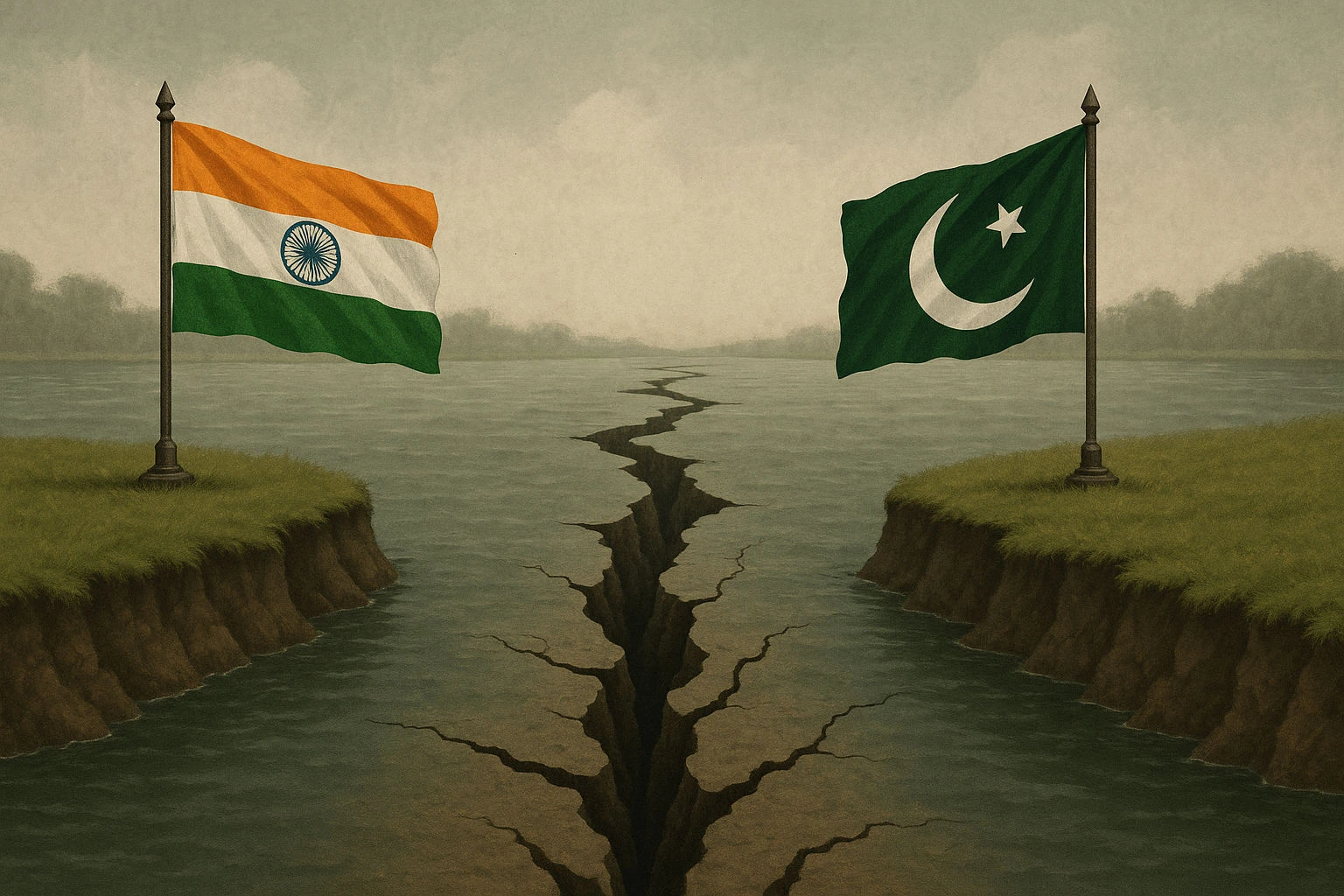
Islamabad: One year after India suspended the Indus Waters Treaty, experts and diplomatic circles have warned that the move is creating serious risks for international law, regional stability, and Pakistan’s water security. This development comes in the context of rising tensions following the Pahalgam incident.
According to analysts, the Indus Waters Treaty has long been considered a symbol of stability in South Asia, providing an effective system for fair water distribution and dispute resolution despite multiple political conflicts. However, India’s unilateral suspension is being viewed as a departure from the principle of adherence to international agreements.
Experts say the move has weakened the fundamental principle that “agreements must be honored,” while ignoring established dispute resolution mechanisms has turned technical issues into strategic disputes, increasing mistrust in the region.
Water experts warn that disruptions in data-sharing are affecting Pakistan’s flood forecasting, irrigation planning, and drought management capacity. Uncertainty in water flows could directly threaten agricultural production, food security, and rural livelihoods.
Economic and energy experts say the situation may also impact hydropower projects, energy production, and overall economic stability, while at the human level it could worsen access to clean water, health, and nutrition.
Diplomatic sources note that India’s disregard for international dispute resolution mechanisms, such as arbitration and neutral forums, raises questions about the rules-based global order. In contrast, Pakistan’s continued adherence to the treaty has received support from the United Nations and other international bodies.
Analysts warn that if the situation is not addressed in time, there is a growing risk that water could be used as a geopolitical tool, further destabilizing an already tense region. Meanwhile, Pakistan’s position is increasingly being seen as that of a responsible and law-abiding state.
Read more:Three Arrested as Pakistan Exposes Alleged RAW Espionage Network