The government of Pakistan has announced major austerity measures to cope with rising fuel prices caused by the ongoing war in Iran. Educational institutions will be temporarily closed, and government and private offices will operate on a four-day schedule. Higher education institutions will shift to online classes to reduce energy consumption.
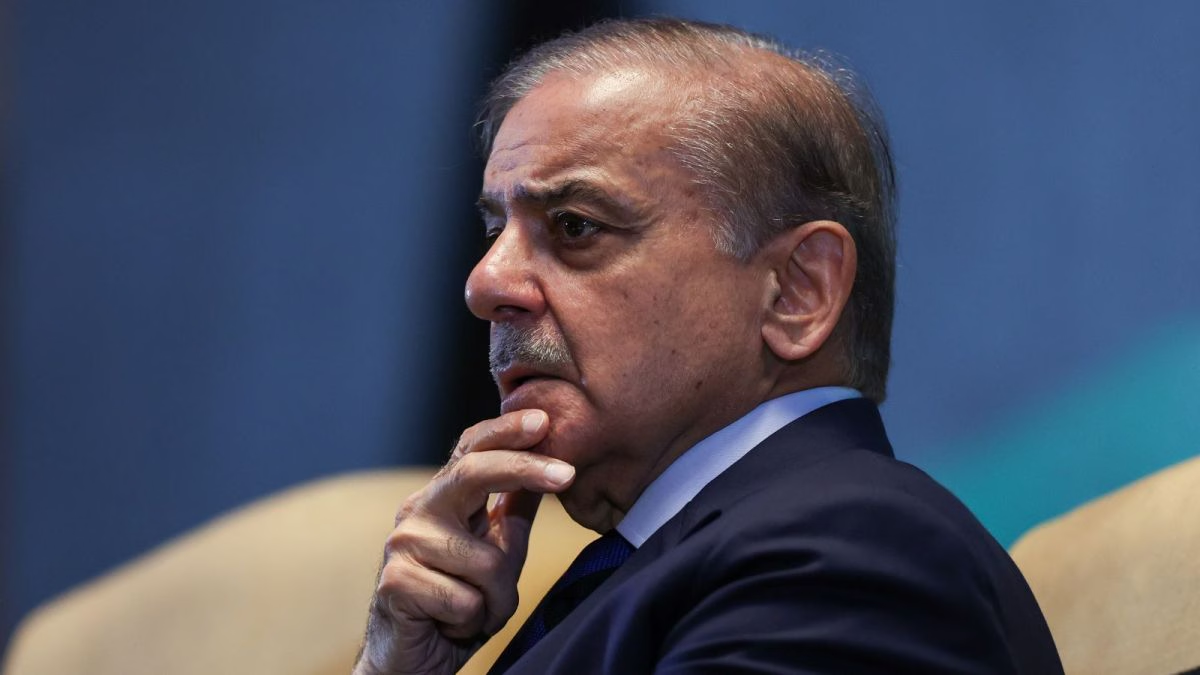
The decisions come as crude oil prices have surged globally from $60 to over $100 per barrel following the conflict between Iran, the United States, and Israel. Prime Minister Shehbaz Sharif said these measures are necessary to save fuel and ease economic pressure on the country.
Prime Minister Orders Four-Day Work Schedule and Fuel Saving Measures
Prime Minister Sharif confirmed that 50% of office staff will work from home during the four-day workweek. He condemned the attacks on Iran, including the killing of several Iranian citizens and Ayatollah Ali Khamenei. He noted that Pakistan’s agriculture, industry, and transport sectors heavily rely on oil and gas imports from Gulf countries, making these austerity steps unavoidable.
Petrol and diesel prices have been increased by PKR 55 per liter, though the government said it limited the rise to reduce the burden on citizens. If global oil prices continue to rise, further increases may be inevitable.
The government also announced cuts in public sector expenses. Fuel consumption in official vehicles will be reduced by 50%, non-essential purchases restricted, and overseas trips for officials limited. Ministers, advisors, and senior officials will forego salaries or contribute part of their pay to public relief. Online meetings will be prioritized to save travel costs and fuel.
Temporary School Closures and Provincial Measures
Schools and colleges across the country will remain closed temporarily. Punjab announced closures from March 10 to 31, while Balochistan’s institutions will be closed until March 23. Online classes and exams will continue as scheduled. The Punjab government also restricted fuel allowances for officials, limited protocol vehicles, and postponed public events and cultural programs.
The move has drawn mixed reactions on social media. Some users criticized closing schools while other sectors operate normally, while others called the measures necessary to cope with the energy crisis and urged citizens to adopt austerity.
These steps aim to stabilize Pakistan’s economy, conserve energy, and prepare the country to manage the indirect effects of the Middle East conflict efficiently.