Skip to content
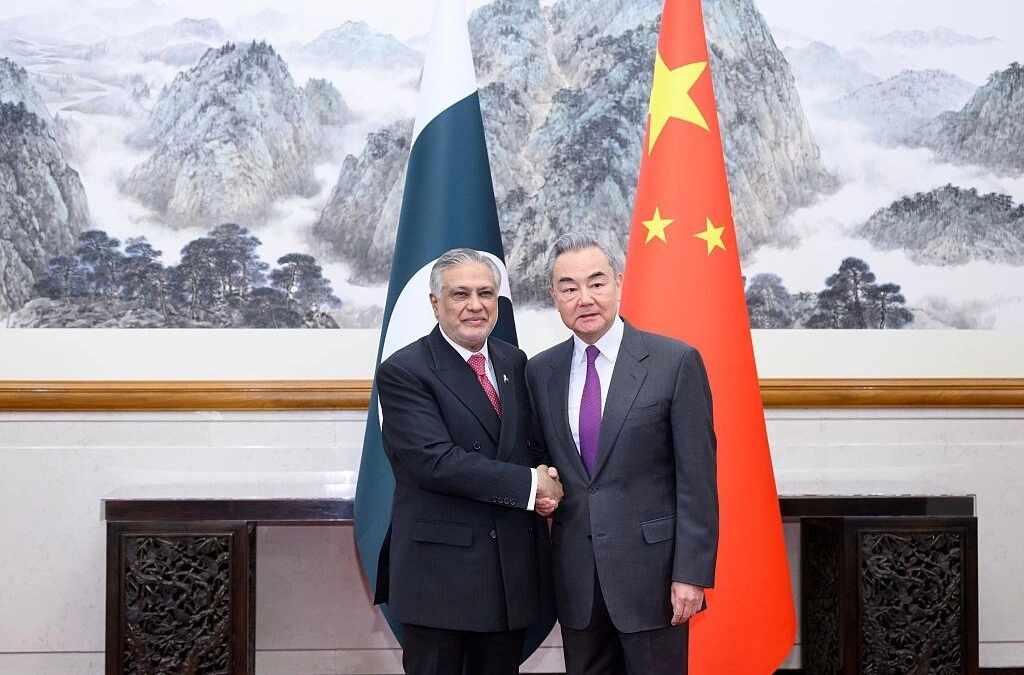
ISLAMABAD- MARCH,30- Deputy Prime Minister and Foreign Minister Ishaq Dar will visit China on March 31 at the invitation of Chinese Foreign Minister Wang Yi, as Pakistan steps up diplomatic engagement amid the ongoing war involving Iran, the United States and Israel.
A statement released by the Foreign Office on Monday said Pakistan and China enjoy an all-weather strategic cooperative partnership, marked by close coordination and regular consultations on regional and international issues.
🔊PR No.8️⃣3️⃣/2️⃣0️⃣2️⃣6️⃣
— Ministry of Foreign Affairs – Pakistan (@ForeignOfficePk) March 30, 2026
Curtain Raiser: Visit of Deputy Prime Minister/Foreign Minister to China, March 31,2026 https://t.co/1P5pAE7iIV pic.twitter.com/GLMSQLynlb
The FO said Dar’s visit would provide an opportunity for both sides to hold in-depth discussions on regional developments, as well as bilateral and global issues of mutual interest.
The statement added that Dar’s decision to proceed with the visit despite medical advice to rest following a hairline shoulder fracture suffered yesterday reflected the importance Pakistan attaches to its relationship with China.
The visit comes at a time when Pakistan has emerged as a key facilitator between Iran and the United States, serving as an intermediary for messages between the two sides as the war continues.
Pakistan has also intensified efforts to help reduce tensions in the region through broader diplomatic engagement.
On Sunday, DPM Dar said a quadrilateral meeting of the foreign ministers of Pakistan, Saudi Arabia, Türkiye and Egypt had called for an immediate and permanent end to the ongoing war in the Middle East.
In a televised address after the meeting in Islamabad, Dar said Pakistan had hosted the talks to discuss a range of issues, including efforts to ease rising regional tensions caused by the US-Israeli war on Iran.
The meeting was attended by Saudi Foreign Minister Prince Faisal bin Farhan, Turkish Foreign Minister Hakan Fidan, and Egyptian Foreign Minister Badr Abdelatty, and came as Islamabad stepped up efforts to help de-escalate the situation in the Middle East.
The diplomatic push comes amid attempts to create a window for negotiations to end the more than month-long war between the United States, Israel and Iran, which began on February 28 and has affected the wider Middle East.
The conflict has also had serious economic consequences, with Iran’s effective blockade of oil and gas shipments through the Strait of Hormuz since the attacks began causing economic pain across the world.
As the war entered its second month, there were no signs of a slowdown. According to reports, Israel’s military launched more than 140 air strikes over a 24-hour period on central and western Iran, including Tehran, targeting ballistic missile launch sites and storage facilities, among other locations.
The war has killed thousands of people and has also affected other countries in the region. Over the weekend, major aluminium plants in Bahrain and the United Arab Emirates were damaged in air strikes.
The UAE is also seeking reparations from Iran for attacks on civilians and critical facilities, along with guarantees to prevent any repeat of such incidents.
The conflict widened further after Yemen’s Iran-aligned Houthis joined the war on Saturday by launching their first attacks on Israel, raising fears that they could target and potentially block another key shipping route, the Bab el-Mandeb Strait. Israeli authorities said on Sunday they had intercepted two drones launched from Yemen.
Read more :China Backs Pakistan’s Efforts to Mediate Middle East Tensions