
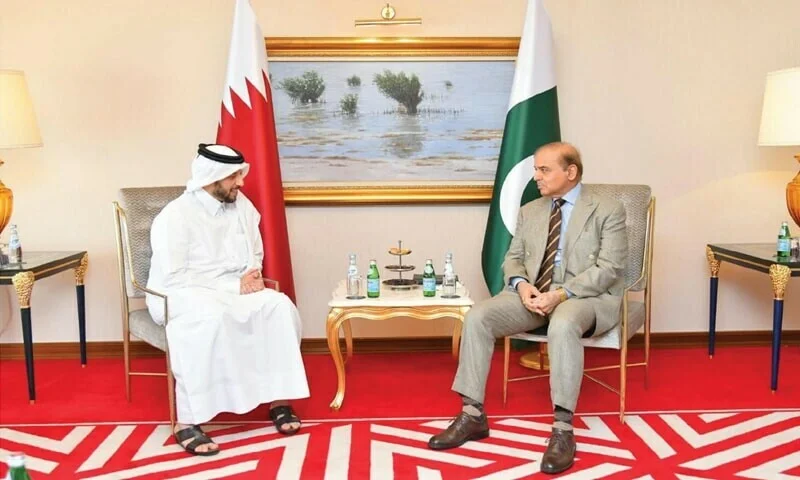
ISLAMABAD: Pakistan and Qatar have signed a landmark protocol formalizing Doha’s $3 billion investment in Pakistan through the Qatar Investment Authority (QIA) or its subsidiaries. The agreement, signed at the Sixth Session of the Pakistan-Qatar Joint Ministerial Commission (JMC), signifies a major step toward expanding strategic economic cooperation between the two nations. Pakistan’s Commerce Minister Jam Kamal Khan and Qatar’s Minister of Commerce and Industry Sheikh Faisal bin Thani bin Faisal Al Thani signed the protocol, reaffirming both countries’ commitment to deepen ties in trade, infrastructure, and digital transformation.
Strengthening Bilateral Cooperation Through Strategic Sectors
The protocol highlights cooperation in transport, health, education, culture, labour, and technology, reflecting a long-term strategy to align Qatar’s capital with Pakistan’s development priorities. The Special Investment Facilitation Council (SIFC) will act as the central platform to attract Qatari investors, streamline procedures, and implement projects efficiently.
In transport, both nations agreed to collaborate on green public transport systems, including electric and hydrogen-powered vehicles. Pakistan also invited Qatari investment in motorway projects, such as the Kharian-Rawalpindi (M-13)andKarachi-Hyderabad Motorway, under public-private partnership models.
New In!!
— HTN World (@htnworld) October 24, 2025
Islamabad and Doha have signed a protocol to implement Qatar’s $3 billion investment in Pakistan’s key sectors. The pact, inked at the 6th Pakistan-Qatar Joint Ministerial Commission, aims to boost cooperation in transport, IT, health, media, and the digital economy. pic.twitter.com/hf9tkh4QMg
Expanding Cooperation in Health, Education, and Culture
Education and health were pivotal points in the talks. A Second Executive Programme (2025–2028) will be drafted to enhance collaboration in higher education, scientific research, and technical skill development through an MoU between Qatar’s Education Ministry and Pakistan’s National Vocational and Technical Training Commission (NAVTTC).
In health, both sides agreed to activate a joint working committee under the existing MoU to bring Pakistani medical professionals to Qatar and pursue mutual recognition of pharmaceuticals to improve market access. The protocol also introduces a ‘Year of Culture’ initiative for cultural exchanges in film, museums, and heritage, along with fast-track visas for media and academic professionals.
Digital Transformation and Labour Cooperation
Both countries plan to enhance cooperation in e-governance, smart cities, and digital economy initiatives, linking the Qatar Science and Technology Park (QSTP) with Pakistan’s Special Technology Zones Authority (STZA) to boost innovation and startups. In the labour sector, Pakistan and Qatar agreed to renew their 1987 labour cooperation framework, expediting skilled worker deployment and sharing best practices in workforce management, a move seen as a boost to Pakistan’s overseas employment strategy.
Strategic Outlook: Deepening Gulf-South Asia Ties
Pakistan-Qatar investment pact as a strategic economic alliance that aligns with Pakistan’s Gulf engagement policy under the SIFC framework. The $3 billion commitment not only enhances financial inflows but also strengthens Qatar’s footprint in South Asia’s emerging markets. If executed effectively, this cooperation could transform bilateral relations into a long-term strategic partnership, creating sustainable growth, jobs, and energy resilience.
Also See: Saudi Delegation’s Visit Boosts Pakistan–Saudi Economic Partnership Under Vision 2030











