Pakistan and China have issued a strong joint message on regional security, urging concrete and measurable action against terrorist groups operating from Afghan soil.
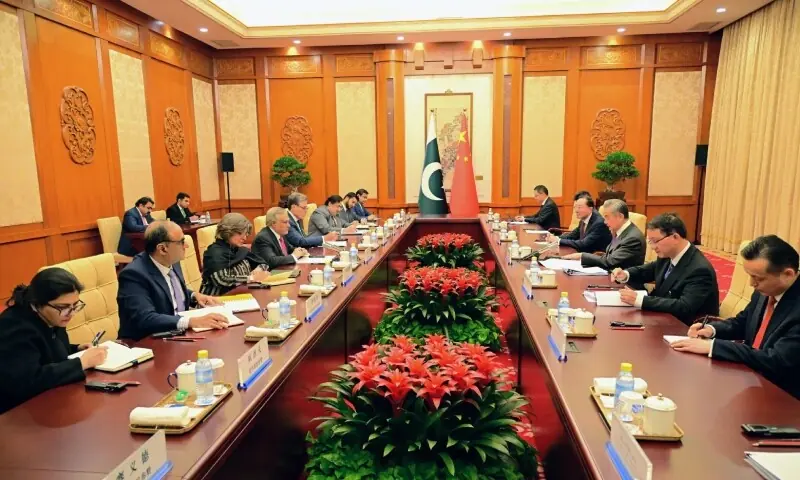
The call came after the seventh round of the Pakistan–China Foreign Ministers’ Strategic Dialogue in Beijing, reflecting a deeper convergence between Pakistan and China on security, development and global governance.
A firm message on Afghanistan and terrorism
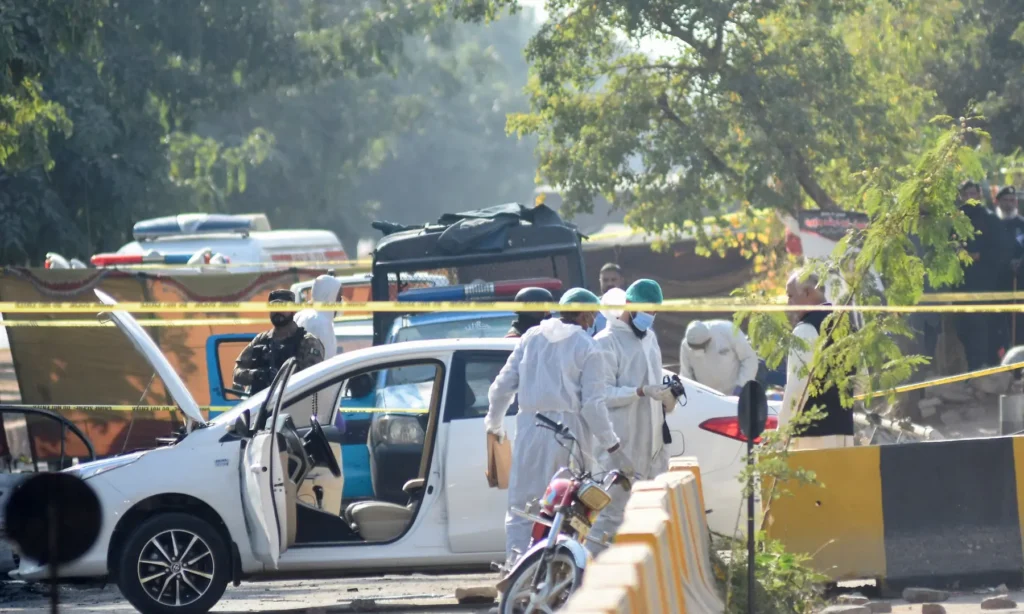
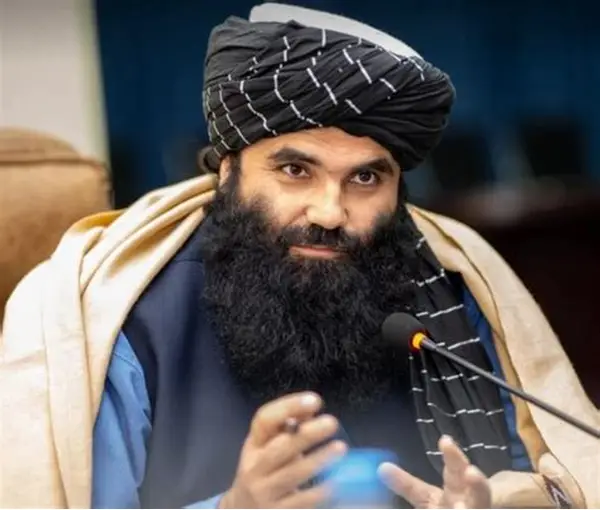
In their joint communiqué, both sides demanded “visible and verifiable” steps to dismantle and eliminate all terrorist organizations based in Afghanistan.
They stressed that Afghan territory must not be used for militancy against any country. The language was deliberate and direct.
It framed terrorism as a threat not only to neighbors, but to regional and global security.
Pakistan and China also agreed to stay in close coordination on Afghanistan and to work with the international community to encourage Kabul to build an inclusive political framework, adopt moderate policies, and focus on development and good neighborly relations.
🔊PR No.0️⃣8️⃣/2️⃣0️⃣2️⃣6️⃣
— Ministry of Foreign Affairs – Pakistan (@ForeignOfficePk) January 5, 2026
Joint Press Communique of the Seventh Round of China-Pakistan Foreign Minister's Strategic Dialogue https://t.co/Zv39fYjgSJ
🔗⬇️ pic.twitter.com/DiAEmTNC3c
China backs Pakistan’s counter-terror record
China openly commended Pakistan’s counter-terrorism measures and recognized the “huge sacrifices” made over the years.
The statement praised Islamabad’s efforts to protect Chinese personnel, projects, and institutions in Pakistan. Both sides reaffirmed a zero-tolerance approach to terrorism in all its forms.
They also opposed double standards in counter-terrorism, calling for stronger international cooperation.
Security was directly linked to economic connectivity, with both sides stressing the need to ensure that Belt and Road cooperation proceeds in a safe and stable environment.
Deputy Prime Minister / Foreign Minister, Senator @MIshaqDar50, visited the Pakistan Embassy in Beijing.
— Ministry of Foreign Affairs – Pakistan (@ForeignOfficePk) January 5, 2026
He toured the renovated public spaces, thoughtfully blending traditional and contemporary design. Interacting with the officers, he highlighted the Embassy’s role in… pic.twitter.com/hVhxCbGdU8
Strategic trust and a 75-year partnership
The dialogue was also framed as part of a long-term strategic relationship. Pakistan and China reaffirmed their status as all-weather strategic cooperative partners with what both sides described as ironclad friendship.
The year 2026 will mark 75 years of diplomatic relations, with commemorative activities planned to expand cooperation into new areas.
Pakistan’s Deputy Prime Minister and Foreign Minister Mohammad Ishaq Dar and China’s Foreign Minister Wang Yi underlined the importance of sustained high-level engagement and strategic communication.
Deputy Prime Minister / Foreign Minister Senator Mohammad Ishaq Dar @MIshaqDar50 met a delegation from China Minmetals Corporation (MCC) led by Vice President Mr. Xu Jiqing.
— Ministry of Foreign Affairs – Pakistan (@ForeignOfficePk) January 5, 2026
They held productive discussions on MCC’s ongoing and upcoming projects in Pakistan.
DPM/FM reaffirmed… pic.twitter.com/wPpizy7Rnq
CPEC 2.0 and economic rebalancing
A major outcome of the dialogue was the agreement to build an upgraded version of the China–Pakistan Economic Corridor.
This second phase will focus on industry, agriculture, and mining. Both sides also highlighted Gwadar Port, the Karakoram Highway, and the year-round opening of the Khunjerab Pass as drivers of trade and connectivity.
Financial and banking cooperation will be strengthened, with mutual support pledged at regional and international forums.
The communiqué also welcomed third-party participation in CPEC projects, provided it aligns with Pakistan–China agreed modalities.
Shared positions on global and regional issues
Beyond bilateral ties, the statement outlined a shared worldview.
Pakistan reiterated its firm commitment to the one-China principle, including support on Taiwan, Xinjiang, Xizang, Hong Kong, and the South China Sea.
China reaffirmed support for Pakistan’s sovereignty and territorial integrity. Both sides opposed unilateral actions and bloc politics, and stressed adherence to the UN Charter and international law.
On South Asia, China reiterated that the Jammu and Kashmir dispute should be resolved peacefully in line with UN resolutions.
The two countries also called for an unconditional ceasefire in Gaza and supported the two-state solution for Palestine.
Deputy Prime Minister/Foreign Minister Senator Mohammad Ishaq Dar @MIshaqDar50 met with Chen Xiaodong, Chairman of CIDCA, at the Pakistan Embassy today.
— Ministry of Foreign Affairs – Pakistan (@ForeignOfficePk) January 5, 2026
They reviewed socio-economic development cooperation, lauded CIDCA’s contributions to Pakistan’s development, and reaffirmed… pic.twitter.com/UcmiP0EJLj
Beyond security: space, governance, and the future
The dialogue also highlighted expanding cooperation in non-traditional areas.
Both sides expressed satisfaction over space cooperation, including the expected participation of a Pakistani astronaut in China’s space station missions.
They agreed to deepen collaboration under global initiatives on development, security, civilization, and governance.
Pakistan was congratulated on its performance at the UN Security Council and received support for its upcoming presidency of the Shanghai Cooperation Organization.
Taken together, the communiqué signals more than routine diplomacy. It reflects a tightening alignment
between Pakistan and China on security, economic transformation, and the shape of the regional order. The emphasis on “visible and verifiable” action in Afghanistan stands out as a clear benchmark.
For both countries, stability in the region is no longer an abstract goal. It is now tied directly to development, connectivity, and their shared vision of a more balanced global system.
Read more: Pakistan, China Urge Concrete Action to Eliminate Terror Groups Operating from Afghanistan