Islamabad – The current Chief Minister, in an incident that took place in Patna, forcibly removed the hijab of a Muslim female doctor, an action that sent the whole state into outrage, and demanded action.
Human rights defenders view this as a direct infringement of personal consent and body autonomy, which was captured on camera.
No matter what explanation was given, the incident points to a disturbing violation of professional boundaries in a social environment.
Pakistan’s Foreign Minister, Ishaq Dar, condemned the incident in strong words.
The shameful incident involving the disrespect of a Muslim woman in Bihar is reprehensible and extremely disturbing.
— Ishaq Dar (@MIshaqDar50) December 17, 2025
Such acts underscore the imperative to safeguard minority rights and to address the troubling rise of Islamophobia. Respect for women and religious beliefs must… https://t.co/19NbkYordo
The act has been described by Amnesty International India as an assault on dignity. Aakar Patel, a Board Chair at Amnesty International India, explained that forcing a woman to take off her hijab by a public official sends a dangerous signal that such action is normal.
Responding to a video circulating on social media showing the Chief Minister of Bihar Nitish Kumar pulling down a Muslim woman’s hijab during a government function, @Aakar__Patel , Chair of Board at Amnesty International India, said: “This act was an assault on this woman’s… pic.twitter.com/qZqbDIc9A8
— Maktoob (@MaktoobMedia) December 16, 2025
He stressed that it is a breach of minority rights and the identity of a woman to be policed about her faith or dress.
Patterns of Policing
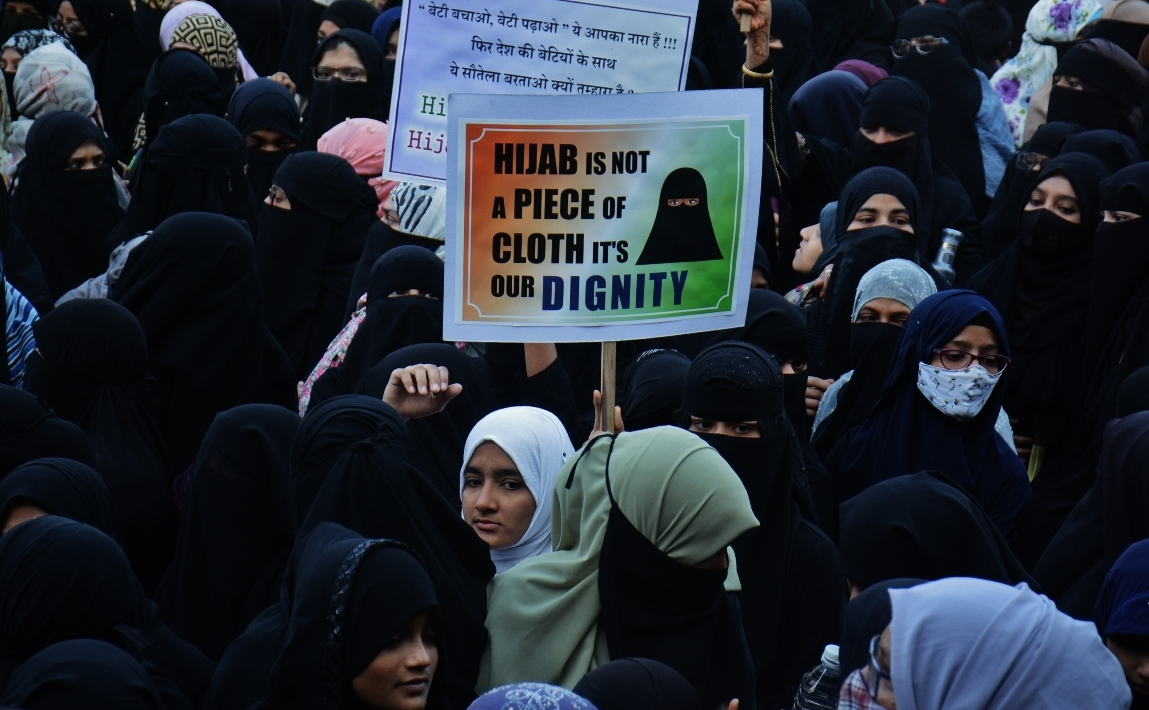
This is not an isolated event but part of a documented pattern where the attire of Muslim women is policed in public spaces. Such actions reinforce the idea that minority identities are often subordinated to majoritarian norms.
The background of the footage reveals a disturbing scene; while the Deputy Chief Minister tried to intervene, other officials were seen laughing. This atmosphere of mockery further erodes the protection of minority rights in the public eye.
Constitutional Contradictions
The act reveals an inconsistency between the constitutional assurances of equality in India and the lives of its people.
Freedom of expression and religion includes the right to choose what to wear. The interference by a leader in this decision casts a grave concern for the security of women in the workplace.
ہیومن رائٹس کونسل آف پاکستان بھارت کے صوبہ بہار کے وزیرِ اعلیٰ نتیش کمار کے اس نہایت شرمناک، قابلِ مذمت اور غیر انسانی اقدام کی سخت ترین الفاظ میں مذمت کرتی ہے، جس میں ایک سرکاری تقریب کے دوران ایک مسلم خاتون ڈاکٹر کا نقاب/حجاب زبردستی ہٹایا گیا، جب وہ اپنی تقرری کا سرٹیفیکیٹ… pic.twitter.com/QRKZm4pBA2
— Human Rights Council of Pakistan (@HRCPakistan) December 16, 2025
Global and Domestic Impact
The denunciation after this incident, mainly by international organizations such as Amnesty, is not merely over etiquette; it is the institutional safeguard of every citizen.
The fact that such behaviour is normalized implies the possibility that constitutional protections cannot be applied equally, and many are afraid of their rights as minorities.
The impact of such episodes is physical and may demotivate the minority to engage in the service of the community.
It is imperative to ensure that identity need not be compromised at the cost of professional conformity to sustain the well-being of a diverse democracy and minority rights for all people.