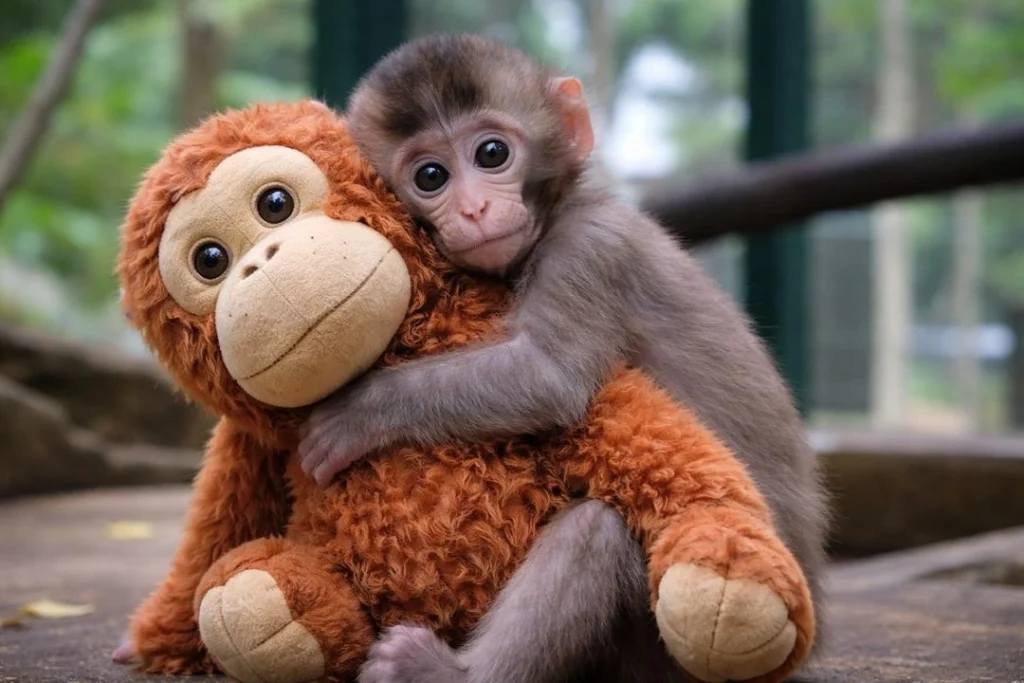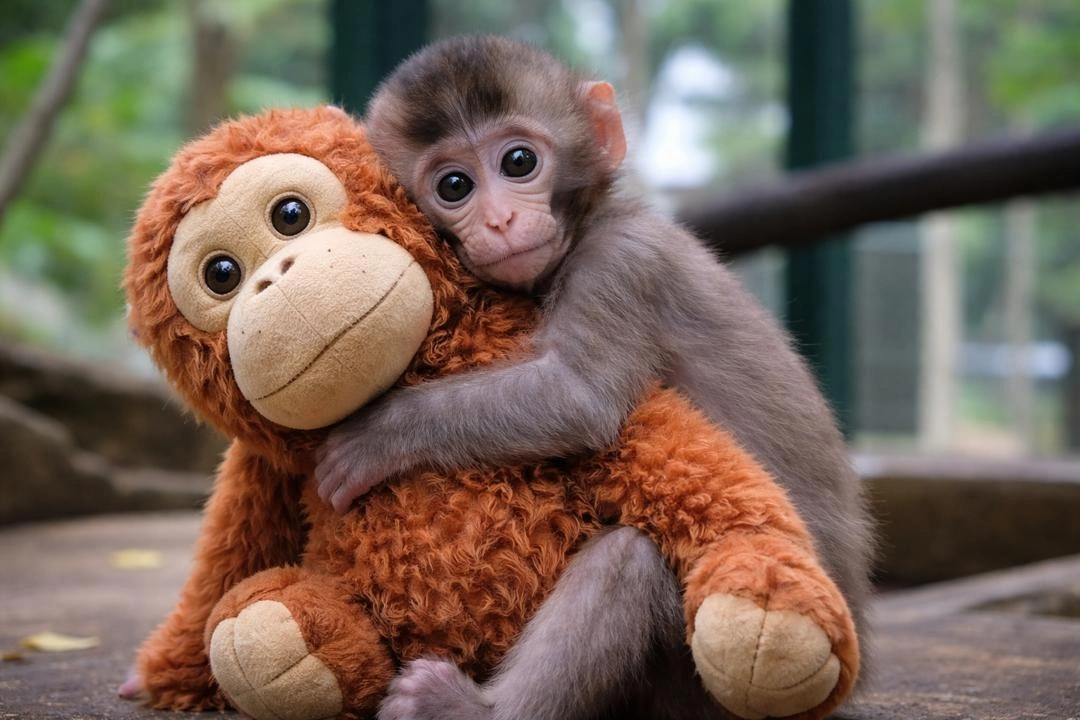
In late 2025, a baby monkey named Punch-kun became a global star. Born at the Ichikawa City Zoo in Japan, his mother was unable to care for him due to birth complications. To help him feel safe, zookeepers gave him a soft orangutan plush toy. Millions of people watched videos of Punch-kun clinging to his Ora-mom toy, especially after he was scolded or ignored by other monkeys in his group. His story is a powerful reminder that all living things need comfort and connection to survive.
The Science of Comfort
Punch-kun’s love for his toy matches a famous study from the 1950s by Dr. Harry Harlow. At that time, many experts thought babies only bonded with their mothers for food. Harlow proved them wrong by giving baby monkeys two fake mothers: one made of cold wire that held a milk bottle and one made of soft cloth that had no food.
The baby monkeys spent almost all their time with the soft cloth mother, only going to the wire mother when they were hungry. This showed that contact comfort — the feeling of something soft and safe — is actually more important than food for emotional health.
Why Loneliness Hurts
Humans are social animals. Our brains are wired to expect other people to be nearby. This is called Social Baseline Theory. When we are with friends, our brains save energy because we feel safer. But when we are alone, everything feels harder. For example, people standing alone actually see hills as being steeper than people standing with a friend.
Being lonely for a long time is not just a sad feeling; it is dangerous for our health. Research shows that chronic loneliness can be as bad for you as smoking 15 cigarettes a day. It can hurt your heart, weaken your immune system, and even lead to an earlier death.
Digital Band-Aids
Because so many people feel lonely today, they turn to the internet for connection. Watching cute animal videos like Punch-kun’s can actually help. Studies show that these videos can lower stress, improve mood, and make people feel a ‘virtual bond’ with the animal.
However, the internet is not a perfect fix. A problem called phubbing — ignoring a person right in front of you to look at your phone — is making our real-life bonds weaker. Experts say that while digital connection is okay, we still need real, face-to-face time to stay healthy. Real touch, eye contact, and even a simple hug can reduce stress in ways a screen cannot
A Better Way to Live
There is an African philosophy called Ubuntu, which means “I am because we are.” It teaches that we only become our true selves through our relationships with others. Instead of trying to be totally independent, Ubuntu suggests we should focus on taking care of our community.
A Lesson for All
The story of Punch-kun ends happily. In early 2026, he was finally accepted by his troop. An adult monkey named Onsing gave him a real, warm hug. While Punch-kun still carries his plushie for comfort, he is learning how to live with his real family.
His journey reminds us that we all need a safe space to go when life gets hard. Whether it’s a soft toy, a comfort show, or a close friend, seeking connection is not a weakness. It is what makes us human.