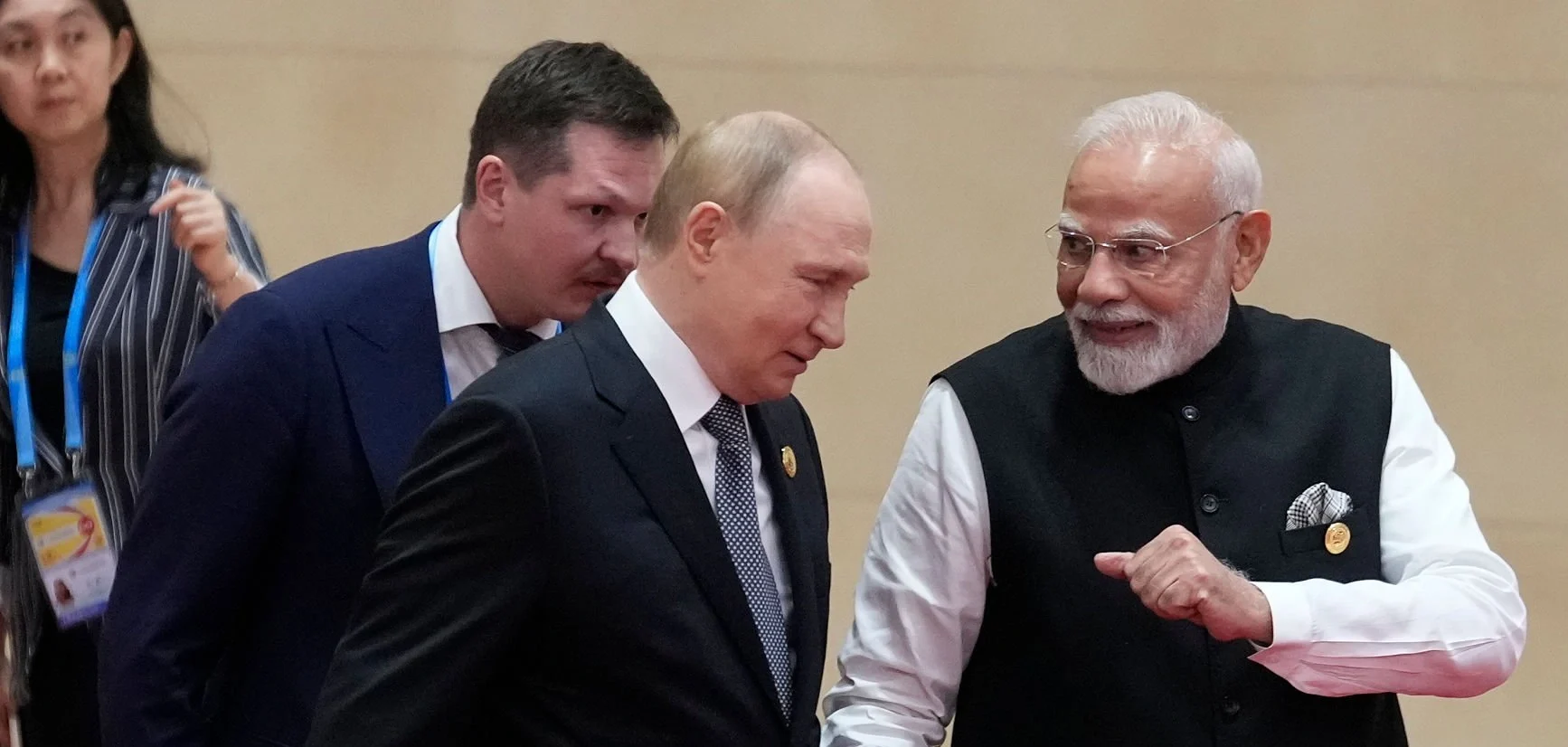
India_ The Putin Visit to India comes at a time when New Delhi is struggling to manage growing pressure from Washington while trying to keep its long-standing partnership with Moscow alive. This is President Vladimir Putin’s first trip to India in more than four years, and it arrives during a period of major diplomatic tension for Modi who is caught between American pressure and Russian leverage.
The visit includes a private dinner with Modi, high-level meetings at Hyderabad House, and a review of India-Russia defence and trade ties. Yet the larger question is how India will position itself between two rivals who are currently engaging under hostile environment, the United States and Russia, without losing the strategic autonomy it proudly claims.
How the Putin visit to India challenges Modi’s strategic autonomy
Since Russia’s invasion of Ukraine, India has tried to stand in the middle. It bought record levels of cheap Russian crude oil, defended its “independent foreign policy,” and avoided criticising Moscow even at multilateral forums. But this approach has become harder to maintain. The US, under Donald Trump, has imposed heavy tariffs on Indian goods and threatened sanctions on companies trading with Russian oil giants. As a result, Indian oil imports from Russia have sharply dropped, and refiners like Reliance are turning back to Middle Eastern supplies.
US pressure rises as India reconsiders its Russia ties during Putin visit
This shift raises doubts over whether India is quietly moving away from Moscow under US pressure. Even in defence, where Russia remains India’s largest supplier, Washington is pushing New Delhi to cut reliance on Russian defence systems.
The Putin Visit to India will test whether Modi can still claim strategic autonomy or whether India is slowly realigning under US pressure. Despite the warm optics planned for the summit, New Delhi may find it increasingly difficult to balance both sides without appearing uncertain and reactive on the global stage.