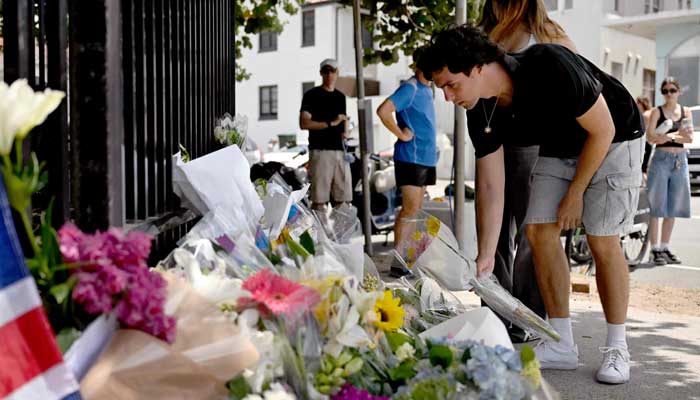
Sydney — A Hanukkah celebration at Sydney’s iconic Bondi Beach descended into chaos on Sunday night when two gunmen opened fire on a crowd gathered for the first evening of the Jewish festival, killing at least 15 people, including a 10-year-old child, and injuring more than 40 others.
Australian authorities say the incident is being treated as a terrorist attack and is the deadliest mass shooting in the country since the 1996 Port Arthur massacre that reshaped Australia’s gun laws.
Police identified the assailants as a father and son, aged 50 and 24. The older suspect was shot dead during a confrontation with police at the scene, while the younger man was critically wounded and remains hospitalised under police guard.
New South Wales Police Commissioner Mal Lanyon said on Monday that the surviving suspect is likely to face criminal charges once his medical condition allows, stressing the need to avoid prejudicing any future prosecution.
“This is a time for calm,” Lanyon said, warning against reprisals or collective blame. “Retribution or acts against any part of any community will not be accepted.”
The attack occurred during an event known as “Chanukah by the Sea,” attended by hundreds of people, including families and elderly community members.
Authorities later confirmed that among the victims were a Jewish rabbi and a French national.
Nearby Bondi Beach Public School was closed due to its proximity to the crime scene, as investigators established a restricted zone and deployed specialist teams to check for additional explosive devices linked to the suspects.
Prime Minister Anthony Albanese described the shooting as a “targeted attack on Jewish Australians” and announced that flags would fly at half-mast nationwide.
“An attack on one community is an attack on all Australians,” he said, urging unity at a moment of national trauma.
Amid the violence, a bystander emerged as an unlikely symbol of courage.
Ahmed al Ahmed, a local shop owner, was filmed tackling and disarming one of the attackers, an act widely credited with preventing further bloodshed. Furthemore, he was struck by two bullets and underwent surgery.
Australian media and officials hailed him as a hero, underscoring how civilian who is happened to be a Muslim intervention altered the course of the attack.
Counterterrorism Investigation Underway
Australian authorities have confirmed that the investigation is being led by counterterrorism units, examining all possible angles, including how the suspects acquired their weapons and whether others may have assisted them.
Commissioner Lanyon said the 50-year-old attacker was a licensed firearms holder who met eligibility requirements under current laws and had six registered weapons, raising fresh questions about regulatory gaps.
Officials emphasised that, at this stage, no third suspect is being sought and that the motives behind the attack remain under investigation.
The Australian Security Intelligence Organisation (ASIO) has acknowledged that one of the individuals was previously known to authorities, though not assessed as posing an imminent threat.
The scale of the attack has renewed debate over Australia’s gun laws, which were tightened dramatically after Port Arthur.
NSW Premier Chris Minns said further reforms were being considered, though he declined to provide details. “You can expect action soon,” he told reporters, noting widespread public concern over firearm access.
A Parallel Battle: Misinformation and Identity Framing
Even as investigators worked through forensic and intelligence leads, a parallel battle erupted online, one over identity, attribution, and narrative.
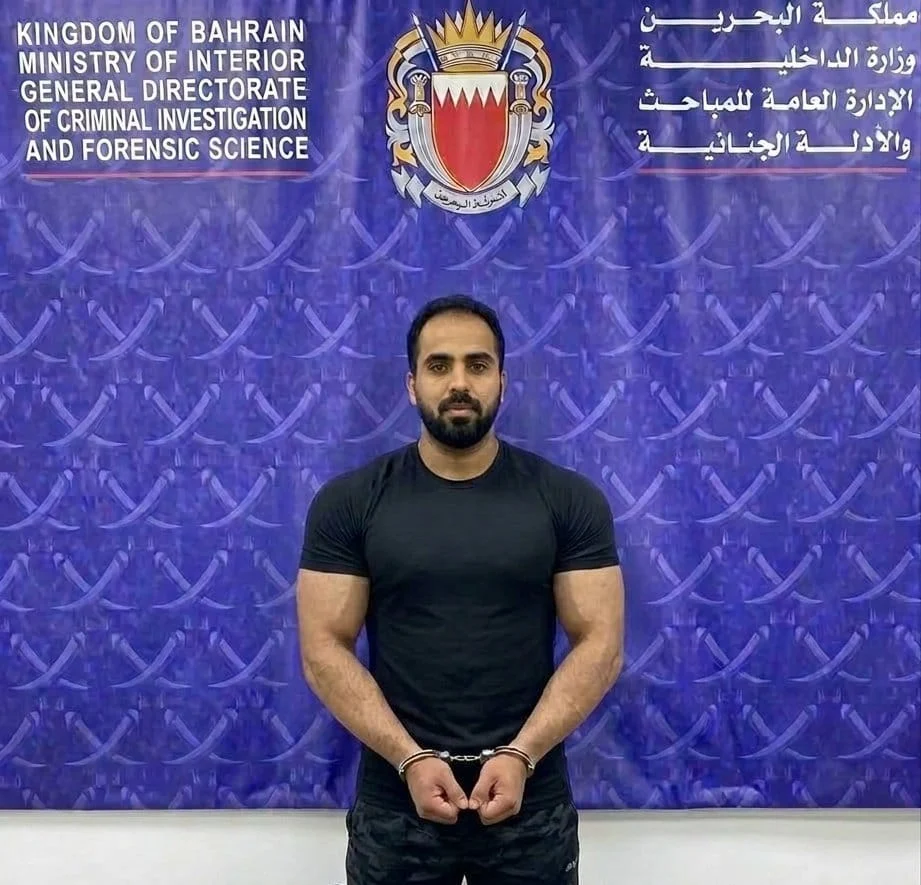
Within hours of the shooting, some Indian, Israeli, Western, and social media accounts began circulating claims that the younger suspect was a “Pakistani-origin” attacker, accompanied by photographs of an unrelated individual who happened to share the same name.
BREAKING : Big revelation in the case of Bondi Beach, Sydney Terrorist Attack : Both terrorists Sajid Akram & Naveed Akram both had visited their home country Pakistan in October 2025 and met with 3 top Pakistan Army & ISI officials including Pak Army Chief Asim Munir. pic.twitter.com/WDGiFkKZ8Q
— Baba Banaras™ (@RealBababanaras) December 15, 2025
US intel, as quoted by Western media says, Naveed Akram is a Pakistani national: pic.twitter.com/IQXiKoc7TD
— Sidhant Sibal (@sidhant) December 15, 2025
So this father-son duo from Pakistan replicated the Pahalgam attack in Australia. Naveed and Sajid Akram shot dead 16 innocent civilians. The son Naveed (24) is still alive. https://t.co/xeLt8FfNqD
— Smita Prakash (@smitaprakash) December 15, 2025
🇦🇺 POLICE RAID NAVEED AKRAM'S BONNYRIGG HOME – CROWDS GATHER AS INVESTIGATORS DIG FOR THE NETWORK
— Mario Nawfal (@MarioNawfal) December 14, 2025
Police cordoning off Naveed Akram's Sydney suburb home in Bonnyrigg. Crowds of locals watching investigators tear through the house of the Pakistani terrorist who massacred Jews on… https://t.co/q16bXl9NQi pic.twitter.com/NN8puNQHz4
The man falsely identified publicly rejected the claims on his social media accounts, clarifying that he had no connection to the attack and urging users to stop spreading the misinformation.
Azaad Fact Check has identified the spread of disinformation by an India-based X handle that falsely claimed the Bondi Beach attacker was a Pakistani national. This claim is fake and fabricated, and part of Indian propaganda. People from the Al-Murad Institute, where the attacker… https://t.co/8LpM9UE6JE pic.twitter.com/UyxIxArsmm
— Azaad Fact Check (@azaadfactcheck) December 14, 2025
Also See: Bondi Beach Attack Kills 12; Muslim Citizen Disarms Attacker, Saving Many Lives
Crucially, Australian authorities have not officially released photographs or confirmed identities beyond age and familial relationship.
The misidentification episode has been cited by Pakistani analysts and officials as evidence of premature narrative construction, where nationality, religion, or ethnicity is used as a substitute for verified investigative findings.
Pakistani analysts argue that this episode reflects a recurring pattern in the aftermath of high-profile attacks where identity-based attribution moves faster than verified investigative findings, allowing nationality or ethnicity to substitute for evidence.
1/8 – The Emerging Disinfo Nexus – From Tel Aviv to Delhi to Kabul
— Digital Debate (@DigDebate) December 4, 2025
Information once a source of knowledge has been weaponized by a specific nexus of countries to distort reality, manipulate minds, and redefine an ideological boundary of a targeted nation. pic.twitter.com/heXN24bSoM
At the same time, unverified claims began circulating online alleging links to Al-Qaeda in the Indian Subcontinent (AQIS), with assertions of cross-border radicalisation involving India and Afghanistan.
These claims, posted by self-described OSINT accounts, have not been confirmed by Australian authorities and remain outside the scope of official statements.
Security experts caution that while AQIS has historically sought to exploit sectarian and symbolic targets, no public evidence has yet been presented linking the Bondi Beach attackers to any transnational militant organisation.
Notably, the online framing has also drawn in Afghan- and India-linked X networks who have sought to attribute responsibility to Pakistan or draw parallels with unrelated incidents involving Afghan nationals in the United States.
Pakistani analysts reject these comparisons as misleading, noting that the United States and Afghanistan have a documented history of asylum, evacuation, and vetting challenges following the 2021 withdrawal, dynamics that are not analogous to the Australian case and have no established relevance to the Bondi investigation.
One widely circulated X post contrasted Afghan condemnation of a past US attack with what it described as Pakistani “denial” in the Bondi case, asserting collective responsibility based on nationality.
Analysts warn that such framing risks collapsing individual criminal acts into civilisational or ethnic blame, a practice long criticised by counterterrorism professionals for undermining investigative integrity.
When an #Afghan committed an act of terror in the US, Afghans worldwide condemned it, showing they were just as opposed to it as anyone else. But when a #Pakistani father and son committed terror and killed people in Australia, what do Pakistanis do? Deny it, celebrate it, blame…
— Aina Durkhanai آئینه درخانۍ (@khybereena) December 14, 2025
For Pakistan, the concern is less about any single claim and more about the cumulative effect of narrative drift, where unverified allegations, amplified at scale, begin shaping public perception before counterterrorism professionals complete their work.
As one senior Pakistani analyst put it: “If nationality becomes the headline before evidence, the investigation is already compromised.”
Geopolitics Enters the Frame
The attack has also generated international political reverberations. Israeli Prime Minister Benjamin Netanyahu criticised Australia’s policies on Palestinian statehood shortly after the shooting, implying a link between Canberra’s diplomatic stance and rising antisemitism.
I wrote: "Your call for a Palestinian state pours fuel on the antisemitic fire. It rewards Hamas terrorists. It emboldens those who menace Australian Jews and encourages the Jew hatred now stalking your streets."
— Prime Minister of Israel (@IsraeliPM) December 14, 2025
His remarks drew criticism from Australian figures, including UN Special Rapporteur Ben Saul, who said such linkage was inappropriate and misleading.
I am disgusted that the Israeli PM links Australia’s principled support for a Palestinian State with yesterday’s terrorist attack in Bondi. Australia has taken extensive measures to prevent anti-semitism https://t.co/GOD5wl13E1
— Prof Ben Saul – UN SR Human Rights & Counterterror (@profbensaul) December 14, 2025
“This is a moment for national unity,” Albanese responded when asked about Netanyahu’s comments, adding that Australia had taken extensive measures to counter antisemitism.
Global Condemnation and Calls for Solidarity
Leaders across the world reacted swiftly, denouncing the shooting and expressing solidarity with Australia and its Jewish community.
Prime Minister Anthony Albanese described the assault as a “targeted” attack, saying “what was unleashed today is beyond comprehension.”
Addressing Australia’s Jewish community directly, he said: “We stand with you, we embrace you, and we reaffirm tonight that you have every right to be proud of who you are and what you believe.”
In neighbouring New Zealand, Prime Minister Chris Luxon emphasised the closeness between the two countries, saying “Australia and New Zealand are closer than friends.
We’re family,” adding that the scenes from Bondi were “distressing” for New Zealanders who know the area well.
In the United States, President Donald Trump described the shooting as a “terrible attack”, calling it “a purely antisemitic attack,” while Secretary of State Marco Rubio said “antisemitism has no place in this world,” extending prayers to the victims, the Jewish community, and the people of Australia.
United Nations Secretary-General António Guterres said he was “horrified” by what he called a “heinous” attack, adding: “My heart is with the Jewish community worldwide on this first day of Hanukkah.”
Israeli President Isaac Herzog described the shooting as “cruel,” saying Jews gathering to light the first candle of Hanukkah had been targeted by “vile terrorists.” Israel’s Foreign Ministry confirmed that at least one Israeli national was killed and another wounded.
European leaders echoed the condemnation. British Prime Minister Keir Starmer called the news “deeply distressing,” while King Charles said he and Queen Camilla were “appalled and saddened” by what he termed a “dreadful antisemitic terrorist attack.”
French President Emmanuel Macron said France would “continue to fight relentlessly against anti-Semitic hatred,” while Germany’s Chancellor Friedrich Merz said the attack was “an assault on our shared values.”
From the Middle East, reactions emphasised rejection of violence. Iran’s Foreign Ministry said “terror and the killing of human beings, wherever committed, is rejected,” while the Palestinian Foreign Ministry reiterated its “firm rejection of all forms of violence, terrorism and extremism,” expressing solidarity with Australia.
Saudi Arabia, the United Arab Emirates, Qatar, Jordan, Türkiye, and Lebanon issued similar condemnations.
Religious leaders also spoke out. The UK’s Chief Rabbi Ephraim Mirvis called the shooting an “unspeakable tragedy,” while Australia’s National Imams Council described it as a “horrific act of violence,” urging Australians of all faiths to stand together in unity and compassion.
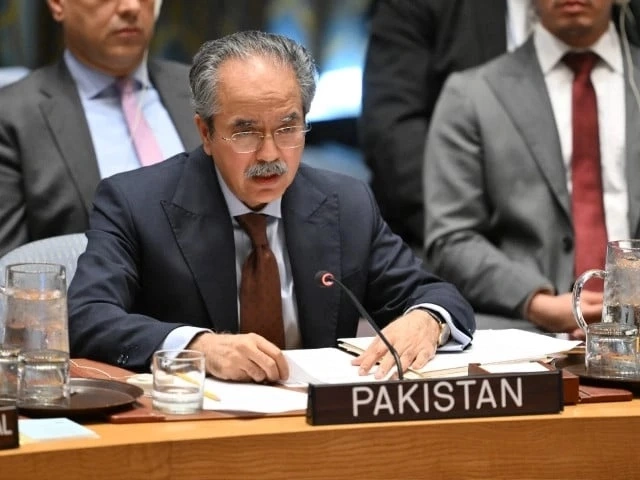
Pakistani leaders joined the international response. President Asif Ali Zardari and Prime Minister Shehbaz Sharif condemned the attack and extended condolences to the victims, stating that “Pakistan, itself a victim of terrorism, stands in solidarity with Australia and condemns violence against innocent civilians.”
My deepest condolences to the victims of the tragic terrorist attack at Bondi Beach, Sydney. Pakistan condemns terrorism in all its forms and manifestations.
— Shehbaz Sharif (@CMShehbaz) December 14, 2025
We stand in solidarity with the people and Government of Australia in this difficult time.@AlboMP
President Asif Ali Zardari has expressed sorrow over the tragic shooting in Sydney, conveyed condolences to the victims’ families & wished the injured a speedy recovery. 🇵🇰, itself a victim of terrorism, stands in solidarity with 🇦🇺 & condemns violence against innocent civilians.
— The President of Pakistan (@PresOfPakistan) December 14, 2025
Calls for Restraint and Evidence-Led Conclusions
Global leaders have expressed condolences. United Nations Secretary-General António Guterres condemned the attack, saying he was “shocked and saddened” by the violence during a religious celebration.
The Palestinian Foreign Ministry also issued a statement rejecting “all forms of violence,” distancing itself from the attack.
As Australia mourns, officials continue to urge the public to resist speculation and allow investigators to complete their work.
For Pakistan, the core position articulated by analysts and officials remains consistent: terrorism must be confronted collectively, but narrative engineering that precedes facts must be resisted.
The Bondi Beach shooting has left deep scars, on victims’ families, on Australia’s sense of safety, and on intercommunal trust.
Whether it also becomes another case study in how tragedy is weaponised in the global information space may depend less on what is posted online, and more on whether evidence is allowed to speak louder than assumptions.
Terror Attacks, Intelligence Expansion, and Historical Precedent
Beyond immediate attribution, the Bondi Beach attack has revived a broader strategic discussion: how major attacks on Jewish communities or Israeli-linked sites abroad often trigger rapid internationalisation of security responses.
It is a matter of record, not conjecture, that such incidents frequently lead to intensified intelligence cooperation, expanded threat framing, and diplomatic recalibration before final attribution is publicly established.
This is standard counterterrorism practice, but it also reshapes geopolitical narratives.
Historical precedents illustrate this pattern clearly.
Following antisemitic incidents in Sydney and Melbourne in recent years, Israeli intelligence engagement with Australian agencies increased, accompanied by heightened alerts and diplomatic coordination.
Similar dynamics followed the 2012 Israeli embassy attacks in Delhi and Tbilisi, as well as the 2018 Pittsburgh synagogue shooting in the United States, each resulting in expanded intelligence collaboration and broader geopolitical signalling.
These cases demonstrate a recurring dynamic that attacks on Jewish or Israeli-linked targets abroad often extend beyond law enforcement into strategic messaging, influencing alliance behaviour, threat perception, and regional security postures.
In the current global environment marked by Gaza-related pressure on Israel, evolving alignments under AUKUS, the Quad and I2U2, and heightened contestation across the Indo-Pacific and West Asia, the risk of narrative weaponisation is elevated.
Violent incidents can be leveraged, intentionally or otherwise, to justify expanded security footprints, diplomatic leverage, or pressure on third states.
Why Premature Attribution Undermines Counterterrorism
Within this context, counterterrorism specialists caution that premature attribution, particularly along national, ethnic, or religious lines, can undermine the very investigations it purports to advance.
Security analysts note that early framing has, in past cases, been used to exert political pressure, extract diplomatic concessions, or legitimise expanded external involvement in sensitive regions.
Pakistan, they point out, has encountered this pattern before, where terror incidents abroad were rapidly transformed into reputational pressure tools despite the absence of verified operational or financial links.
Once embedded in public discourse, such narratives are difficult to reverse, even when subsequent evidence contradicts initial claims.
The result, analysts warn, is distorted threat assessment, strained diplomatic relations, and investigative distraction from the core questions of who planned, funded, facilitated, and directed an attack.
Professional counterterrorism practice, they stress, must remain evidence-led.
Nationality, religion, or ethnicity are descriptors, not analytical substitutes; when treated as causal explanations, they reflect political intent rather than security rigor and risk destabilising regional trust.
In the Bondi Beach case, Australian authorities have repeatedly urged restraint, emphasising that identities, motives, and affiliations must be established through forensic evidence and legal process rather than online inference.
Allowing investigations to conclude free from geopolitical pressure, analysts argue, is not an act of hesitation but of institutional discipline.
At the same time, it remains analytically valid to examine who benefits strategically from expanded threat narratives.
Historically, major attacks abroad have often coincided with the strengthening of Israel’s security diplomacy and intelligence engagement during periods of heightened international scrutiny, a structural observation frequently noted in strategic studies, not an accusation.
The responsible course, analysts conclude, is clear: allow Australian authorities to complete a transparent investigation; resist premature geopolitical loading; and prevent the conversion of a domestic tragedy into a pressure instrument within Pak-Afghan, Indo-Pacific, or West Asian geopolitics.
Read more: Pakistan Navy Conducts Successful Live Firing of FM-90(N) Missile in Arabian Sea