Afghanistan/Iran_ Afghanistan’s Taliban government has sought bilateral reassurance from Iran after refusing to join a major regional meeting in Tehran last week.
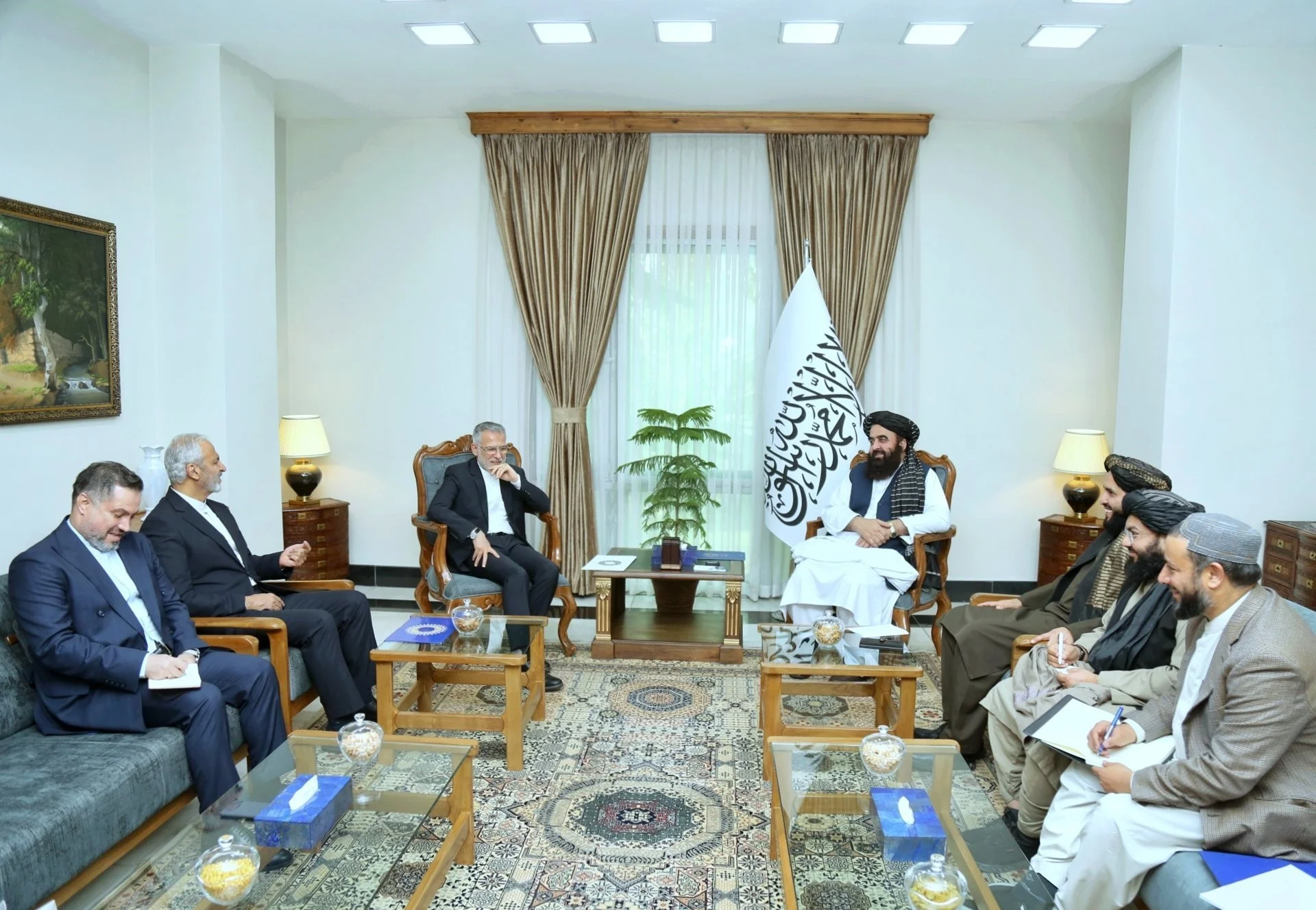
A senior Iranian diplomat, Mohammad Reza Bahrami, travelled to Kabul and held detailed talks with Afghan Foreign Minister Mawlawi Amir Khan Muttaqi, briefing him on the summit that brought together Afghanistan’s six neighbors along with Russia.
Kabul’s absence had already drawn regional concern as the meeting focused on shared security challenges, counterterrorism coordination and humanitarian issues.
According to the Afghan Ministry of Foreign Affairs, Bahrami conveyed an invitation from the Iranian foreign minister and said that “relations with Afghanistan are of great importance” for Tehran.
The ministry quoted Muttaqi as saying Afghanistan “has now emerged from a difficult situation and is taking rapid steps towards development” and “should not be treated as a problem.”
Days after the #Afghan gov't refused to join a regional meeting in #Tehran, a senior Iranian diplomat travelled to #Kabul and held talks with Afghan Foreign Minister Mawlawi Amir Khan Muttaqi to brief him about the meeting. Kabul had skipped the meeting of Afghanistan's six… pic.twitter.com/eTiFlBj5CS
— Tahir Khan (@taahir_khan) December 17, 2025
Taliban’s selective engagement raises regional concerns
Kabul’s refusal to participate in the Tehran meeting has reinforced perceptions that the Taliban prefer controlled bilateral engagements over multilateral accountability.
While the Afghan leadership claims to support “active and cooperative relations with regional countries,” skipping a forum designed to address cross-border militancy, trade disruptions, refugee pressures and water management stands at odds with that narrative.
Tehran’s decision to brief Kabul after the fact suggests Afghanistan’s growing distance from structured regional mechanisms.
Analysts note that meaningful cooperation requires participation at the table, not post-summit explanations.
Pakistan, Iran, China, Russia and Central Asian states had expected Kabul to attend and address growing concerns over TTP, ISKP and other networks operating from Afghan soil.
Lack of transparency in security operations deepens mistrust
The recent late-night operation in Badakhshan targeting a hideout linked to attacks on Chinese nationals highlights why such forums matter.
Kabul released limited information claimed the planning occurred “outside Afghanistan” and withheld identities and operational details from affected states.
Reports indicate the information was circulated only within the Taliban leadership circle, bypassing regional defence and diplomatic channels.
This approach, combined with Kabul’s absence from the Tehran talks, has raised questions about the credibility of its stated commitment to regional cooperation.
For Pakistan and other neighbors, confidence depends on transparent intelligence sharing and active participation in collective security mechanisms.
Skipping multilateral dialogue while later offering narrative reassurances risks further eroding trust at a time when regional security threats are deeply interconnected.
Read more: Taliban’s Push for India Ties Fuels Political Campaign Against Pakistani Medicines