
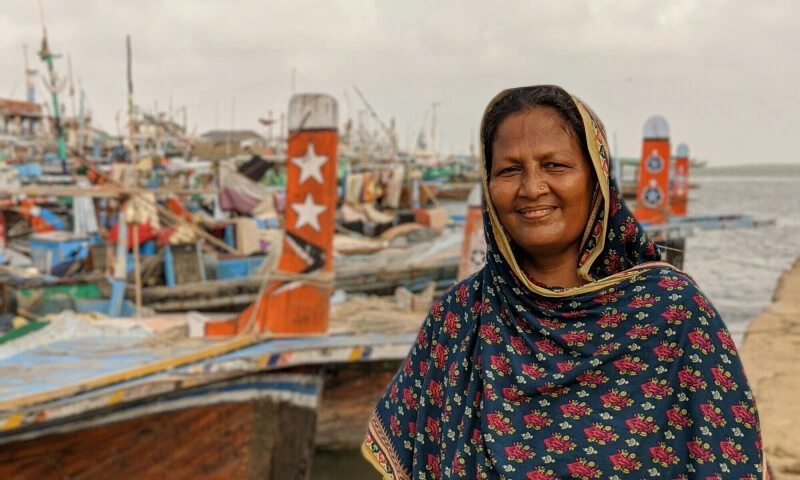
Islamabad – Fatima Majeed Becomes First Woman from Fishing Community to Lead Sindh Fishers.
On August 22, 2025, climate activist and Pakistan Fisherfolk Forum (PFF) leader Fatima Majeed was appointed chairperson of the Sindh Fisheries Department, the first woman from the fishing community to hold this position. The move reflects a broader vision of inclusion, gender equality, and recognition of grassroots voices in decision-making.
Why This Appointment Matters
Fatima Majeed has long been a prominent voice for fisherfolk rights, climate justice, and women’s empowerment. As senior vice-chairperson of the Pakistan Fisherfolk Forum, she has worked on issues ranging from illegal deep-sea trawling and river lease systems to the detention of Pakistani fishermen in India. Her activism is deeply personal: raised in Ibrahim Hyderi in a family of fishermen, she has firsthand experience of the community’s struggles.
Her leadership has not been confined to rallies and policy talks. In 2015, she challenged powerful local figures in her community, signaling her willingness to take on entrenched interests. More recently, she used art and storytelling to highlight the cultural and ecological threats facing the coast, most notably through her project at the 2024 Karachi Biennale, which brought the daily realities of fisherfolk into mainstream discourse.
She has also drawn attention to the ecological decline of the Indus Delta, once a thriving ecosystem that supported countless families, now facing saltwater intrusion, reduced river flows, and disappearing mangroves. These environmental shifts have not only undermined fisheries but also worsened poverty, food insecurity, and the vulnerability of coastal women.
The Road Ahead
Fatima Majeed’s appointment is being seen as both a symbolic breakthrough and a practical opportunity. Her deep ties with the fishing community mean her leadership could foster trust between the government and small-scale fishers, while also improving compliance with conservation rules. She is expected to push for mangrove protection, fair fish marketing practices, and stronger action against unsustainable trawling.
At the same time, the challenges are immense. The fisheries sector is marked by bureaucratic inertia, weak regulation, and pressure from powerful boat owners and middlemen. Restoring the Indus Delta will require major policy shifts in water distribution that go far beyond her department’s mandate. Any reforms that threaten vested interests may be resisted fiercely.
Still, her appointment represents a new chapter. It demonstrates that leadership can emerge from within marginalized communities, and that women can take charge in spaces traditionally dominated by men. If Fatima Majeed can translate years of activism into effective governance, this could become a turning point not just for Sindh’s fisherfolk but also for the future of Pakistan’s coastal ecology.











