
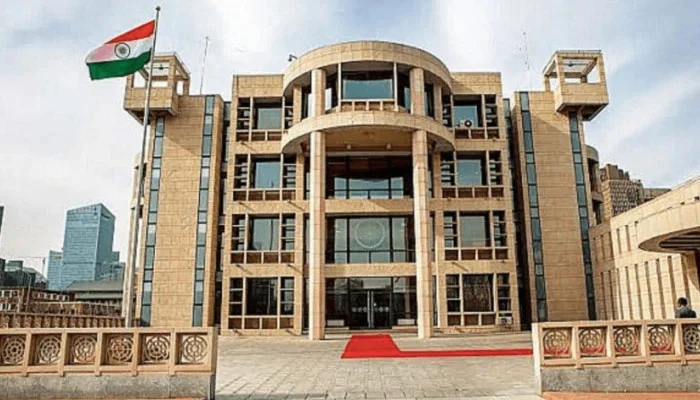
Kabul – In a major diplomatic outrage, the government of Afghanistan has declared a senior Indian intelligence officer, Harish Kumar, persona non grata and expelled him from the country.
According to Afghanistan International, this expulsion, confirmed on August 17, followed allegations by the Taliban’s General Directorate of Intelligence (GDI) that the Indian official had been secretly meeting anti-Taliban personnel in Kabul to mobilize them.
According to a senior Afghan official, Harish Kumar, who served as a liaison officer at the Indian Embassy in Kabul, was given 24 hours to leave the country. Afghan authorities have officially marked his passport, number D1156181.
Allegations of Mobilization and Secret Meetings
The move to expel is based on a succession of purported meetings between Harish Kumar and anti-Taliban leaders.
According to a source privy to the happenings, Kumar, a resident of the Indian city of Himachal Pradesh, traveled to Kabul, then to Delhi, and later to Qatar to meet with several anti-Taliban leaders in Afghanistan.
In this meeting, the group is said to have deliberated on an anti-Taliban conference which was to be held in Pakistan but was postponed.
Following the initial talks, Kumar continued his efforts to organize the conference, exploring alternative venues in either Qatar or Dubai. He went back to Kabul on August 13.
Afghan authorities held an intelligence operation on August 15. The GDI agents stormed the restaurant in Shahre Naw district of Kabul, where Harish Kumar had arranged a meeting with a group of anti-Taliban Afghan leaders. The Afghan leaders were immediately arrested in the raid.
On August 16, the next day, the Taliban government called a meeting with the Indian Embassy officials and officially conveyed their decision to expel Harish Kumar from the country immediately. He left for Delhi on August 17.
Diplomatic Fallout
The expulsion of an intelligence officer of high rank is a very rare and extreme diplomatic step, highlighting the severity of the Taliban government’s perception of India’s actions. This incident might have a long-term effect on the bilateral relations between India and Afghanistan. Since the Taliban assumed power, India has had a small presence in Kabul, balancing its strategic interest with a restrained attitude towards the new government.
India’s Reaction
The Ministry of External Affairs of India has not yet offered an official statement regarding the incident.











