
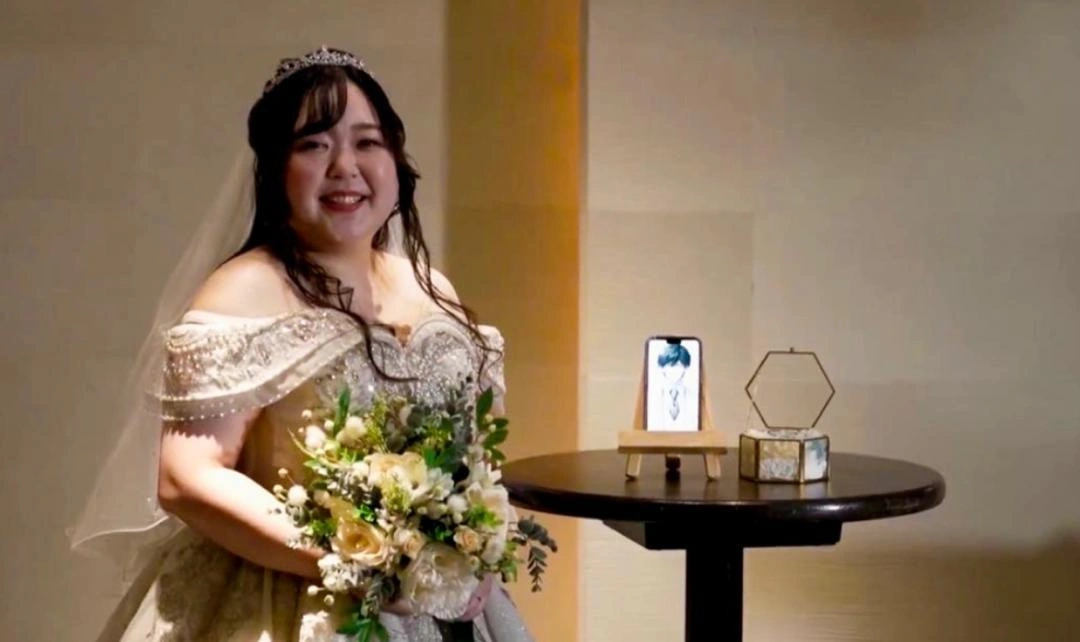
In a country long known for its deep-rooted anime culture and technological innovation, advances in artificial intelligence are reshaping not just industries — but intimate human relationships as well. A recent case has reignited debate over the emotional and ethical boundaries of AI companionship.
Yurina Nokuji, a Japanese woman and anime enthusiast, made headlines after ending her engagement to a human partner following months of consultation with an AI assistant. Soon after, with the help of that same technology, she created a customized AI version of “Klaus,” her favorite anime character, and held a symbolic wedding ceremony to formalize their virtual union.
While such marriages have no legal standing in Japan, they reflect a growing social trend. Surveys suggest that emotional reliance on AI chatbots is steadily increasing, with many individuals — particularly young people — preferring to confide in artificial intelligence rather than in friends, family, or romantic partners.
A Digital Companion Without Judgment
Experts say AI’s appeal lies in its constant availability and nonjudgmental responses. Unlike human relationships, AI companions offer immediate attention, personalized dialogue, and emotional validation without conflict or unpredictability.
“Artificial intelligence can reduce psychological stress because it listens without criticism and responds instantly,” says one Tokyo-based psychologist studying digital intimacy trends. “But it cannot replace real therapeutic support or genuine human connection.”
Recent studies also indicate that while marriage rates in Japan continue to decline, interest in “fictional” or virtual relationships among teenagers and young adults is rising. Some researchers attribute this shift to social pressure, work culture, and the difficulty many young people face in forming traditional relationships.
Corporate Caution
Major technology companies, including Microsoft and leading AI developers, have introduced safeguards to prevent AI systems from encouraging exclusive romantic dependency. Restrictions have been placed on certain emotionally intimate interactions, amid concerns about psychological overattachment.
Despite these warnings, Nokuji insists her relationship has been positive. She claims that interacting with her AI-created Klaus has brought her comfort, stability, and even helped reduce symptoms associated with borderline personality disorder. However, she acknowledges the risks and says she has set personal rules to limit her use of the chatbot to avoid unhealthy dependence.
“If a relationship with AI makes me happy,” she says, “that is enough for me.”
Between Innovation and Isolation
Japan has previously witnessed unconventional forms of companionship — from hologram partners to virtual idol devotion — but AI-driven emotional bonds represent a new chapter. The technology now allows users to shape personalities, simulate affection, and build ongoing narratives with fictional characters in ways that feel increasingly real.
The phenomenon raises pressing ethical questions:
Can emotional fulfillment through AI coexist with healthy social bonds?
At what point does digital comfort become emotional isolation?
And how should society regulate relationships that exist entirely in code?
As artificial intelligence grows more sophisticated, the line between imagination and intimacy continues to blur. Whether this trend signals a transformation of love in the digital age or a retreat from human connection remains an open question.
For now, stories like Nokuji’s highlight both the promise and the complexity of a world where technology is no longer just a tool — but, for some, a partner.











