
Followers of the Shia and Deobandi schools of thought live both in Pakistan and in India. Interestingly, their behavior in India is very different from their behavior in Pakistan. In India, they appear soft like silk, but in Pakistan they often act like swords of steel. In India, they exist almost invisibly, as if in a dream—one cannot even tell whether they are present or not. But in Pakistan, they leap, turn, and confront with passion, and everything around them seems to tremble. The question is: why is this so?
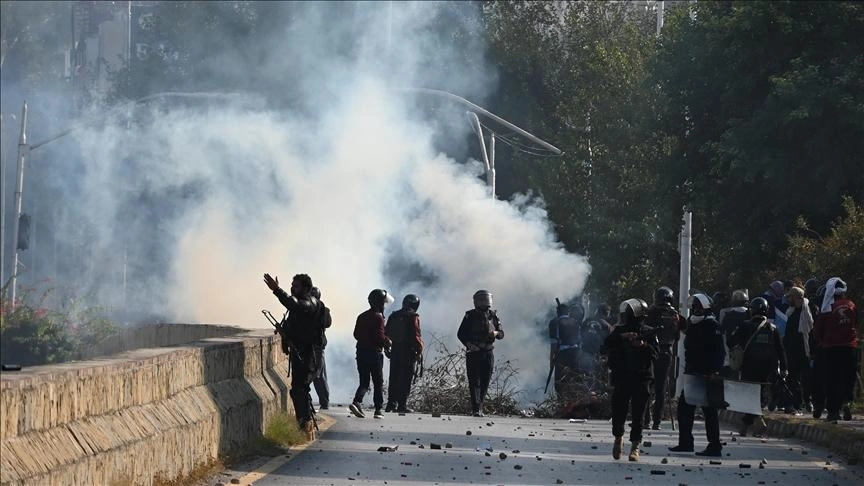
Consider the recent attacks on Iran by Israel and the United States. Pakistan provided diplomatic support to Iran at the United Nations, condemned the attacks, and even in the Iranian parliament slogans of gratitude toward Pakistan were raised. Despite this, violent protests took place in Pakistan. The government was harshly criticized, properties were burned, a United Nations office was set on fire, people entered the American embassy, security personnel were burned alive, and threats were issued claiming that Pakistan had crossed the limits of humiliation and that further actions would lead to retaliation and attacks on certain targets.
On the other hand, there is India. India stood with Israel. Its foreign ministry openly declared that its sympathies were with Israel. The day after the Indian Prime Minister visited Israel, Israel launched its attack on Iran. Iran felt betrayed by India, and India even issued threats regarding Iran. Yet despite all this, Shia communities in India did not stage violent protests—not even in centers like Lucknow. No United Nations office was burned. No one accused India of crossing the limits of humiliation. No one issued warnings that if the Modi government continued such policies they would respond with attacks. No one burned security personnel alive, nor did anyone even throw stones at them. No protest marches stormed the American embassy. No one declared that if the ruling establishment did not change its policies they would be forced to target specific locations.
In other words, Pakistan receives unrest despite its goodwill, while India enjoys calm despite its hostile stance. Pakistan supports Iran at the United Nations yet is placed in the dock, while India stands openly with Israel and no one there can speak even a few words of punishment or protest against it. What explains this contradiction? It is a serious question.
The same situation exists with the Deobandi school of thought. In India, this school barely raises its voice, but in Pakistan it constantly challenges and criticizes. In Pakistan, its ideological alignment with Afghanistan’s rulers goes so far that Pakistan’s policies are frequently targeted. Yet in India, it does not have the courage even to quietly disagree with the foreign policy of the Modi government.
In the town of Deoband, where Muslims make up nearly 70 percent of the population, BJP leader Brijesh Singh declared that the name of the area would soon be changed from “Deoband” to “Devvrand.” Yet the Deobandi school neither protests nor announces a march toward Delhi. Meanwhile in Pakistan it is often heard raising strong slogans. What is the reason?
In Pakistan, this school enjoys the fiery speeches of figures like Hafiz Hamdullah, but in India it seems not even a gentle voice exists that could disagree with Modi’s policies in even the softest tone.
In Pakistan, if anyone becomes a challenge to Jamiat Ulema-e-Islam, they can quickly be labeled a “Jewish agent.” Even when Maulana Sherani parted ways with the party, he was mocked as part of “Jamiat Ulema-e-Israel.” Meanwhile, Deobandi scholars in India appear so constrained by fear that they cannot even imagine offending the BJP’s ideological supporters.
In Pakistan, clerics often challenge rulers, the establishment, and even global powers like the United States and Russia. But in India, they struggle to raise their voices even against the authoritarian tendencies of the BJP. In Pakistan, Deobandism appears as boldness and confrontation; in India it seems marked by restraint and helplessness, constantly assuring obedience.
In Pakistan, when members of JUI are arrested in the Parliament Lodges, their leader arrives boldly and declares, “If you have the courage, arrest me as well.” Yet in Saharanpur district in India, when students of Darul Uloom are removed from buses and their heads shaved, or when life becomes difficult for Muslims, the Deobandi movement rarely moves beyond mild and respectful protest.
In Pakistan, being considered teachers or mentors of the Afghan Taliban is seen as a matter of pride, while in India Darul Uloom repeatedly clarifies that it has no connection with the Taliban and portrays itself as peaceful and secular.
The kind of loudness and boldness that these schools display day and night in Pakistan—why do they not demonstrate the same in India?
If the freedom to speak, criticize, and challenge exists only in Pakistan, then perhaps the country also deserves appreciation. Such disregard for it is not appropriate.











