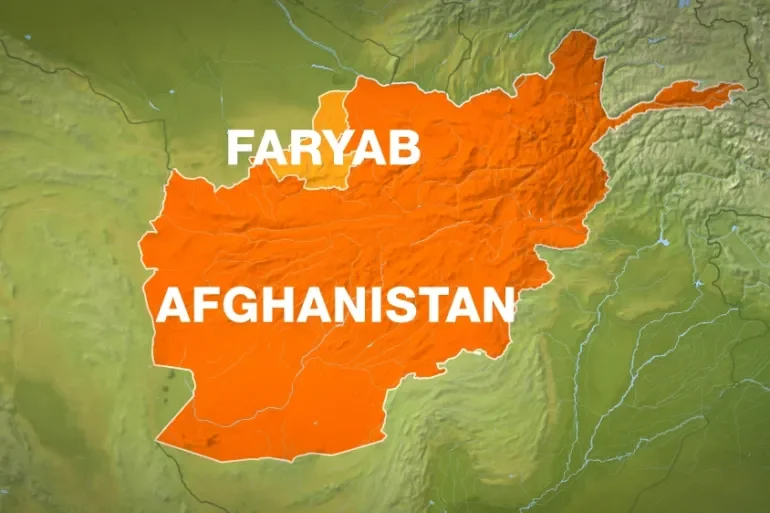
Revelations about a purported major Daesh hub in Afghanistan’s Faryab province and activities on Eid have raised serious questions about the Taliban’s claims of conducting operations against Daesh. According to sources, the center in the Yekah Khaji area of Faryab is being used not only as a secure hideout but also reportedly hosts high-level militants.
Sources say the center is run by the group of Qari Hikmat, allegedly led by Shafiqullah, also known as Qari Hikmat, the son of the late militant commander Ismatullah alias Hikmat Khorasani.
It is claimed that the camp operates under the supervision and security of Afghanistan’s intelligence agency (GDI), and there are reports of movement of Tehreek-i-Taliban Pakistan (TTP) elements through the area.
According to sources, a large gathering took place at the center on Eid, attended by several senior and wanted Daesh commanders. Reports indicate that participants included Daesh-Khorasan’s alleged emir Saif al-Bahr alias Sheikh Maqbool, Chechen fighters, and members of the Daesh media network.
Other attendees reportedly included Abu Bakr Khorasani, militants active in Iraq, Syria, and Turkey; Muawiya Abu Saad from the Tajikistan group; and other regional extremists.
The report also mentions that some militants in Faryab are connected to Central Asian extremist networks, including individuals associated with the Islamic Movement of Uzbekistan (IMU).
A purported commander, Shah Zor Khairi, was also named, said to maintain links from Afghanistan to Central Asia through smuggling networks.
Sources claim that due to ongoing tensions in border areas, the Taliban have relocated Daesh, TTP, and Al-Qaeda-affiliated militants from Kunar, Nuristan, and Nangarhar to interior provinces, particularly Faryab.
In this context, Faryab is being described as a significant hub where large numbers of militants have been gathered.
The Taliban government has consistently claimed it is conducting operations against Daesh. However, these new revelations cast doubt on these claims. If accurate, they suggest that Daesh networks are not only active in Afghanistan but may also receive open or covert protection in certain areas.
Analysts say such activities in Faryab are not just an Afghan problem but pose risks for the entire region. For Pakistan, Central Asia, and neighboring countries, this development could heighten security concerns, especially at a time when cross-border terrorism is already a major challenge.