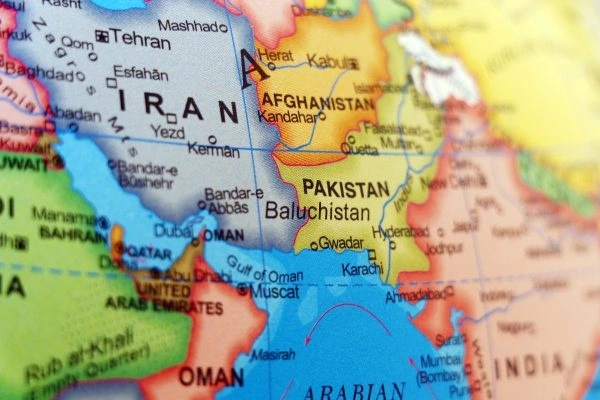
In recent years, clear signs have emerged of the declining effectiveness of international and regional institutions in managing complex global crises. This erosion has not only weakened the capacity for collective response to conflicts but has also, inadvertently, created space for the resurgence and expansion of extremist non-state actors. Afghanistan today stands as a stark example—effectively under the control of such groups, with no functioning, inclusive state structure.
The United Nations, once the cornerstone of the post-World War II international order, now faces serious structural and political limitations. Its repeated failure to resolve protracted conflicts from West Asia to parts of Africa has led to diminishing global trust. Increasingly, states are turning toward unilateral actions or limited alliances, bypassing multilateral frameworks. This shift has created dangerous security vacuums, particularly in fragile regions, enabling the rise and consolidation of armed non-state groups.
At the regional level, institutions such as the Organisation of Islamic Cooperation have also struggled to play an effective role in mediating intra-regional disputes among Muslim-majority countries. Deep political divisions among member states, intensifying geopolitical rivalries, and weak enforcement mechanisms have reduced these organizations from proactive actors to largely symbolic observers issuing statements rather than shaping outcomes.
Within such weakened institutional environments, the likelihood of extremist groups reorganizing and expanding increases significantly. Exploiting governance vacuums, fragile central authorities, and access to financial resources, these groups gradually evolve from fragmented entities into organized networks sometimes even assuming quasi-governmental roles. A particularly alarming dimension of this trend is their pursuit of control over natural resources, including mining operations, narcotics production and trafficking, arms manufacturing, and organized criminal activities. These revenue streams allow them to secure long-term financing and consolidate territorial influence. In some cases, they even co-opt intellectuals, media voices, and propagandists to legitimize and amplify their narratives.
From a geopolitical perspective, the threat of conflict diffusion from West Asia to other vulnerable regions especially the Horn of Africa and South Asia is steadily increasing. These regions, due to their strategic location, fragile state institutions, and transnational linkages, are highly susceptible to becoming new theatres of armed competition and the transfer of violent operational models.
For the developed world, the implications of such shifts are profound and multi-layered: rising migration pressures, escalating transnational security threats, and disruptions to global energy and supply chains. In such a context, reliance on reactive and short-term approaches is not only insufficient but may, in fact, exacerbate existing crises.
A fundamental rethinking of the role and structure of international and regional institutions is therefore imperative. Strengthening multilateral mechanisms and addressing the political and economic root causes of extremism must become central priorities. Without such reforms, existing vacuums will inevitably be filled by forces that challenge not only regional stability but also the very foundations of the global order.
A Regional Warning
Countries across West Asia, South Asia, and neighboring regions must recognize the growing danger posed by the expansion of extremist networks and transnational terrorism. The spillover of instability does not respect borders. Without coordinated intelligence-sharing, stronger border governance, and unified political will, these networks will continue to exploit divisions, recruit across societies, and destabilize entire regions. The time for preventive, collective action is now before the cost of inaction becomes irreversible.