
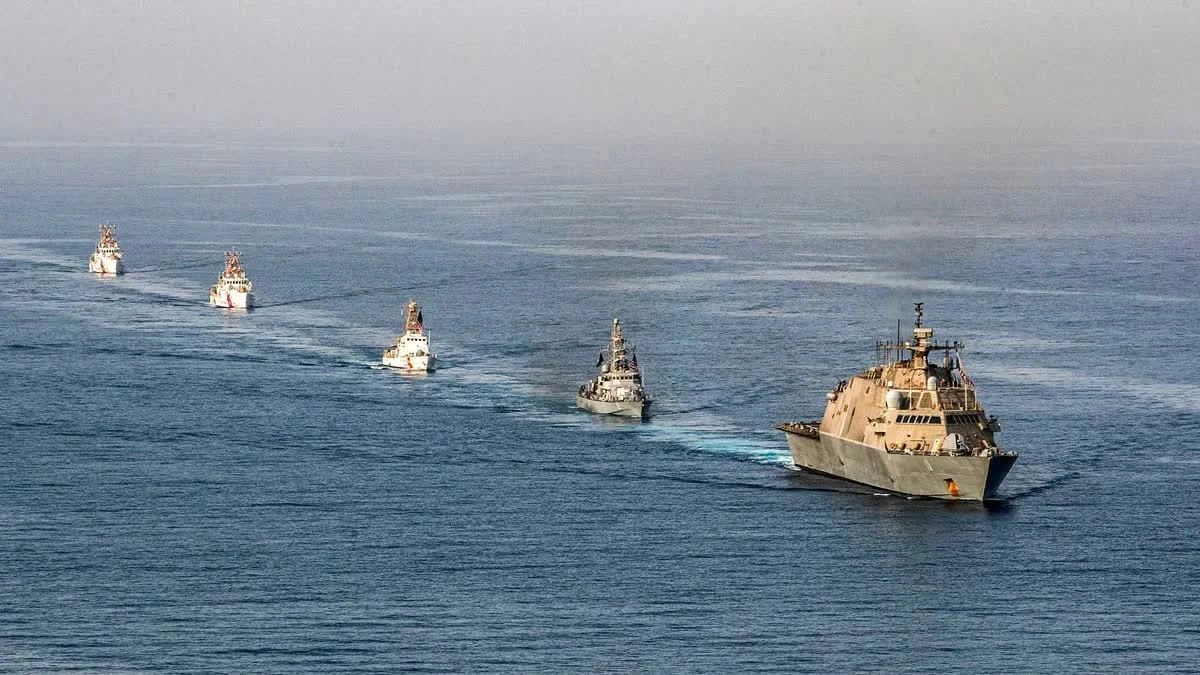
Iran has further hardened its strategic position regarding ports in the Persian Gulf and the Sea of Oman, stating that these ports will either remain open for the commercial activities of all countries or none will be allowed to use them. The statement issued by the Iranian Armed Forces is being described as highly significant in the context of rising maritime tensions in the region and potential blockade scenarios.
According to Iran’s state broadcaster IRIB, a commander of the armed forces stated in clear terms that exercising sovereignty over regional waters is the natural and legal right of the Iranian nation. The statement declared that Iran will not only maintain control over the security of the Strait of Hormuz but will also completely deny passage to vessels linked to “enemy countries” through this critical waterway. Iranian officials added that even after the end of the conflict, a new and integrated system of permanent control over the Strait of Hormuz will be implemented.
Transit Tax Proposal
The Iranian Armed Forces also indicated the possibility of imposing transit taxes on vessels passing through the Strait of Hormuz, which could be used as a form of “war reparations.” Iranian officials stated that foreign vessels would only be allowed passage if they fully comply with Iranian regulations.
Sharp Criticism of the United States
The Iranian statement strongly criticized recent U.S. actions, describing restrictions on maritime movement in international waters as illegal and equivalent to “piracy.” Iran warned that if the security of its ports is threatened in any way, no port in the Persian Gulf or the Sea of Oman would remain safe in response.
Concerns Over Global Economic Impact
Analysts say this position could significantly affect global energy supply routes through the Strait of Hormuz. The “all or none” policy has triggered concern among global markets and trading nations, especially amid ongoing strategic uncertainty following the stalled Islamabad talks and continued calls for regional restraint.











