
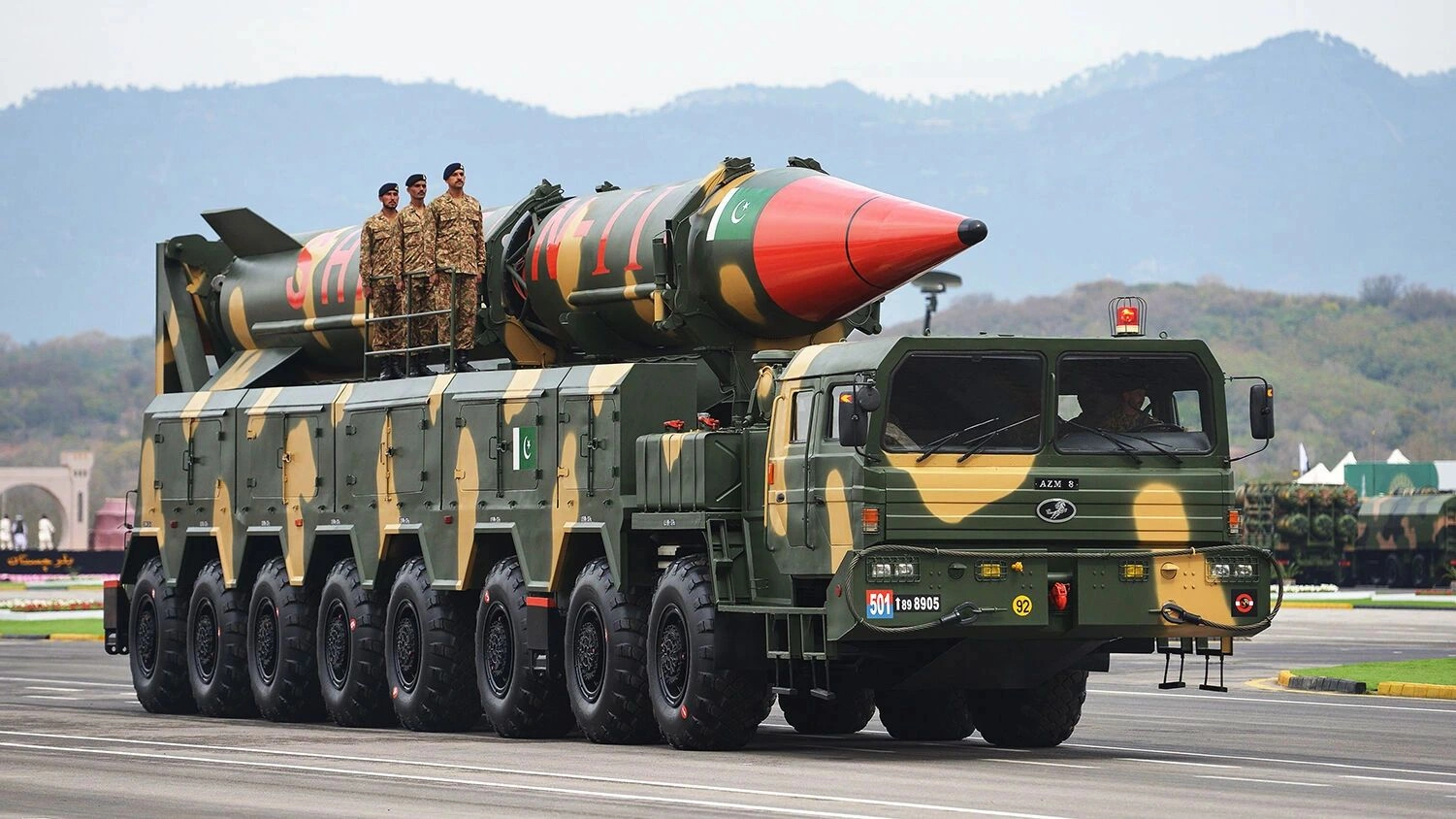
Indian defense analyst Brahma Chellaney’s attempt to place Pakistan and Iran’s nuclear programs under the same framework of “nuclear Islamism” has been rejected by experts as analytically flawed and factually misleading. Defense specialists argue that such comparisons deliberately ignore the legal, strategic, and institutional differences that form the foundation of global nuclear politics.
Legal and Treaty-Based Differences
Experts note that Pakistan cannot be accused of violating the Nuclear Non-Proliferation Treaty (NPT) simply because it is not a signatory to it. In contrast, Iran, as a member of the treaty, is bound by International Atomic Energy Agency (IAEA) safeguards. This fundamental legal distinction, they argue, invalidates claims of a uniform or “double standard” approach, since states with different legal obligations cannot be assessed under identical criteria.
Strategic Context of Pakistan-US Relations
Analysts emphasize that US policy toward Pakistan has historically been driven by strategic necessity rather than ideology or religion. From containing Soviet expansion during the Cold War, to the Afghan war in the 1980s, and later the post-9/11 counterterrorism campaign, Pakistan has consistently served as a frontline partner. Fluctuations in non-proliferation concerns during these periods are viewed as strategic adjustments rather than preferential treatment.
India and Selective Nuclear Enforcement
Observers point out that if selective enforcement of nuclear rules is to be discussed, India represents a key example. After conducting its first nuclear test in 1974, India indirectly led to the formation of the Nuclear Suppliers Group (NSG), yet it later received exceptional waivers despite remaining outside the NPT. New cooperation frameworks launched in February 2025 with US backing and advanced technology transfers are cited as evidence of continued preferential treatment.
India’s Expanding Nuclear Arsenal
Current estimates suggest India possesses over 180 nuclear warheads, with some academic sources placing the number between 300 and 450. The testing of the Agni-5 missile in August 2025, along with development of intercontinental systems exceeding 8,000 km range, highlights its expanding strategic capabilities. Despite this, India remains a key US strategic partner, reinforcing arguments that nuclear policy is shaped by geopolitics rather than ideology.
Religious Narrative Critique
Experts further argue that nuclear weapons are governed by state policies and strategic doctrines, not religion. They caution that if religious framing were applied universally, India’s nuclear identity—rooted in Hindutva political ideology—and Israel’s nuclear program would also come under similar scrutiny. Analysts conclude that the term “nuclear Islamism” is a misleading construct aimed at diverting attention from India’s growing nuclear expansion in South Asia.











