
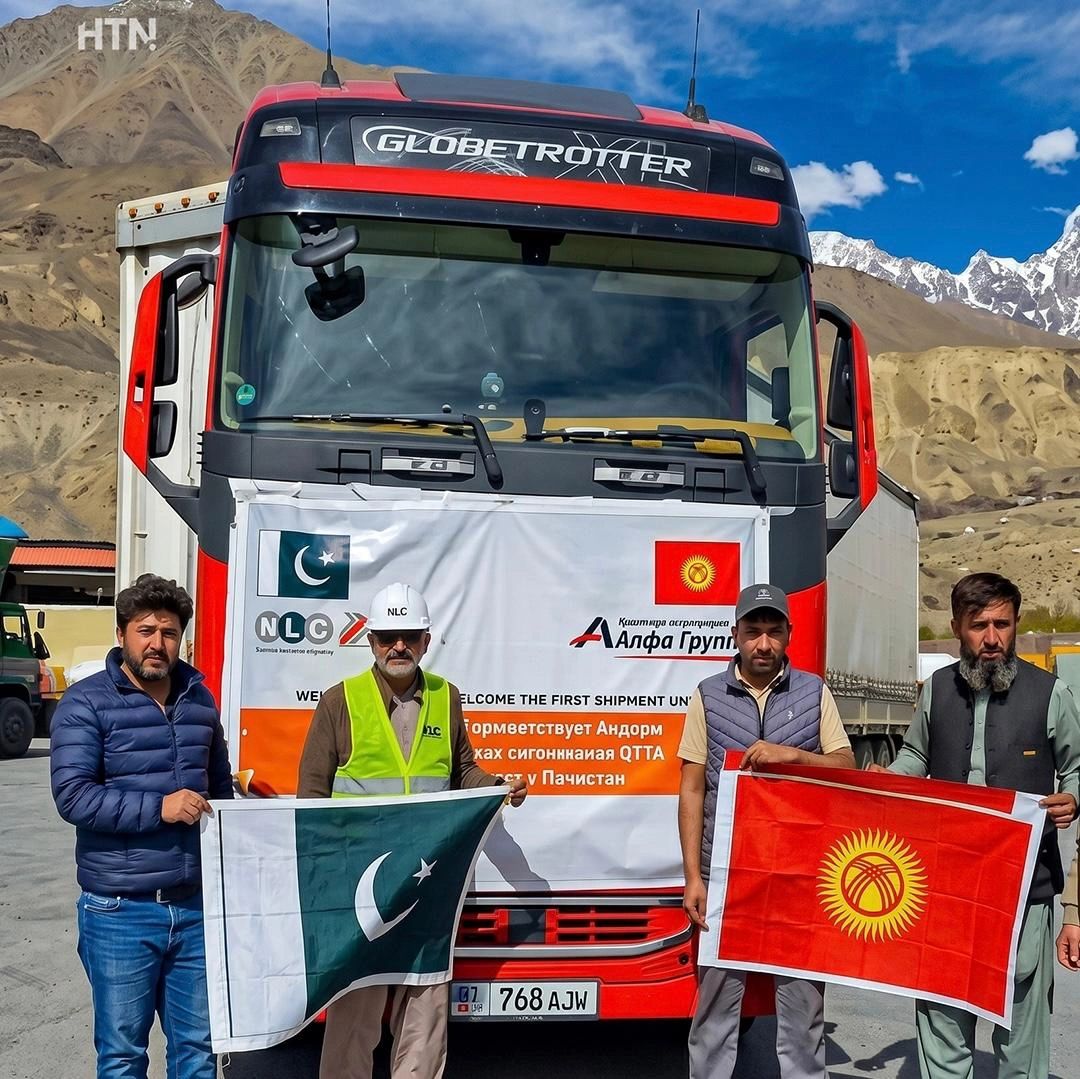
A landmark development in regional trade connectivity has taken place as the first cargo truck from Kyrgyzstan successfully reached Pakistan’s Sost Dry Port via China, bypassing Afghanistan. The shipment carried transit goods and marks a significant step in expanding alternative trade corridors in the region.
The movement is being seen as the first instance of a Commonwealth of Independent States (CIS) country independently completing such a logistics route into Pakistan. Officials say the transit was facilitated through a partner company of the National Logistics Corporation, reflecting growing coordination between Central Asian states, China, and Pakistan in developing diversified trade routes.
New Transit Route Signals Shift In Regional Trade Patterns
The successful delivery highlights the operational viability of emerging transport corridors that avoid traditional routes through Afghanistan. Experts say such developments could gradually reshape regional trade patterns by reducing dependence on single transit pathways and improving supply chain resilience.
Authorities believe this milestone may encourage other Central Asian countries to explore similar routes, particularly those seeking more stable and secure access to South Asian markets.
Pakistan Aims To Strengthen Role As Regional Transit Hub
Officials view the development as an important step toward positioning Pakistan as a regional transit and logistics hub. Plans are reportedly underway to extend cargo movement from Sost further south to Karachi and potentially to Gwadar Port, providing direct access to international maritime trade routes.
Trade analysts note that if expanded successfully, such corridors could significantly reduce transportation costs for landlocked Central Asian economies like Kyrgyzstan, Tajikistan, and Uzbekistan while increasing Pakistan’s role in regional commerce.
Broader Connectivity Push Gains Momentum In Region
The initiative aligns with broader efforts to enhance regional connectivity across Central and South Asia, including infrastructure development and cross-border trade facilitation projects. China’s role as a transit partner further underscores the growing integration of regional logistics networks under multi-country cooperation frameworks.
Economists say such developments reflect a gradual shift toward diversified trade routes in Eurasia, where connectivity projects are increasingly shaping economic and strategic relations between participating countries.











