
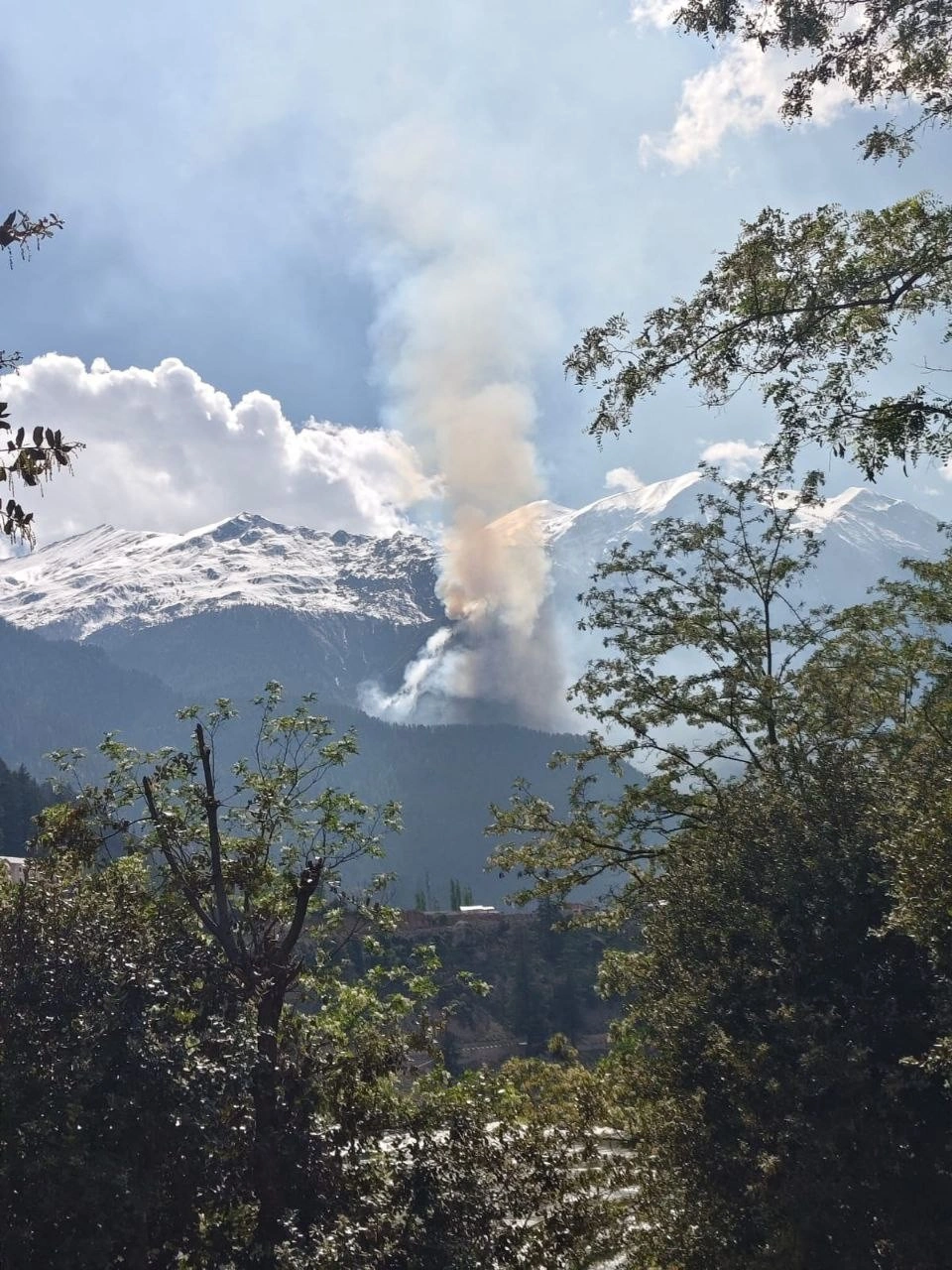
An aircraft of the Indian Air Force crashed on Wednesday in the remote mountainous district of Kishtwar, located in Jammu and Kashmir. According to local witnesses, thick smoke was seen rising from the crash site shortly after the incident. The aircraft went down in a difficult forested area, making access extremely challenging.
Soon after the crash, local authorities and rescue teams were dispatched to the area. However, the rough terrain and narrow mountain paths slowed down the operation. Dense forests and steep slopes have made it hard for rescue workers to reach the wreckage and search for possible survivors. Helicopters and ground teams are reportedly being used to support the rescue effort.
Meanwhile, Indian Air Force officials have confirmed that one of their aircraft was involved in the accident. However, they have not shared details about the type of aircraft or the exact cause of the crash. So far, there has been no official word on how many crew members were on board or their condition. As a result, families and the public remain anxious as they wait for more information.
Questions Over Maintenance and Fleet Safety
As the rescue operation continues, attention has shifted to the broader issue of aircraft safety within the Indian Air Force. Over the past few years, several military aircraft accidents have been reported in different parts of India. Because of this, defense analysts say the latest crash has once again raised serious concerns.
According to experts, frequent crashes point toward possible issues in aircraft maintenance, aging equipment, or operational stress. They argue that operating advanced aircraft in harsh weather and tough landscapes requires strict safety checks and regular upgrades. When accidents happen repeatedly, it weakens confidence in the overall system.
Moreover, the crash in a sensitive and difficult region like Kishtwar adds to the seriousness of the situation. Military aircraft often operate in such areas, and any failure can lead to loss of life and valuable equipment. Analysts believe that a transparent investigation is necessary to identify the real cause and prevent future incidents.
In conclusion, while the immediate focus remains on rescue and recovery, the incident has sparked a wider debate. Many are now calling for improved safety measures and better oversight to ensure that such accidents do not continue in the future.
Read more: India’s Indus Waters Doctrine Faces Legal Scrutiny Over Treaty Suspension











