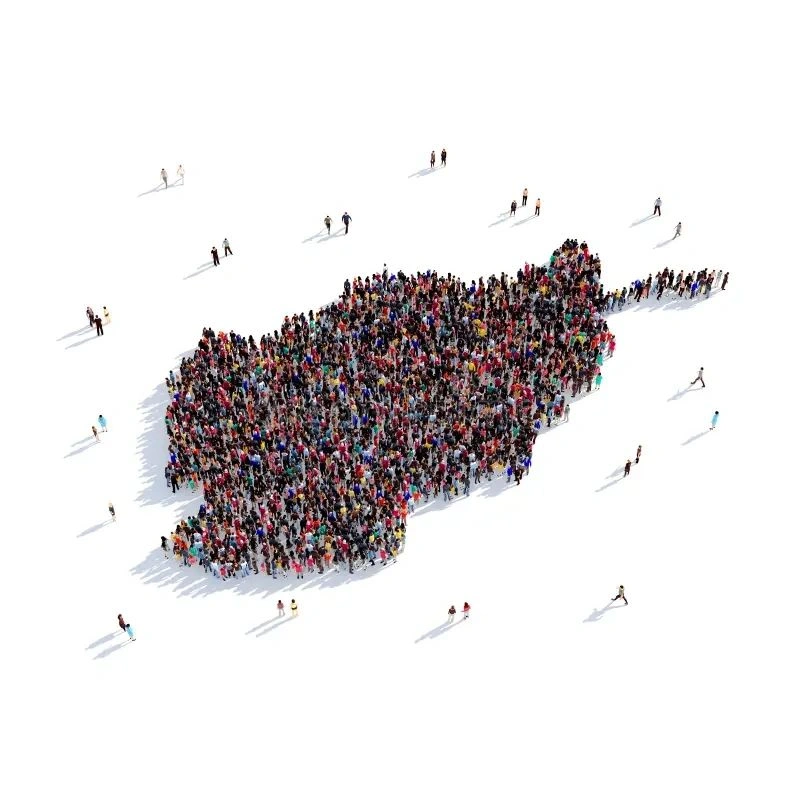
Islamabad: Afghanistan’s long-standing debate over ethnicity and population data has resurfaced following new claims by British-Afghan analyst and human rights advocate Shabnam Nasimi, who argues that the absence of a national census has enabled decades of political manipulation and entrenched uncertainty over demographic realities.
Nasimi, a former adviser to the UK Minister for Refugees and head of the Friends of Afghan Women Network, says Afghanistan remains one of the few countries in the world that has never conducted a comprehensive national census, leaving key questions of representation and governance unresolved.
Early Census Attempts Allegedly Blocked By Political Fears
According to Nasimi, the first serious attempt to establish a nationwide census system began in the early 1970s, with international assistance supporting mapping and institutional capacity-building. However, she claims that in 1979, under the government of Nur Muhammad Taraki, census forms were altered and references to ethnicity were removed amid fears that accurate data could challenge existing political narratives.
She further states that instability during this period led to the destruction of census materials in some regions, and reports of casualties among census workers contributed to the collapse of the exercise.
Afghanistan has never conducted a national census.
— Cyborg 🇵🇰🍁 (@cyborg_reborn) April 23, 2026
A UN-backed census effort was also abandoned in 1979 by Taraki. Forms were burned and 80 census workers were killed out of fear that it would challenge the dominance of ruling Pashtun minority.
More shocking details by Shabnam: pic.twitter.com/VrpoQEyKax
Post-2001 Efforts Also Failed To Materialize
The analysis also highlights that despite extensive international presence and financial assistance between 2001 and 2021, successive Afghan governments were unable to conduct a full census. Both the administrations of Hamid Karzai and Ashraf Ghani reportedly planned population surveys, but these were repeatedly delayed or cancelled due to political and logistical challenges.
Observers note that Afghanistan received substantial international aid during this period, yet demographic uncertainty remained unresolved, continuing to affect governance and planning.
Census Data As A Political Tool
Citing historical research, including the work of scholars such as Thomas Barfield, Nasimi argues that ambiguity around population figures has been a recurring feature of Afghan statecraft. According to this view, the lack of reliable demographic data has allowed competing political narratives about ethnic balance to persist without verification.
Some officials from statistical institutions have also, in past statements, acknowledged pressure from political actors who disputed figures that contradicted their expectations regarding population distribution.
Experts Link Data Gap To Governance Challenges
Analysts say the absence of credible census data continues to have significant implications for governance, resource allocation, and political representation in Afghanistan. Without verified demographic information, policy planning remains based on estimates rather than evidence.
Sociologists and political observers further argue that concepts of ethnic majority and minority in Afghanistan are often shaped by political interests rather than verified statistics, contributing to long-standing divisions and mistrust.
Call For Transparent Data Collection
Experts conclude that without a transparent and credible national census, Afghanistan is likely to continue facing challenges in building inclusive governance structures and ensuring equitable distribution of resources. The issue remains central to debates over political legitimacy, representation, and long-term stability in the country.