
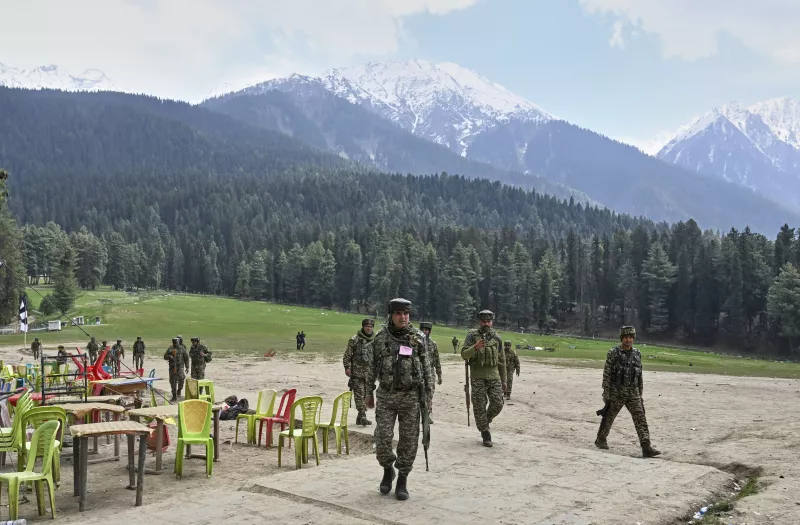
A sunny Tuesday afternoon in the Baisaran Valley. Tourists on ponies. Pine forests and snow-capped ridges. Then, on April 22, 2025, armed men emerged from the surrounding forests and opened fire on tourists near Pahalgam in India’s Jammu and Kashmir, killing 26 civilians in what became the deadliest attack on Indian civilians since the 2008 Mumbai attacks. More than 20 others were injured. The horror of Baisaran was real. The grief across the region was genuine. What followed in New Delhi’s corridors of power, however, was something else entirely. Within two weeks, South Asia stood at the edge of open war between two nuclear-armed states, and the road from a meadow in Kashmir to missile strikes on Pakistani cities passed entirely through a series of decisions that bypassed evidence, bypassed diplomacy, and bypassed the most basic principles of accountability.
A Blame With No Burden of Proof
India moved with extraordinary speed after the attack, but the urgency was reserved for accusations, not investigation. India accused Pakistan of sponsoring the militants. Pakistan denied any involvement and called for an independent, impartial international inquiry into the incident. That offer received backing from Turkey, China, and Malaysia, among others. India rejected it outright. On the first anniversary of the attack, Pakistan’s Information Minister Attaullah Tarar stated that India had still not produced credible evidence for its allegations, and had sidestepped every meaningful call for a neutral inquiry. A verdict had been delivered before any investigation had begun.
Punishments Before Verdicts
On April 23, 2025, just one day after the Pahalgam attack, India placed the Indus Waters Treaty of 1960 in abeyance, suspending an agreement that had endured three wars and decades of bilateral hostility without ever being seriously questioned by either side. India also expelled Pakistani diplomats, recalled its own staff, cut off visa services, and shut the Wagah-Attari border crossing. India’s Home Minister Amit Shah stated the treaty would never be restored and that water would be diverted for Indian use. The Permanent Court of Arbitration subsequently ruled that the treaty remained legally binding regardless. India rejected the ruling and boycotted the proceedings. These were the actions of a government that had already decided the verdict and was moving to execute the sentence.
The Weeks Between April and War
Between April 24 and May 6, Pakistani and Indian forces exchanged cross-border fire and artillery shelling along the Line of Control. Diplomatic channels were shutting down one by one. The atmosphere India had constructed, one of certainty about Pakistani guilt and urgency about response, left little room for de-escalation. In the early hours of May 7, Indian missile strikes hit six cities across Punjab and Azad Kashmir, destroying a mosque and killing dozens of civilians, including women, children, and the elderly. Pakistan called it an act of war and vowed to respond at a time and place of its choosing. Three days later, Operation Bunyan-un-Marsoos changed the strategic map of South Asia.
A Valley That Deserved Better
The 26 people killed in Baisaran Valley deserved justice. Their families deserved answers. A transparent, credible investigation, the very thing Pakistan offered and India refused, was the one path that could have served both. Instead, the Pahalgam attack was converted into a pretext before the blood had dried. One year on, as Pakistan marks Youm-e-Marka-e-Haq, the most telling fact about April 22 remains this: the country that claimed to be the aggrieved party was also the one most determined to ensure no one looked too closely at what actually happened.
Read More: Pakistan’s Nuclear Program Fully Aligned with International Law and a Guarantee of National Security











