
A social media post by the Central Intelligence Agency (CIA), in which a brick from the Abbottabad compound was declared the “artifact of the week” in its museum, has sparked widespread anger and mockery among Pakistani users. Many have described the move as insensitive and linked it to a deeply controversial event involving a violation of Pakistan’s sovereignty, prompting a large-scale satirical campaign against the agency.
According to details, the CIA shared an image on its official social media accounts of a brick recovered from the compound in Abbottabad, where Osama bin Laden had lived.
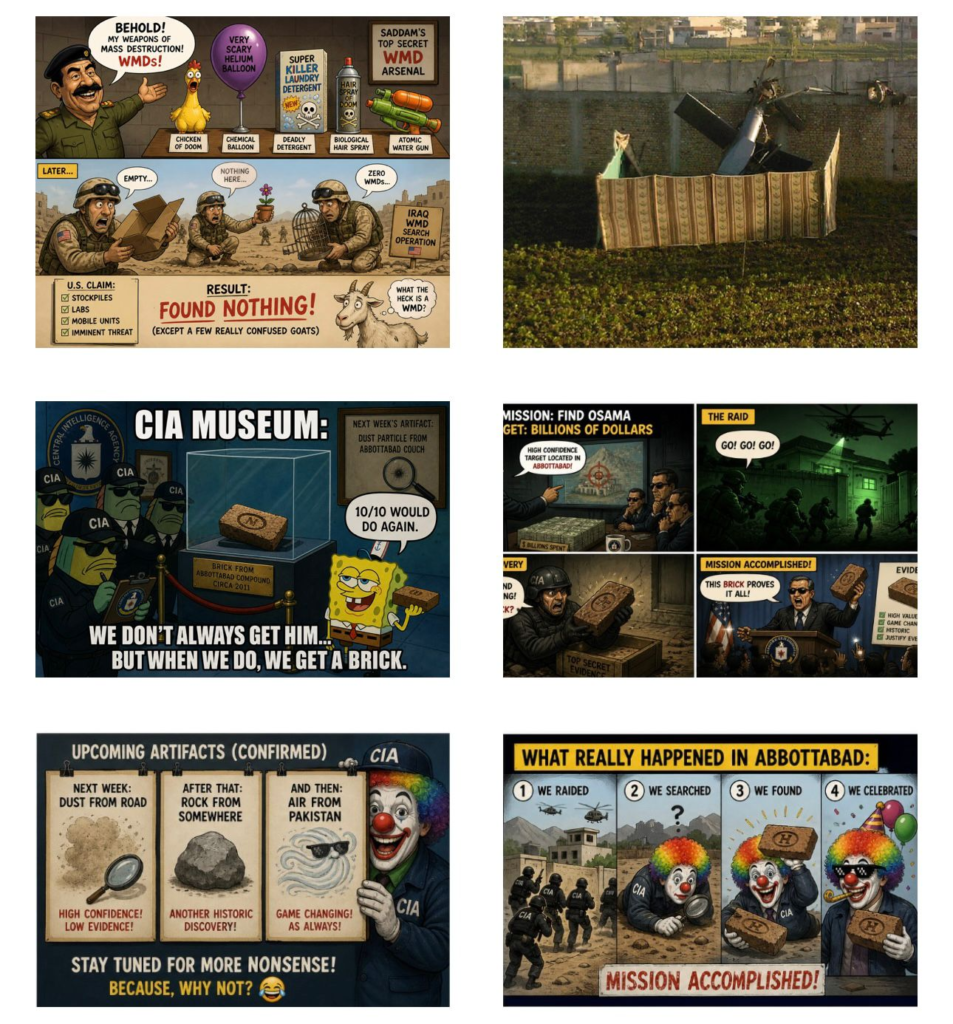
In response, Pakistani users began countering the post by using the CIA’s own signature graphic style to create satirical content. These posts highlighted past intelligence failures, drone strike debris, fake passports, and espionage equipment, presenting them as “real artifacts.”
The viral memes and images circulating on social media mocked the agency by suggesting that if a brick could be considered a masterpiece, then the CIA’s past failures—many of which affected its global reputation—should also be labeled as historical assets.
The campaign particularly targeted items associated with controversial CIA operations and alleged human rights violations, turning them into symbols of criticism through humor and satire.
Analysts and observers say this strong reaction is not incidental but reflects deeper public resentment over U.S. policies and perceived violations of Pakistan’s territorial integrity. Many users described the CIA’s post as insensitive, likening it to “rubbing salt into wounds.”
The campaign quickly gained global attention, with millions engaging in the discussion and challenging what they see as the CIA’s double standards and unprofessional social media strategy. Pakistani internet users’ creative and satirical response has demonstrated how dismissing sensitive national and international issues can lead to significant public backlash.











