
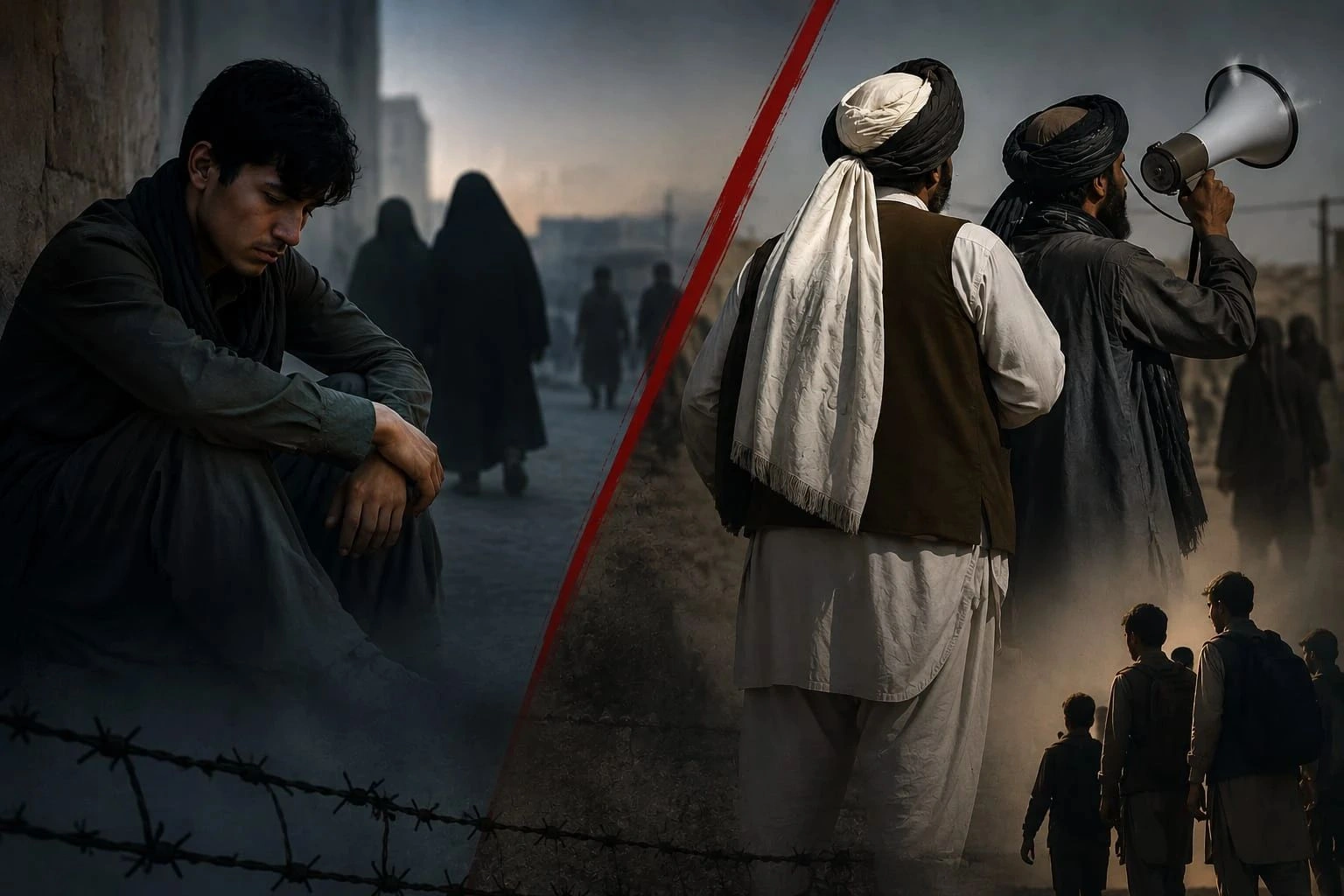
Afghanistan in recent years has entered a phase of political and social transformation in which the daily lives of citizens are more than ever under restrictions, surveillance, and governmental pressure. Among those most affected are young people, who as the most active and future-shaping segment of society are bearing the greatest burden. In recent days, videos circulated on social media showing Taliban forces brutally beating a young man, with no clear explanation of the alleged crime or reason for such treatment. This is not an isolated incident but part of a broader pattern in which personal freedoms and human dignity of youth are increasingly violated.
In a society where young people should be at the center of development and hope for the future, harsh and at times humiliating treatment carries serious consequences for social stability and the country’s future.
Use of Religion and the “Promotion of Virtue and Prevention of Vice” Structure
The Taliban, through the structure of “Promotion of Virtue and Prevention of Vice,” have effectively created a wide surveillance system over people’s private lives — a system that has gone beyond moral guidelines and has become a tool of social control and political pressure. Young people, women, and ordinary citizens face daily inspections, restrictions, and interference in their private affairs.
The key question remains: should “promotion of virtue” be a means of social reform, or a tool to impose a way of life and create fear among people?
Violence Against Youth Under Unclear Pretexts
The circulation of videos showing beatings of young people by Taliban forces has once again highlighted that physical violence has become part of a broader system of social control. In many cases, the reasons are unclear. Sometimes a different hairstyle, sometimes clothing style, or simply being in a certain place can lead to detention or abuse.
This behavior raises serious concerns about justice and rule of law. In any political system, punishment must be based on clear legal procedures, not the personal judgment of armed individuals on the streets.
Interference in Privacy and Mobile Phone Searches
One of the most frequently reported complaints from young people is the search of personal mobile phones by Taliban forces. In today’s world, mobile phones are considered part of personal privacy, containing private information, family photos, communications, and social connections.
Searching them without consent or legal warrant not only violates privacy but also increases psychological insecurity among youth. When a young person does not know whether their phone can be checked at any moment, they no longer feel free or safe in society.
Control Over Appearance from Hair to Clothing
In recent months, there have been multiple reports of young people being confronted over their clothing or hairstyles. This reflects an attempt at cultural and social uniformity.
Youth is a stage of identity formation, and appearance is part of that identity. When authorities interfere in this personal space, they are essentially limiting individual choice and self-expression.
Pressure on Women Over Dress Code
Alongside youth, women have also been affected by these policies. Reports and videos show instances where women have been insulted, pressured, or even physically confronted in public spaces due to their attire.
While the issue of dress in Afghanistan has always been sensitive, current actions go beyond moral advice. Harsh treatment of women in public undermines not only their freedom but also their human dignity.
Psychological and Social Impact on the Younger Generation
The most serious victim of this situation is the mental well-being and future of young people. A youth living under constant fear of arrest, beating, or humiliation gradually loses trust in society.
This pressure can lead to depression, isolation, forced migration, or even radical or protest behavior. A society whose youth lose hope cannot have a stable future.
Taliban’s Justification and Criticism
Some supporters of the Taliban argue that these measures are necessary to preserve social values and prevent moral corruption. They believe society must be governed according to religious principles and that monitoring public behavior is part of this responsibility.
Silent Crisis and Youth Response
One of the most painful aspects is the confusion among young people. Many do not know how to respond to such pressure. Open protest is dangerous, while silence means continuation of the status quo.
Some choose migration, others become isolated, and some try to adapt. However, forced adaptation often means living without freedom or choice.
A society where youth have no voice for expression will inevitably face deeper crises in the long term.
Future Depends on Freedom and Human Dignity
“Promotion of virtue and prevention of vice” is originally a moral concept for social reform, but when it becomes a tool of coercion and political pressure, it loses its essence. What is seen today in Afghanistan is more than moral reform — it is strict control over private life and individual freedoms.
Beatings, phone searches, dress restrictions, and pressure on women all indicate a broader limitation imposed on society. This situation threatens not only citizens’ rights but also the country’s future stability.
Reform Instead of Coercion
Afghanistan needs a society where human dignity, individual freedom, and citizens’ rights are respected. Preserving values should not come at the cost of breaking human dignity.
If the goal is reform, the path lies in education, dialogue, and awareness — not violence and imposition. Afghan youth need psychological security, opportunities for growth, and freedom of choice. Any system that ignores these rights ultimately weakens the country’s future.
History has shown that sustained pressure on youth does not bring lasting silence or stability — it only widens the gap between the state and the people.











